 Society
Sơn La hit by two earthquakes within 30 minutes
1.
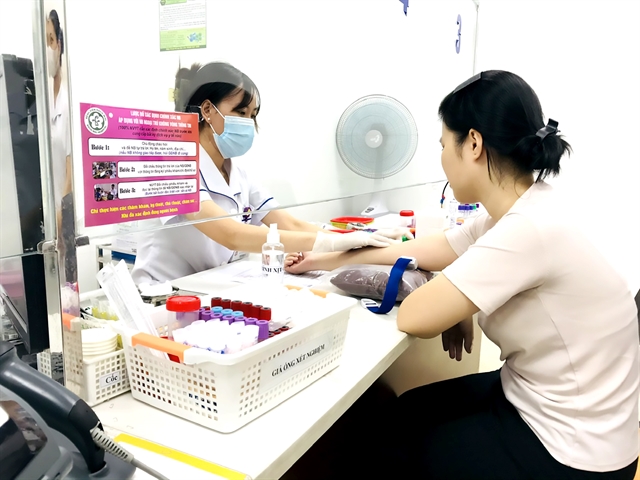 |
| A woman receives medical examinations at a health-care facility. — VNA/VNS Photo Tạ Nguyên |
HÀ NỘI — On September 9, 2025, the Politburo issued Resolution No. 72/NQ-TW on several breakthrough solutions in protecting, caring for and improving public health.
Just six days later, on September 15, 2025, the Government issued Resolution No. 282/NQ-CP on the Action Programme to implement the Politburo's resolution.
The consecutive issuance of these two important documents affirms the strong political commitment of the Party and the State to developing Việt Nam’s health system, placing public health squarely at the centre of the country’s development strategy in the new period.
Public health as the top priority
Resolution No. 282/NQ-CP affirms that the health of every citizen is the foundation of national development and a decisive factor in the quality of life. Accordingly, in this Action Programme, the Government identifies placing public health at the centre as one of the top priorities of national policy.
This is a comprehensive strategy to improve people’s quality of life and enhance the national health system. All citizens, regardless of geography, region or economic conditions, must have access to quality health services, ensuring equity in health-care provision.
One of the key objectives of Resolution 282 is the reform of the health system, especially the improvement of grassroots health care. This will not only ease the burden on central-level hospitals but also enable people, particularly those in remote and mountainous areas, to access medical services right where they live.
The Government is committed to increasing investment in grassroots health care, providing sufficient facilities, equipment and quality human resources to meet people’s health-care needs.
Upgrading grassroots health care not only reduces pressure on higher-level hospitals but also strengthens public confidence in the national health system. The Government has introduced policies and solutions to support localities, especially remote and disadvantaged areas, to improve access to medical services. This will help build an effective, equitable and sustainable health system that better serves the health needs of the population.
A crucial element in placing public health at the centre is disease prevention. Rather than focusing only on treatment when illness occurs, the Government will prioritise proactive prevention.
In Resolution 282, the Government calls for intensified communication and community education on the importance of regular health check-ups, adopting healthy lifestyles and preventing common diseases such as cardiovascular diseases, diabetes and cancer. The occurrence of such afflictions can be significantly reduced if people maintain the habit of regular check-ups, follow scientific diets and sustain healthy living habits.
Another decisive element in putting public health at the centre is ensuring equity in access to health services. The Vietnamese Government is committed to making certain that every citizen, whether in urban or rural areas, rich or poor, has the right to receive the best possible health care. Vulnerable groups, including the poor, ethnic minority communities and people in remote and mountainous areas, will receive priority in access to health services.
Prioritising access for vulnerable groups
According to Minister of Health Đào Hồng Lan, the quality and effectiveness of the health system depend on three major factors: human resources, infrastructure and equipment and financial mechanisms.
Regarding human resources, grassroots health care and preventive medicine will prioritise resource allocation and mobilisation, with breakthrough mechanisms and policies to develop human resources in sufficient quantity, quality and structure, especially in remote, mountainous, difficult and extremely difficult areas, as well as border and island regions.
Commune-level health stations will be bolstered to ensure adequate staffing and the required number of doctors according to their functions and tasks. A reasonable force of health workers at villages and residential clusters, village midwives and population collaborators will be maintained according to assigned roles.
Minister Lan said: “From 2025 to 2030, each locality will rotate or assign at least 1,000 doctors per year to work on a fixed-term basis at commune-level health stations; permanent doctors will be added to commune-level health stations, with at least four to five doctors in place by 2027, and sufficient doctors according to functions and tasks by 2030.”
The Ministry of Health will vigorously and effectively implement the scheme on training and capacity-building for doctors for commune-level health stations, especially in remote, disadvantaged, border and island communes, according to the minister. Investment will focus on developing several high-quality health-sector training institutions meeting regional standards.
Postgraduate training in specialised health disciplines under the national education system will also be strengthened under the Ministry of Health’s management.
MinisterLan affirmed that basic medical infrastructure, medicines and equipment would be ensured, especially in remote, mountainous, border and island areas.
“One hundred per cent of commune-level health stations will receive investment in basic medical facilities and equipment according to their designated functions and tasks," the minister said.
"The Ministry of Health will propose, develop and refine mechanisms and policies to ensure stable, safe and timely vaccine supply; and will lead and coordinate with relevant ministries and sectors to promote investment, encourage and support domestic enterprises in vaccine research and production, gradually mastering technology and fully meeting the needs of the Expanded Programme on Immunisation and preparedness for emerging diseases.”
Regarding operational and financial mechanisms, the functions, tasks and organisational structure of commune-level health stations would follow the model of public service units, ensuring the provision of basic and essential services in disease prevention, primary health care, medical examination and treatment and social care. The State budget would ensure recurrent expenditure and investment for grassroots and preventive health care.
Appropriate financial mechanisms would be put in place to mobilise all social resources for investment in public health-care services.
The State budget however would still play the leading role in guaranteeing funding and investment in infrastructure and equipment for grassroots and preventive health care; for care for policy-beneficiary groups and certain specific groups; and for areas inhabited by ethnic minority communities, mountainous regions and economically disadvantaged, extremely disadvantaged, border and island areas, as well as for mental health, forensic medicine, forensic psychiatry, emergency resuscitation, pathology and other specialised groups.
Resolution No. 282/NQ-CP on the Action Programme to implement the breakthrough Resolution 72-NQ/TW of the Party marks an important step in placing public health at the centre of national policy.
The concrete objectives, from improving grassroots health care and promoting proactive disease prevention to ensuring equity in access to services and applying science and technology in health care, are expected to build a healthy and sustainable society as Việt Nam aims for drastic growth and development in the 'era of nation's rise'. — VNS
Society
 Society
 Society
 Society
 Society
 Society
 Society
 Society
 Society
 Society
 Society
 Society
 Society
 Society
 Society