 Society

VPS leads brokerage market share on HNX in Q3
1.
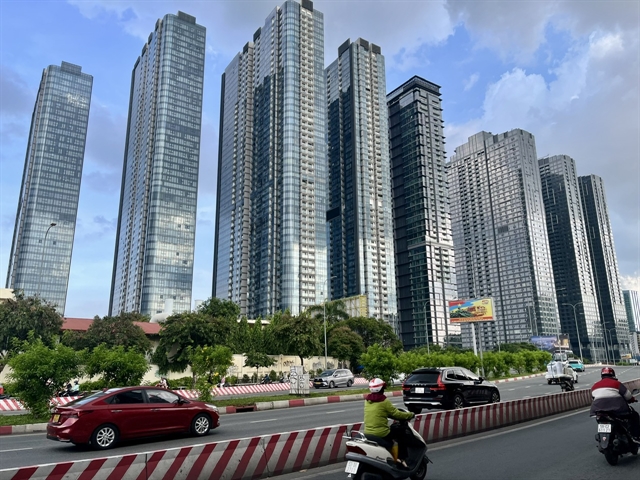 |
| Real estate developments in downtown HCM City. — VNS Photo Bồ Xuân Hiệp |
HCM CITY — The HCM City Real Estate Association (HoREA) has urged the Government not to establish new State-run property transaction centres, warning the model could duplicate existing functions and increase administrative costs.
HoREA has outlined its concerns in comments submitted to the Ministry of Construction on a draft resolution that would pilot Government-operated real estate transaction centres from 2026.
Under the proposal, each centre would include five specialised units handling tax documentation, land-use rights certification, legal consultation and public information services.
HoREA argued the structure would require significant staffing and could “create additional administrative machinery” at a time when authorities are trying to streamline public-sector operations.
The association said many of the proposed functions already exist in local one-stop administrative centres or are handled by provincial construction departments.
Private-sector brokers, digital platforms, notary offices and existing databases managed by the Ministry of Construction also support most transactions, it said.
“The model could lead to the creation of new public service units, increase the number of civil servants and raise budget expenditure,” it stated, adding that the Government should “not rush to establish these centres.”
Recommendations
Instead, HoREA recommended strengthening transparency rules for developers, including mandatory public disclosure of accurate and complete information on existing housing, off-plan projects and serviced land plots.
Violations such as incomplete disclosures or transactions conducted without sufficient legal conditions should be strictly sanctioned, it said.
Most property transactions in Việt Nam are currently processed through private developer-run exchanges, especially in the primary market.
The push for State-run transaction centres follows Prime Minister Phạm Minh Chính’s directive earlier this year for the Ministry of Construction to accelerate plans to establish facilities where the public can access information, complete transactions and obtain land-use certificates through integrated digital procedures.
The ministry has been tasked with piloting the model during 2026-27.
The 2024 Land Law also outlines the creation of a national land information system that must be centralised, interconnected and used for multiple administrative purposes, with the Ministry of Construction and local governments responsible for ensuring its operation.
HoREA also called for a prompt revision of the Law on Real Estate Business to increase market transparency and protect homebuyers, investors and transaction participants. — VNS
Society
 Society
 Society
 Society
 Society
 Society
 Society
 Society
 Society
 Society
.jpg) Society
Society
 Society
 Society
 Society
 Society