 Society

Top Vietnamese leader highlights new horizon for Việt Nam–Denmark cooperation
1.
|
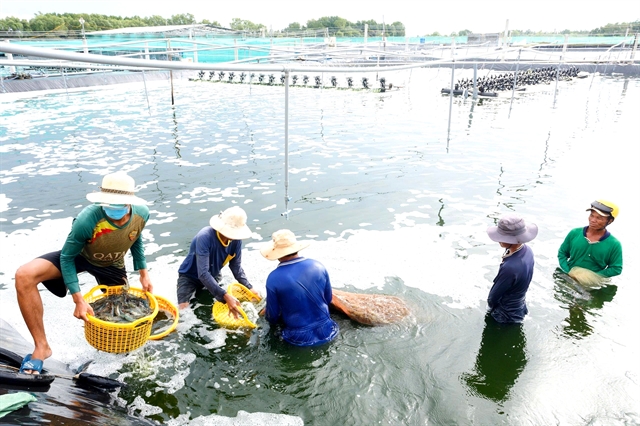
| Farmers harvest shrimp bred through high-tech farming in Cà Mau Province. – VNA/VNS Photo |
CÀ MAU — Cà Mau Province is accelerating the development of shrimp farming by tailoring methods to local ecological conditions, adopting modern technologies, and meeting international standards.
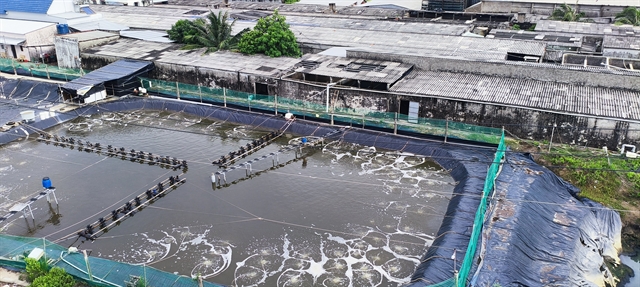
The country’s largest shrimp producing province is prioritising super-intensive shrimp farming, maintaining 13,200ha with an average annual yield of 23 tonnes per hectare, according to its Department of Agriculture and Environment.
It is also expanding 400–500ha of super-intensive shrimp farming with zero-waste discharge.
At the same time, it maintains 190,000ha of extensive and advanced extensive farming, with an average yield of 450 kilogrammes per hectare per year.
Its extensive farming models include rice–shrimp and mangrove–shrimp farming, which are environmental friendly and produce clean products.
Tô Hoài Phương, director of the provincial agriculture department, said: “The province will further expand rice–shrimp and mangrove–shrimp farming models, as well as eco-friendly and organic shrimp production, aiming to obtain international certifications that enhance the value and quality of its shrimp in both domestic and export markets.”
It will focus on developing value chains for 30 per cent of its super-intensive shrimp farming areas, equivalent to 4,000ha, he said.
The province is assisting businesses in registering for high-tech agriculture certification and building a stronger shrimp brand.
At the same time, it is boosting the application of science and technology and digital transformation in farm management, including IoT-based environmental monitoring systems and support for farmers using smart farming applications.
Aquaculture advantages
After the administrative merging of the former Cà Mau and Bạc Liêu provinces into the new Cà Mau Province at the beginning of July, the new Cà Mau has more advantages in aquaculture due to its vast farming area and strong investment in science and technology.
Cà Mau has 450,900ha of shrimp, with an annual output of 566,000 tonnes.
It is actively adopting high-tech farming practices, building sustainable value chains, and strengthening partnerships between farmers, enterprises, and organisations to promote a more efficient and comprehensive shrimp industry.
Nguyễn Chí Thiện, director of the province Department of Industry and Trade, said that the province’s export turnover is estimated at US$1.15 billion in the first half of this year, with seafood exports earning $1.04 billion, up 5.2 per cent year-on-year.
During the period, the province’s seafood exports accounted for more than 20 per cent of Việt Nam’s seafood export turnover.
The province expects to achieve total export turnover of $2.6 billion this year, including $2.43 billion from seafood, an increase of 7 per cent compared to last year.
|
| A high-tech shrimp farming pond in Cà Mau Province’s Gành Hào Commune. – VNA/VNS Photo Chanh Đa |
A highlight of Cà Mau’s shrimp industry is the proactive role of co-operatives in developing internationally certified farming zones.
Eco-shrimp farming models that integrate mangrove protection have enhanced product value and earned international certifications such as ASC and GlobalGAP, paving the way for the province’s shrimp to enter demanding markets like the US, EU, and Japan.
Cái Bát Aquaculture, Processing, Trade and Service Co-operative in Tân Hưng Commune is a leading example as it has achieved ASC certification, one of the most stringent international standards.
Nguyễn Hoàng Ân, chairman of Cái Bát, said: “With a farming area of more than 330ha and shrimp farming under ASC standards, we are shifting towards organic and food-safety standards to meet strict market requirements.”
“We believe that the farming zone is a key factor in determining product quality. Developing a clean shrimp brand with traceability and international certifications is the only way forward if we want to compete in global markets,” he added.
The province has more than 36,000ha of shrimp certified to international standards.
Despite its many advantages, the province’s shrimp industry is facing challenges such as climate change, saltwater intrusion, disease outbreaks, price fluctuations, and technical trade barriers.
Farmers and enterprises are facing difficulties accessing loans for shrimp farming due to a lack of collateral and feasible farming plans.
Additionally, environmental pollution and disease risks make many households hesitant to expand their operations.
From a business perspective, Trần Văn Diệu, Director of Thái Co., Ltd., said: “Cà Mau shrimp products are competitive thanks to their high quality and added value, allowing us to maintain market share in demanding markets like the US, EU, Japan, Australia, and South Korea.”
“However, the industry is under pressure from diseases and higher production costs compared to competitors such as India, Ecuador, and Thailand,” he said.
Thiện, director of the province’s Department of Industry and Trade, said that to address issues of the shrimp industry, the department regularly and proactively directs and implements fundamental solutions, including closely monitoring major seafood import markets and negotiations with key trading partners.
The department also keeps a close watch on the difficulties and obstacles faced by businesses in order to provide timely support and advise the competent authorities on appropriate responses to remove bottlenecks in seafood exports, he said.
It encourages enterprises to stay informed, develop suitable strategies, and carefully manage raw material resources to avoid risks related to origin tracing, he said. — VNS
Society
 Society
 Society
 Society
 Society
 Society
 Society
 Society
 Society
 Society
 Society
 Society
 Society
 Society
 Society