 Politics & Law

Việt Nam, Laos firms sign deals on property, smart farming projects
1.
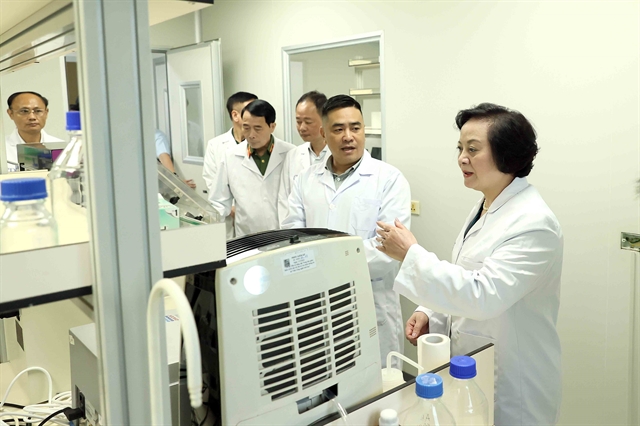 |
| Deputy Prime Minister Phạm Thị Thanh Trà inspects the Centre for DNA Identification under the Institute of Biology on Monday. — VNA/VNS Photos |
HÀ NỘI — Deputy Prime Minister Phạm Thị Thanh Trà on Monday urged forces involved in the search, collection and identification of war martyrs’ remains to strengthen human resources, accelerate training, complete necessary facilities and develop an integrated data system.
She was speaking while conducting an on-site inspection of DNA testing and the identification of martyrs’ remains at the Centre for DNA Identification under the Institute of Biology, Việt Nam Academy of Science and Technology and at the Military Institute of Forensic Medicine under the Directorate of Military Medicine, Ministry of National Defence.
Trà, who is head of the National Steering Committee for the Search, Collection, and Identification of Martyrs’ Remains, commended the great efforts made by the agencies and called for focused efforts to remove bottlenecks related to human resources, data, infrastructure, funding and procedures in order to accelerate the 500-day-and-night campaign to search for the war martyrs’ remains.
She hailed the Centre for DNA Identification and the Institute of Biology for researching and testing new technologies, and at the same time, simultaneously deploying them to support the identification of martyrs’ remains.
The centre currently masters two groups of DNA testing technologies: traditional mitochondrial DNA (mtDNA) technology applied to outstanding samples for which previous results are already available and next-generation sequencing combined with single nucleotide polymorphism analysis (NGS-SNP) to process severely degraded bone samples.
To date, the centre has received 37,610 samples of martyrs’ remains from eight provinces and cities.
In recent batches alone, the centre received more than 7,100 samples from HCM City, more than 4,600 from Đồng Nai Province and more than 5,200 handed over by Tây Ninh Province.
Since the beginning of 2026, the centre has successfully identified 10 cases of martyrs’ remains with sufficient scientific and legal grounds for their identities to be officially announced and the results delivered to their families.
With nearly 38,000 samples already received, the pace of analysis remains below requirements because large-scale clean-room infrastructure and the NGS-SNP processing line are still being completed and installed.
Trà said human resources must be given high priority while asking the Việt Nam Academy of Science and Technology to conduct an overall review of human resources, not only at the Institute of Biology but also at other relevant units, and to urgently mobilise qualified personnel who can adapt to the work for training and preparation to operate the new technology lines.
The Deputy Prime Minister also requested continued assessment of the practical effectiveness of the new technology, including its advantages, difficulties and limitations through actual testing, so that technology can be combined with practical experience to improve the speed, quality and effectiveness of identification efforts.
Data must also receive particular attention, she said, adding that information on martyrs must be updated and synchronised with the national population database and the database of biological samples from martyrs’ relatives. Samples of remains already collected should also be incorporated into the system to facilitate matching and comparison.
Meanwhile, during the 2013–25 period, the Military Institute of Forensic Medicine received nearly 5,000 samples of martyrs’ remains, conducted forensic examinations on nearly 2,000 remains samples and more than 1,800 samples from relatives and identified 558 martyrs.
Under the 500-day-and-night campaign, which began on March 15, 2026, the institute has extracted DNA from 243 samples of martyrs’ remains, obtaining 48 mitochondrial DNA sequences and carrying out comparisons for identification.
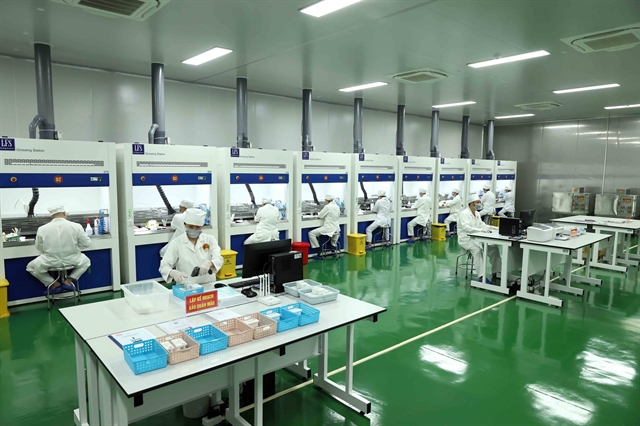 |
| Inside the lab of the Military Institute of Forensic Medicine. |
To date, the institute has received 35,776 samples of martyrs’ remains from 16 of the 17 provinces and cities. More than 30,000 samples have been assigned QR codes, while nearly 9,000 samples have been processed, assessed and placed in long-term storage.
Deputy PM Trà praised the technical procedures for sampling, transporting, handing over, preserving, and storing martyrs’ remains developed and advised by the Directorate of Military Medicine and rapidly implemented nationwide.
She asked the directorate to continue improving and standardising these procedures so that they can be applied consistently, rigorously and professionally by localities and relevant units.
She also praised the workforce of the Military Institute of Forensic Medicine and the Directorate of Military Medicine, describing them as being “highly skilled and capable,” demonstrating dedication, responsibility and strong professional and technical expertise.
Alongside human resources, agencies must develop an integrated data system capable of facilitating matching and comparison among units, avoiding a situation in which each unit possesses data but the datasets cannot be connected or synchronised, she said. — VNS
Politics & Law
 Politics & Law
 Politics & Law
 Politics & Law
 Politics & Law
 Politics & Law
 Politics & Law
 Politics & Law
 Politics & Law
 Politics & Law
 Politics & Law
 Politics & Law
 Politics & Law
 Politics & Law
 Politics & Law