 Politics & Law
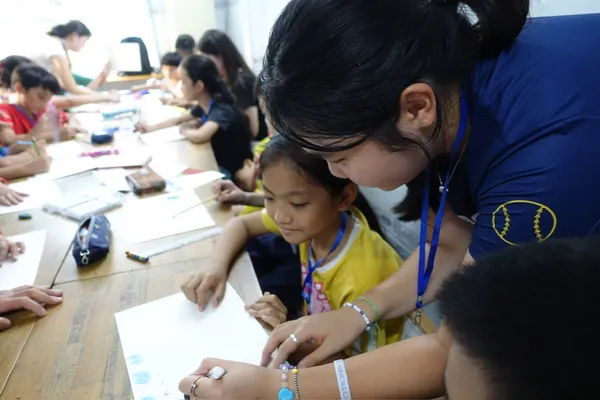
Youth-led initiative opens up opportunities for disadvantaged children
1.
|
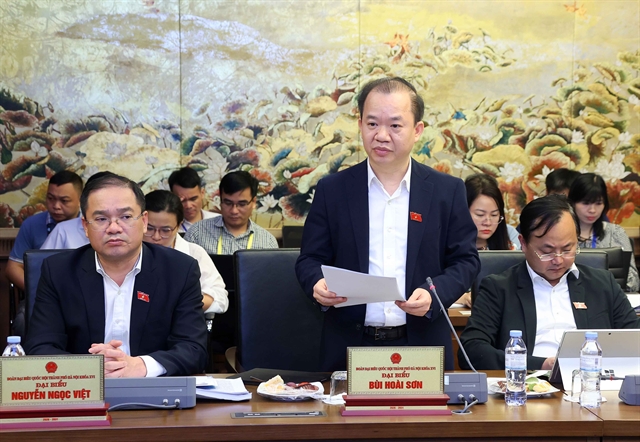
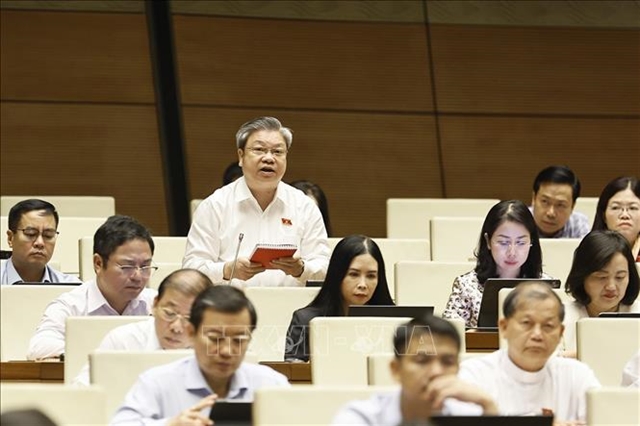
| Dr Bùi Hoài Sơn. — VNA/VNS Photo Văn Điệp |
Dr Bùi Hoài Sơn, member of the National Assembly's Committee on Culture and Social Affairs, speaks to the Hà Nội Press, Radio and Television Agency about the changes needed in approaches to intellectual property (IP) rights protection online.
Copyright seems to be often overlooked these days, as many people consider internet content as a free resource. What’s your view on the current state of copyright infringement and its consequences for the creative community?
This is a thought-provoking issue. Never before have creating, disseminating and accessing knowledge, culture and art been as convenient as they are today, in the digital age. But also never before has the boundary between sharing and appropriation, or legal use and copyright infringement, become so fragile.
Many people still believe that anything that appears on the internet can be freely taken, copied, reposted and even used to make money without asking for permission, paying fees or acknowledging the creator’s efforts. This is not only a lack of legal understanding but also a lack of respect for intellectual labour.
Copyright infringement today is no longer a small, spontaneous act. It occurs on many platforms and in many forms: newspapers, music, films, books, images, television programmes, lectures, data and digital content. Some violations are intentional and carefully organised to attract views, sell advertising, increase interactions and generate revenue.
Not only does infringement cause economic damage to rights holders, it also thwarts the creative drive of society.
When a journalist puts effort into an investigative piece, a musician dedicates years to writing a song, a filmmaker pours capital and passion into making a film or a researcher builds knowledge through diligent work, and then that product is stolen and exploited unfairly, it sends a dangerous message to society: creativity is not protected, but copying it can be profitable.
A society that wants to develop through knowledge, science, technology, innovation and the cultural industry cannot underestimate copyright. Copyright is not a barrier to accessing culture; it is a mechanism for fair protection so that creators can continue to create.
Without protecting copyright, we will struggle to have a strong content industry, major cultural brands and a healthy creative market.
Although copyright infringements occur rapidly, the process of detecting, collecting evidence and identifying violators still faces considerable difficulties. What can be done to improve this situation?
I believe the current bottleneck lies not with regulations but with enforcement. The Law on Intellectual Property has recently been amended, which further refines many regulations on copyright and related rights to suit the new era.
However, in the digital environment, infringements occur in seconds and spread across thousands of accounts and servers located in multiple countries. Meanwhile, infringers remain anonymous or change constantly. If the handling process remains slow and overly reliant on complaints, it will be very difficult to keep up with reality.
Several measures need to be implemented. First, the technological capacity of enforcement agencies must be increased so that they do not rely solely on traditional methods. A digital monitoring system is needed, along with tools for tracing and identifying infringing content, storing electronic evidence and connecting data between State management agencies, copyright holders, digital platforms and intermediary service providers.
Digital platforms need to be held accountable. They shouldn’t be allowed to benefit from traffic, advertising and user data without taking responsibility for the copyrighted content posted, shared and commercialised within their ecosystems. They should be required by law to remove and block IP infringing sources, lock repeat offender accounts, and preventing advertising revenue from supporting infringing content.
The economic gains from the violation must be addressed. Penalties must be strong enough to make violators understand that appropriating IP is not a risk-averse business model, and they should be increased for organised, repeat offences and larger illicit gains. In serious cases, criminal liability should be considered.
The rights protection process needs to be shortened. Creators, media outlets and content businesses are often discouraged by lengthy complaint procedures, difficulty in collecting evidence and high litigation costs. So a mechanism for quick handling of obvious violations is necessary to support them in registering, managing, exploiting and protecting their rights.
Finally, inter-agency and international IP protection cooperation must be strengthened, as digital copyright infringements cross national borders. Coordinated efforts are needed among cultural and information management agencies, the police, courts and customs, as well as market management forces, professional associations and digital platforms.
What changes should be made so that IP protection will both handle violations and create an environment that respects creativity, and where IP rights can be turned into a resource for economic and cultural development?
A very fundamental change is needed, which is that IP protection should not be seen merely as punishment for violations, but as a pillar of development. In this era, the most important resources are not land, minerals or investment capital, but IP assets, such as ideas, knowledge, data, brands, designs, works of art, technological solutions and cultural stories.
To make this change, we must first build a culture of respect for copyright, which must begin with education in schools and with the press, businesses and each internet user.
We need to teach the younger generation that a photograph, a piece of music, an article, a software programme or a design doesn't just appear out of nowhere. Behind it lies the labour, talent, cost, time, emotions and responsibility of human beings. Respecting copyright is thus respecting creative individuals.
We also need to shift our mindset from ‘protection’ to ‘exploitation and development’. Much of our cultural heritage and indigenous knowledge, as well as our traditional crafts, works of art, local brands and cultural data, is of immense value. But they have not yet been systematically identified, registered, digitised, commercialised and protected.
The State needs to create an ecosystem that not only protects creators against infringement, but also supports them in rights registration and valuation and market access, along with helping them be fairly compensated for their work.
A balance must be established between protecting rights and the public's right of access to knowledge and culture by creating a transparent copyright market. Copyright should not be a barrier to knowledge, but a mechanism for fair, transparent and responsible sharing of it.
I want to emphasise that in the digital age, a strong nation is not one with many buildings, factories and other physical infrastructure, but one that knows how to protect ideas, honour talent and fairly compensate creativity and transform it into soft power. For such a nation, protecting IP is not just a legal issue, but a matter of developing culture, strengthening social ethics, and enhancing national competitiveness.
We can only build a healthy, humane and sustainable creative environment when every citizen understands that ‘fair use’ does not mean ‘having the right to appropriate others' works’, every platform understands that profit must come with responsibility, every enforcement agency has the capacity to protect creators and every IP asset is recognised as a resource for development. — VNS
Politics & Law
 Politics & Law
 Politics & Law
 Politics & Law
 Politics & Law
 Politics & Law
 Politics & Law
 Politics & Law
 Politics & Law
 Politics & Law
 Politics & Law
 Politics & Law
 Politics & Law
 Politics & Law
 Politics & Law


.jpg)



