 Politics & Law

Sơn La holds second coffee festival, targeting stronger businesses in future
1.
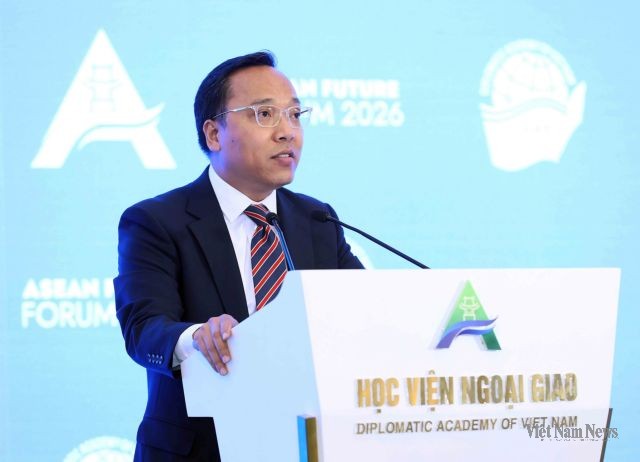 |
| Deputy Minister of Industry and Trade Nguyễn Hoàng Long speaks at the fourth plenary session of the ASEAN Future Forum 2026 (AFF), titled 'Enhancing Energy Security in the New Context'. VNA/VNS Photo |
Vũ Khánh Linh
HÀ NỘI — As one of the world's most dynamic growth centres, ASEAN is facing an urgent challenge of ensuring stable, reliable and affordable energy supplies to support a sustainable future.
Against a backdrop of mounting geopolitical uncertainties and growing energy demand, ASEAN and its partners must accelerate the transition to cleaner energy systems while deepening cooperation to build resilience against external shocks, experts said on Wednesday at the fourth plenary session of the ASEAN Future Forum 2026 (AFF), titled 'Enhancing Energy Security in the New Context'.
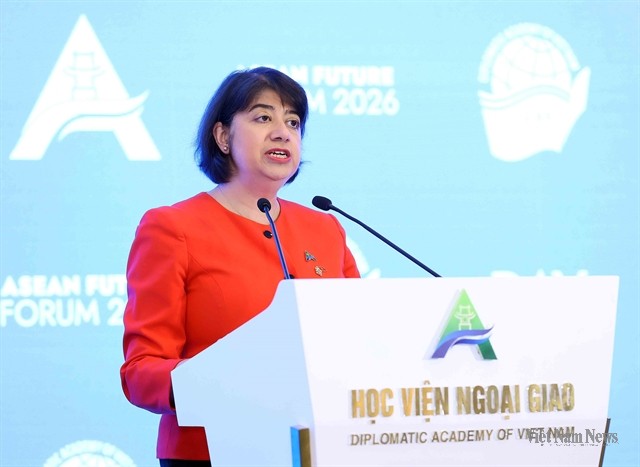 |
| Seema Malhotra, Parliamentary Under-Secretary of State for the Indo-Pacific at the UK Foreign, Commonwealth and Development Office, speaks at the session. VNA/VNS Photo |
Seema Malhotra, Parliamentary Under-Secretary of State for the Indo-Pacific at the UK Foreign, Commonwealth and Development Office, said at the session that recent geopolitical tensions have pushed energy security back to the forefront of the global agenda.
She noted that risks to maritime traffic through the Strait of Hormuz have had a direct impact on oil and gas prices and energy supply chains, placing significant pressure on electricity generation and transportation costs across Southeast Asia.
In this context, she stressed that safeguarding freedom of navigation, upholding the rules-based international order and strengthening international coordination are essential to maintaining both economic stability and regional energy security.
Malhotra said the UK stands ready to share its experience in managing market risks, diversifying energy supplies and developing renewable energy. London will also continue supporting initiatives such as the Just Energy Transition Partnerships in Việt Nam and Indonesia, while helping advance the ASEAN Power Grid.
According to the British official, a connected, sustainable and inclusive energy system will form the foundation for the region's long-term growth and resilience.
Following Malhotra's remarks, Việt Nam's Deputy Minister of Industry and Trade Nguyễn Hoàng Long argued that energy security must now be viewed through a broader lens as the international environment becomes increasingly volatile.
From a regional cooperation perspective, he said ASEAN must strike a balance among three key objectives: ensuring energy security, advancing the energy transition and maintaining affordability for households and businesses.
Long called for stronger implementation of existing mechanisms, such as the ASEAN Plan of Action for Energy Cooperation and the ASEAN Petroleum Security Agreement. He also urged faster infrastructure connectivity through the ASEAN Power Grid, expanded cross-border electricity trade and deeper integration under the Trans-ASEAN Gas Pipeline framework.
The deputy minister identified five priority areas for ASEAN: enhancing the resilience of energy supply chains; diversifying energy sources and transportation routes; promoting a just energy transition; improving energy efficiency; and mobilising greater financial, technological and knowledge resources from international partners to support the region's green transition.
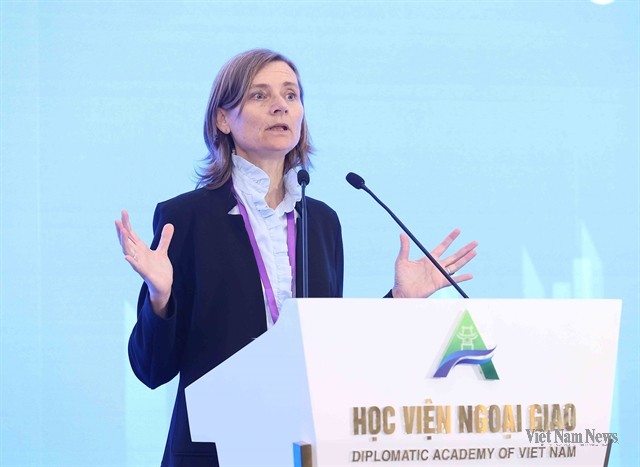 |
| Christiana Hageneder, Programme Director of the GIZ Energy Support Programme, speaks at the event. VNA/VNS Photo |
Looking ahead, GIZ Energy Support Programme Director Christiana Hageneder said ASEAN is following a path similar to that of many other regions by prioritising energy market integration, power system interconnection and electrification across industry, transport and daily life.
These efforts provide the foundation for countries to make more effective use of domestic renewable energy resources, she said.
Hageneder noted that economic growth does not necessarily have to be accompanied by ever-increasing energy consumption. Advances in technology and improvements in energy efficiency can enable countries to reduce energy intensity while sustaining economic growth.
She also highlighted ASEAN's vast renewable energy potential, particularly in wind and solar power. Realising that potential, however, will require substantial investment in transmission infrastructure, energy storage systems and smart-grid technologies, Hageneder said.
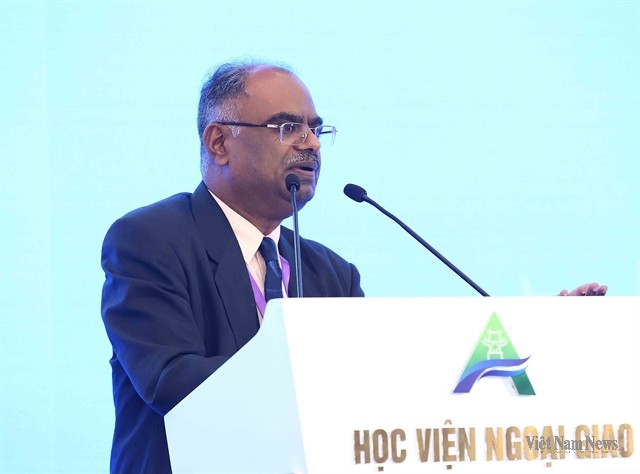 |
| Venkatachalam Anbumozhi, Senior Research Fellow at the ASEAN and East Asia Economic Research Institute. VNA/VNS Photo |
Venkatachalam Anbumozhi, Senior Research Fellow at the ASEAN and East Asia Economic Research Institute, warned that ASEAN's energy demand will continue to rise alongside the region's rapid economic expansion. ASEAN remains heavily dependent on fossil fuels to sustain growth while facing growing carbon emissions.
Anbumozhi said energy security is increasingly becoming a strategic concern as the region grows more reliant on imported energy, particularly coal, natural gas, LPG and LNG. Strategic petroleum reserves in many ASEAN countries remain limited by international standards.
As ASEAN gradually becomes a net importer of natural gas and LNG, strengthening mechanisms to secure energy supplies should become a higher regional priority, he added.
For the longer term, he proposed that ASEAN focus on three key pillars: expanding strategic petroleum reserves, accelerating the ASEAN Power Grid and developing the Trans-ASEAN Gas Pipeline System.
He also called for greater efforts to maximise domestic energy resources, digitalise energy supply chains and adopt a people-centred approach to energy policymaking.
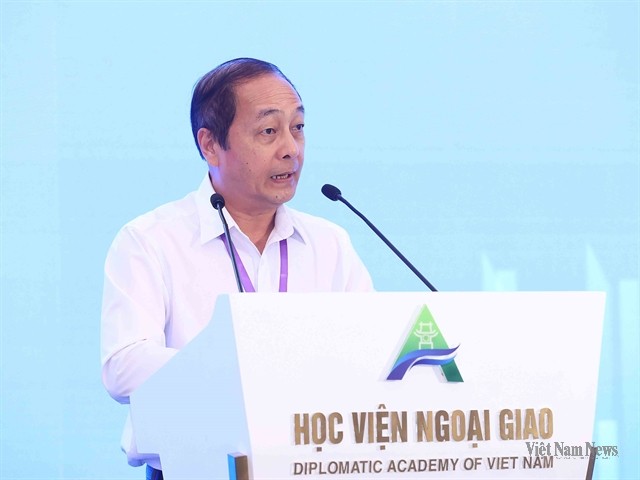 |
| Nguyễn Anh Tuấn, vice president of the Việt Nam Energy Association, speaks at the event. VNA/VNS Photo |
According to Vice President of the Việt Nam Energy Association Nguyễn Anh Tuấn, Việt Nam faces the challenge of balancing rapid economic growth, green transformation and national energy security in an increasingly uncertain global environment.
Although renewable energy has expanded significantly in recent years, the country's energy mix still relies heavily on coal and oil, while dependence on imported energy continues to rise. In 2024 alone, Việt Nam imported nearly 26 million tonnes of oil equivalent, making the economy more vulnerable to global market and supply chain disruptions.
To address these risks, the country is implementing Power Development Plan 8, which requires an estimated US$136 billion in investment by 2030. The plan prioritises a gradual reduction in coal-fired power generation while expanding offshore wind power, renewable energy and energy storage systems.
However, the transition also presents substantial financial challenges and raises concerns about maintaining a stable energy supply for the economy.
Tuấn said Việt Nam is not pursuing an abrupt transition. Instead, it has adopted a roadmap built on three pillars: optimising domestic resources, ensuring the physical security of the energy system and maintaining stable baseload power generation.
He reaffirmed the country's commitment to achieving that balance, while stressing that meeting long-term energy security goals will require significant investment, sustained commitment and, above all, strong international cooperation. — VNS
Politics & Law
 Politics & Law
 Politics & Law
 Politics & Law
 Politics & Law
 Politics & Law
 Politics & Law
 Politics & Law
 Politics & Law
 Politics & Law
 Politics & Law
 Politics & Law
 Politics & Law
 Politics & Law
 Politics & Law