 Politics & Law
Việt Nam, EU and Belgium seek deeper, practical cooperation
1.
|
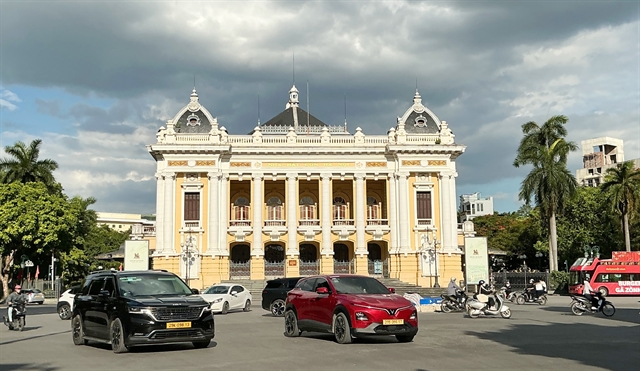
| Hà Nội's Opera House. — VNA/VNS Photo |
HÀ NỘI — Hà Nội will hold its Investment Promotion Conference 2026 on Monday alongside the announcement of the capital city’s master plan with a 100-year vision, marking a major step in implementing its long-term development strategy.
Introducing a new investment landscape
Deputy Director of the Hanoi Department of Finance Lê Trung Hiếu said the conference will review the city’s socio-economic achievements while introducing its development vision and new special mechanisms and policies. The event is expected to showcase Hà Nội’s aspirations and attract stronger cooperation from domestic and international investors.
The conference is expected to draw 1,000–1,200 participants, including representatives of businesses, investment organisations, ministries, international organisations, embassies, financial institutions, investment funds and local authorities.
A highlight of the event will be the launch of a digital investment project management and data platform. The system will digitise investment projects through 3D images, digital maps and field data, enabling investors to access planning information, procedures and policies more easily. Interactive tools are expected to improve transparency and shorten the time needed to identify investment opportunities.
An exhibition on Hà Nội’s master plan will also be held, featuring scale models, maps and 3D mapping technology to help residents and businesses better understand the city’s development orientation.
From capital attraction to quality investment selection
A key feature of Hà Nội's new strategy is a shift from extensive to intensive investment attraction.
According to Hiếu, the city will prioritise strategic investors and projects capable of generating high added value and driving growth, rather than focusing solely on the number of projects or registered capital.
Economic results in the first half of the year have provided momentum for this approach. State budget revenue was estimated at more than VNĐ404 trillion (US$15.3 billion), up 2.9 per cent, while total development investment reached VNĐ256.9 trillion, up 15.2 per cent year-on-year.
The city’s Index of Industrial Production rose 8.8 per cent, while total retail sales of goods and consumer service revenue reached VNĐ516.9 trillion, up 13.3 per cent. Tourist arrivals were estimated at 4.8 million, up 33 per cent from a year earlier.
The digital economy accounted for about 17.34 per cent of Hà Nội’s gross regional domestic product (GRDP), helping the city maintain its leading position nationwide in the digitisation of administrative procedures.
As of early June, Hà Nội had attracted $74.6 billion in foreign direct investment (FDI) through more than 9,250 valid projects. FDI inflows in the first six months were projected at $3.2 billion, surpassing the annual target by 116 per cent, while nearly 16,000 new businesses were established in the first five months, up 34.4 per cent year-on-year.
New growth poles on Hà Nội’s investment map
Under Decision No 2512/QD-UBND, Hà Nội will develop under a “multi-layered, multi-polar and multi-centre” model, with the Red River serving as the ecological and cultural axis linking nine development poles, nine major centres and nine growth corridors.
The master plan targets average GRDP growth of over 11 per cent annually during 2026–2035, with the economy projected to reach about $200 billion by 2035 and $640 billion by 2045.
Key growth zones have been identified to attract investment in strategic sectors. The Hòa Lạc–Sơn Tây–Xuân Mai area will focus on high technology, semiconductors, artificial intelligence and research and development. The Nội Bài–Đông Anh–Sóc Sơn–Mê Linh zone will specialise in aviation logistics and a free trade zone, while the Red River corridor will promote cultural industries, finance, commerce, tourism and creative urban development.
To support these goals, Hà Nội plans to accelerate major infrastructure and institutional projects, including a 1,153-km urban railway network, a free trade zone linked to a northern airport city, the Hòa Lạc science and technology urban area, and studies for a second airport in the Capital Region.
Together with the 2026 Capital Law and new special mechanisms, these initiatives are expected to strengthen Hà Nội's appeal to strategic investors and high-tech projects in the years ahead. —VNA/VNS
Politics & Law
 Politics & Law
 Politics & Law
 Politics & Law
 Politics & Law
 Politics & Law
 Politics & Law
 Politics & Law
 Politics & Law
 Politics & Law
 Politics & Law
 Politics & Law
 Politics & Law
 Politics & Law
 Politics & Law