 Politics & Law

Miss Universe Hong Kong Winner Jen Zhou — On the Road to Puerto Rico
1.
|
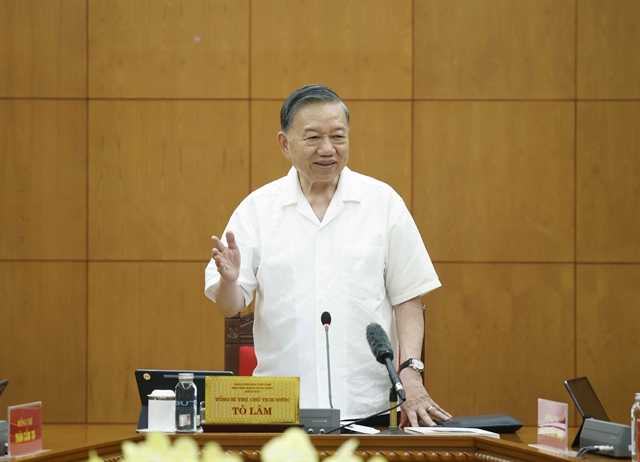
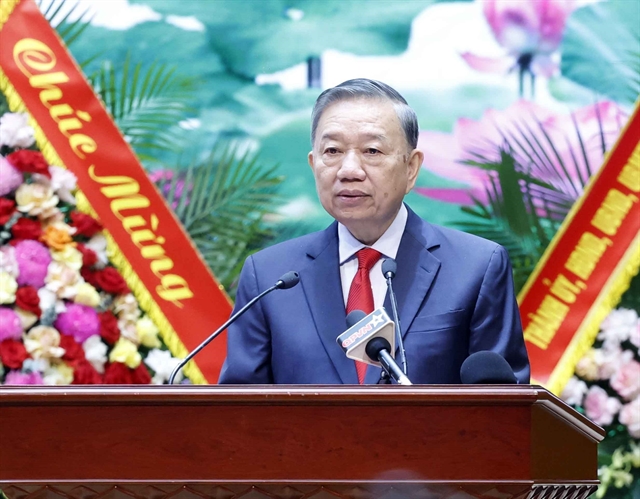
| Party General Secretary and State President Tô Lâm addresses the meeting. VNA/VNS Photo |
HÀ NỘI — Party General Secretary and State President Tô Lâm on Wednesday stressed that Việt Nam’s development vision for 2030–2130 must continue to embody the nation’s aspirations for growth and prosperity, while being grounded in theory and practical experience and long-term strategic thinking.
Chairing a meeting of the permanent members of the Steering Committee responsible for reviewing 100 years of the Communist Party of Việt Nam’s leadership of the Vietnamese revolution (1930–2030), defining leadership orientations for the following century (2030–2130), and assessing 40 years of implementing the Platform for national construction during the transition to socialism, General Secretary and State President Lâm, who heads the committee, highlighted the significance of the task.
He noted that despite limited time, a large workload and demanding political, theoretical and practical requirements, initial draft documents and detailed outlines had been completed, providing an important foundation for the next stages of work.
The leader urged the drafting team to fully incorporate feedback and continue refining the documents in a scientific, objective and responsible manner.
He emphasised that the review of 100 years of Party leadership is a task of exceptional importance and must be firmly grounded in historical truth.
However, he said, the exercise should go beyond recounting events or compiling a chronological record. More importantly, it should identify overarching lessons, key conclusions and enduring patterns that help explain Việt Nam’s revolutionary path, the Party’s leadership role, the strength of the people and national unity, and the country’s future development trajectory.
According to the Party and State leader, the review must generate new insights and theoretical contributions beyond previous assessments. It should clarify how the Party’s theoretical understanding has evolved during the 1930–2030 period, what lessons have been elevated to a higher level of generalisation, what new theoretical issues have emerged, and what strategic orientations should guide the country’s development over the next 100 years.
He stressed the need for a clear articulation of the relationship between the review of 100 years of Party leadership and the assessment of 40 years of implementing the national development platform, stressing that the two processes are closely linked but should neither be treated separately nor merged in a way that obscures their distinct objectives.
The review of the platform’s implementation, he said, should be placed within the broader context of the Party’s century-long leadership, identifying which principles have been validated by practice, which require further refinement and which new issues demand theoretical innovation.
While highlighting achievements, it should candidly address shortcomings, limitations and unresolved challenges, drawing lessons from both successes and failures.
He called for a deeper examination of the fundamental factors that enabled the Party to lead the country to victories amidst difficult circumstances, and for the distillation of lessons with genuine theoretical and strategic value.
Particular emphasis, he said, must be placed on defining a long-term vision and development orientation for the next century.
“The vision for the next 100 years must continue to reflect the aspirations of the Vietnamese nation,” he said.
It should answer major questions about what kind of developed nation Việt Nam seeks to become, what foundations must be preserved, what new growth drivers should be cultivated, what breakthroughs are required, what risks the country must prepare for, and what values should be protected and promoted.
On implementation, the Party and State leader instructed review groups to work proactively and simultaneously rather than sequentially. Each group should establish clear plans, responsibilities, deadlines and coordination mechanisms.
He also stressed the importance of collecting and analysing historical documents, data and testimonies.
The process should draw on the knowledge and experience of researchers, scientists, experts, practitioners, historical witnesses, veteran revolutionaries and generations of leaders and managers, with the combination of archival records, witness accounts, academic research and practical experience, and effective use of domestic and international archives, existing research and specialised reviews, he underscored. — VNA/VNS
Politics & Law
 Politics & Law
 Politics & Law
 Politics & Law
 Politics & Law
 Politics & Law
 Politics & Law
 Politics & Law
 Politics & Law
 Politics & Law
 Politics & Law
 Politics & Law
 Politics & Law
 Politics & Law
 Politics & Law