.jpeg) Opinion
Opinion

Ping An Digital Bank Completes HKMA’s Second GenA.I. Sandbox Cohort
1.
 |
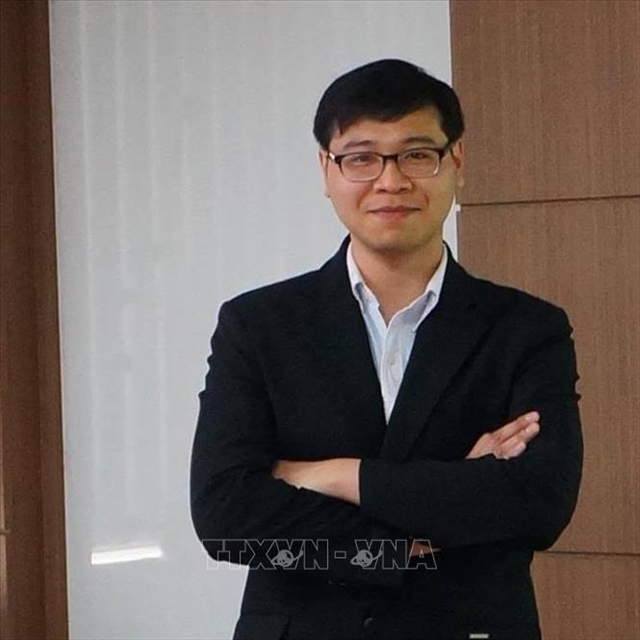
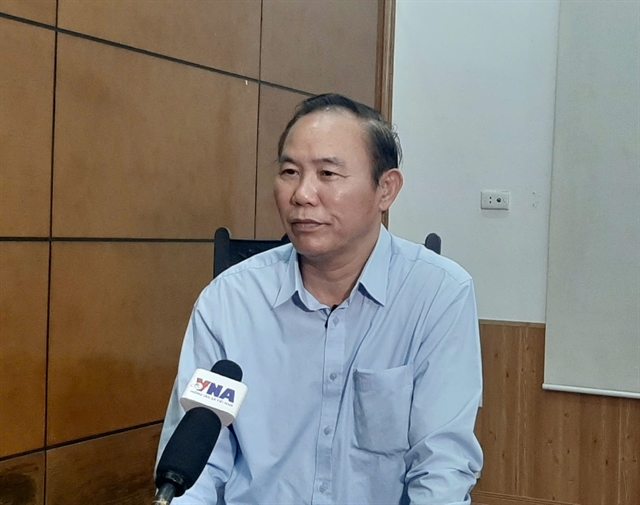
| Professor Nguyễn Văn Nội, director of the Key Laboratory for Advanced Materials for Green Development at Vietnam National University, Hà Nội, (VNU).— VNS Photo Nguyễn Hằng |
Professor Nguyễn Văn Nội, director of VNU’s Key Laboratory for Advanced Materials for Green Development, speaks to Việt Nam News on strategies for sustainable development of national laboratories as VNU opens its new Analysis Research and Education Centre.
What does the opening of the new centre mean for the development of science and technology at VNU in particular and in Việt Nam more broadly?
The centre is a core component of the SATREPS EDFEN technical cooperation project, funded by the Japanese Government through non-refundable ODA sources. The project is led by VNU University of Science, with joint sponsorship from the Japan International Cooperation Agency (JICA) and the Japan Science and Technology Agency (JST). Its aim is to develop advanced technologies for creating rapid, user-friendly analytical devices and to strengthen human resources for food safety and environmental monitoring.
As the project’s manager, I see that each international project contributes to its own set of priorities. In this case, the two most important directions are environmental quality monitoring and food safety. Our work focuses on identifying pollutants in the environment and detecting harmful substances in food. One of the project’s key outcomes is the development of portable, easy-to-use analytical devices capable of producing highly accurate results at low cost. This is crucial. It enables Việt Nam to produce home-grown scientific products with real commercial potential, products that, through close collaboration with Japanese scientists, can compete internationally.
International cooperation is also vital because it exposes Vietnamese scientists to global standards and expertise. It allows our researchers at the university to demonstrate their intellectual capacity on an international stage, and it gives Vietnamese students access to equipment and laboratories of a standard comparable to those in Japan. This, in turn, helps nurture the next generation of leading Vietnamese scientists.
What are the priorities for ensuring the sustainable development of key laboratories and research centres, especially given the challenges surrounding long-term funding?
Sustainability is always the central question. For international cooperation projects, especially those supported by the Japanese Government via JICA and JST, sustainability is a strict requirement. Five years after a project ends, its impact must still be visible, and the centre must not only survive but continue to grow. This means expanding beyond a handful of localities and ensuring that a research hub with eight key laboratories becomes a magnet for collaboration, not only with Government bodies but also with businesses.
Cooperation between the three pillars – managers, scientists and enterprises – is essential. Without this, laboratories and equipment inevitably become outdated. Continuous upgrading is necessary and that requires a stable funding stream. Sustainable funding only comes from meaningful research results that meet real-world needs.
For example, one major component of the project is the development of portable devices capable of rapidly detecting toxic heavy metals such as arsenic, lead and mercury. JICA and JST have emphasised that these devices must be commercialised after the project concludes. That requirement is extremely important. It pushes us beyond producing equipment that is merely 'made in Việt Nam' to equipment that is truly 'created in Việt Nam,' designed with Vietnamese expertise rather than simply assembled.
To achieve sustainability, research centres and laboratories must work closely with industry. Collaboration only succeeds when the laboratory’s capabilities align with a company’s needs. When this happens, companies can place orders with research units, giving scientists the opportunity to turn their ideas into practical technologies. The win-win dynamic is the only way to secure long-term financial resources and ensure the sustainable operation of laboratories and research centres.
How do you assess the current policies of Việt Nam to promote science and technology development?
The Party and the Government have always paid great attention to science and technology. But recently, the commitment has taken a major step forward, particularly with the adoption of Resolution 57 and Resolution 72.
The two resolutions are considered breakthroughs. Resolution 57 focuses on promoting science, technology and innovation, while Resolution 72 addresses the transformative development of higher education. They complement each other. Higher education is not only about teaching, but it is also where most high-value scientific research takes place. International experience shows that universities contribute more than half of society’s annual scientific output.
With the two mutually reinforcing policies, scientists in universities now have more opportunities to flourish. For key laboratories and major research centres, State investment is essential, but researchers themselves must also ensure sustainable development through their initiatives and contributions.
Resolution 57, in particular, introduces a range of progressive and highly innovative regulations. These create a more favourable environment for scientists to conduct research and contribute to national development. I believe these reforms will enable Vietnamese science to take off in the coming years.
At the same time, the role of university researchers is evolving. In the era of the Fourth Industrial Revolution, students can easily access and summarise information through AI tools. This frees academic staff to dedicate more time to scientific research, significantly strengthening the research function of universities compared to the past. — VNS
Opinion
 Opinion
 Opinion
 Opinion
 Opinion
 Opinion
 Opinion
 Opinion
.jfif) Opinion
Opinion
 Opinion
 Opinion
 Opinion
 Opinion
 Opinion
 Opinion