 Opinion
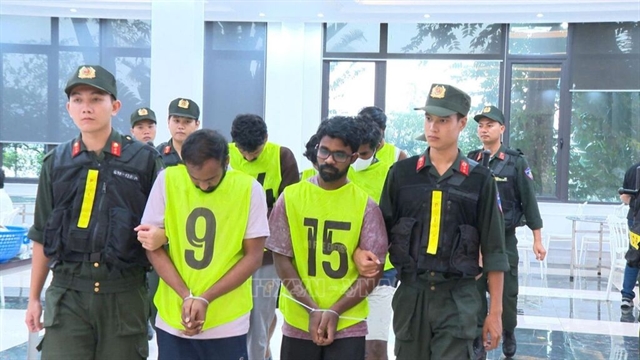
84 individuals investigated for transnational online frauds
1.
The United Nations Convention against Cybercrime, known as the Hanoi Convention, is a landmark international treaty that will strengthen global cooperation in combating cybercrime. On this occasion, specialists share their thoughts with Vietnam News Agency, highlighting the Convention’s significance and Việt Nam’s role in advancing global cooperation against cyber threats, as the country hosts the signing ceremony this weekend.
Xiaohong Li
Director, New York Liaison Office, UN Office on Drugs and Crime (UNODC)
 |
| Xiaohong Li, director of the UN Office on Drugs and Crime (UNODC) New York Liaison Office. |
The rapid development of information and communication technologies in recent years has transformed societies, improved governance and promoted sustainable development.
However, it has also given rise to new forms of transnational crime. According to a recent UNODC report, East Asia and Southeast Asia witnessed a sharp rise in cybercrime from 2021 to 2024, causing estimated losses of more than US$37 billion. This underscores the urgent need for a global response to a global threat.
Against this backdrop, the adoption of the Convention marks a historic milestone, the first non-criminal agreement related to cyberspace governance. It provides a comprehensive, multidisciplinary framework to prevent and combat cybercrime, harmonising national laws on issues such as online fraud and establishing stronger mechanisms for law enforcement cooperation. Once in effect, the document will serve as an effective, comprehensive global legal framework for tackling cybercrime.
Hosting the signing ceremony is a landmark event that demonstrates Việt Nam’s commitment to collective action against global threats. Over the five years of negotiations, Việt Nam acted as a bridge-builder, helping to narrow differences among UN member states.
The UN’s decision to select Hà Nội as the venue sends a strong message of multilateralism in action. It reflects Việt Nam’s growing international prestige as a responsible, constructive and reliable partner within the UN and the global community.
The upcoming Hà Nội ceremony carries even greater significance as Asia is now among the regions most affected by cybercrime. I believe that Việt Nam will continue to play an active role in implementation.
After the Hà Nội event, the UN will continue with the signing process at its headquarters in New York or another designated venue. Member states will then proceed with national ratification within 90 days. The Convention will enter into force once at least 40 countries complete the ratification process.
During this phase, the UNODC will continue to assist member states through legal and strategic advisory support, digital forensics training and international cooperation programmes. It will also serve as secretary for future meetings of the involved parties, with the first session scheduled for January 2026 in Vienna, Austria, to discuss procedural rules and cooperation mechanisms.
Professor Carl Thayer
Australian Defence Force Academy, University of New South Wales
.jpg) |
| Professor Carl Thayer of the Australian Defence Force Academy, University of New South Wales |
Cybercrime is a transnational issue and the Hanoi Convention is the first from the UN in 20 years to deal with transnational crimes, including cybercrime.
Việt Nam ranks 17th in the world for its ability to protect. Therefore, it can play a leadership role and domestically we know that science, technology and innovation have been identified as a major focus.
So Việt Nam faces the same dilemma as others: at some point in the next five years, 90 per cent of the world above six years of age will have access to the internet. Safeguarding costs money, and updating constantly and then reacting immediately, providing the data and getting international cooperation are all important.
Việt Nam is leading the way with that. It is a result of 20 years of multilateralising and diversifying relations, being elected to the UN Security Council twice and getting elected to the UN Human Rights Council twice.
The country is now addressing an issue that faces every country in the world, no matter where you are, developed or underdeveloped. And Việt Nam is positioned within ASEAN to provide a leadership role there.
Dr Jeff Nijsse
Senior lecturer in Software Engineering, RMIT University Vietnam
 |
| Dr Jeff Nijsse, a senior lecturer in Software Engineering at RMIT University Vietnam |
The Hanoi Convention reflects Việt Nam’s rising role in the global fight against cybercrime. The selection of Việt Nam as the host of the signing ceremony shows it is a nation of strategic importance.
The country’s ascent to Tier 1 in the 2024 Global Cybersecurity Index rankings with a near-perfect score also speaks of a rapid maturation of its national cybersecurity framework.
I personally appreciate the forward-looking nature of the Convention, especially the inclusion of virtual assets in the definition of property.
This is a welcome modern provision that directly addresses the role that cryptocurrencies can play in cybercrime, from ransomware payments to money laundering. By codifying this, the Hanoi Convention avoids the legal ambiguity that older treaties might have and equips law enforcement to trace and seize digital currencies derived from criminal activity.
I also would like to underline the document’s requirement for each country to designate a 24/7 contact point for urgent cybercrime investigations, and to make offences extraditable, ensuring criminals cannot evade justice by crossing borders.
Dr Vũ Việt Anh
Researcher, Cambridge Cybercrime Centre
.jpg) |
| Dr Vũ Việt Anh, a researcher at the Cambridge Cybercrime Centre in the UK |
The UN’s selection of Hà Nội as the host city demonstrates the international community's trust in Việt Nam’s efforts and credibility. The event will not only elevate the country’s global standing but also contribute to building a global legal framework, enhancing information sharing and improving cross-border crime-tracing efforts.
In recent years, Việt Nam has made significant progress in developing its cybersecurity legal framework, protecting personal data and strengthening cooperation with international organisations to combat hi-tech crimes. The enactment of the Cybersecurity Law, effective since 2019, is clear evidence of Việt Nam’s strong commitment to global cooperation.
The Hanoi Convention is the first UN treaty on cybercrime in more than 20 years since the signing of the Budapest Convention in 2001. The document is highly symbolic as it positions Việt Nam as a trusted bridge between developed and developing countries, promoting dialogue grounded in equality, respect for sovereignty and mutual benefit.
In a context where nations hold divergent views on cyberspace governance, the consensus reached at this event reflects Việt Nam’s skilful multilateral diplomacy and ability to foster global consensus.
Hosting the event marks Việt Nam’s evolution in international relations, from a participant to an active contributor to the shaping of global norms and rules. It also affirms Hà Nội’s image as a safe and friendly destination capable of organising major international events, while opening up opportunities for cooperation in digital transformation, cybersecurity and the digital economy.
The Hanoi Convention establishes common standards and a comprehensive legal cooperation framework, enabling countries to coordinate investigations, share evidence and prosecute hi-tech crimes more effectively. It also standardises definitions of offences such as unauthorised access, data theft, online fraud, money-laundering, online child exploitation, AI-related crimes and disinformation.
In addition, it details provisions on electronic evidence, cross-border data sharing and privacy protection in transnational investigations — balancing international cooperation with respect for sovereignty and human rights.
Cybercrime is transcending territorial and legal boundaries, exploiting gaps between national frameworks. Over the past two decades, both the volume and sophistication of cybercrime have surged, with traditional crimes such as theft and swindling shifting online, while rapid advances in AI and anonymous digital assets have created new and complex threats.
Việt Nam should prioritise the protection of critical infrastructure, including healthcare, energy, finance and citizen data, while developing incident-response and recovery plans and a long-term cybersecurity strategy that keeps up with technological progress. VNS
Opinion
 Opinion
.jpg) Opinion
Opinion
 Opinion
 Opinion
 Opinion
 Opinion
 Opinion
 Opinion
 Opinion
 Opinion
 Opinion
 Opinion
 Opinion
 Opinion