 Life & Style
Việt Nam steps up labour cooperation with Canada’s Saskatchewan province
1.
|
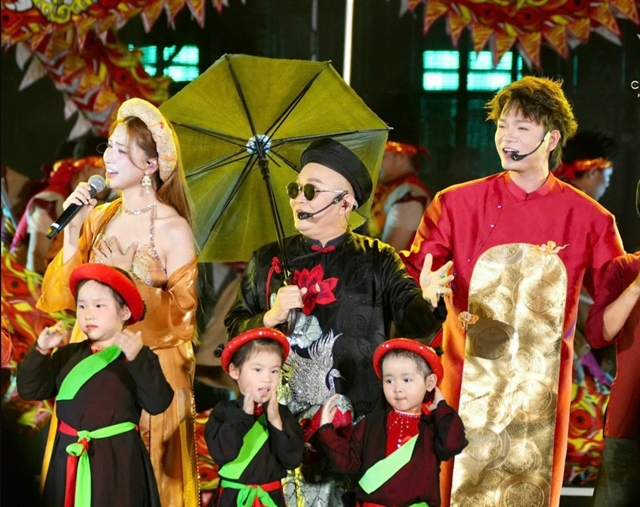
| A traditional performance at V Concert last year in Đông Anh Commune, Hà Nội. Contemporary art performances on stage are also helping to bring Vietnamese culture to the world stage. — Photo courtesy of V Concert |
HÀ NỘI — A shift in mindset from preservation to taking advantage of cultural heritage through the development of creative industries is a key strategy for Việt Nam to position itself on the global map, experts say.
In the context of global competition, culture has become an important endogenous resource and a pillar for rapid and sustainable development.
According to Associate Professor Dr Nguyễn Thị Thu Phương, director of the Việt Nam Institute of Culture, Arts, Sports and Tourism, the soft power of culture does not naturally arise from the "vast treasure trove of heritage".
In fact, Phương said, the treasure trove only exists as a resource and only truly exerts its effect through a "flexible transformation mechanism, leveraging the impetus of diverse transmission channels" such as cultural diplomacy, cultural and creative industries, and strategic communication in the digital space.
To concretise the strategic vision set out in the Poliburo's Resolution 80 on using Vietnamese culture as a catalyst for breakthrough development, the approach has shifted from preservation and safeguarding of heritage to promoting its value.
|
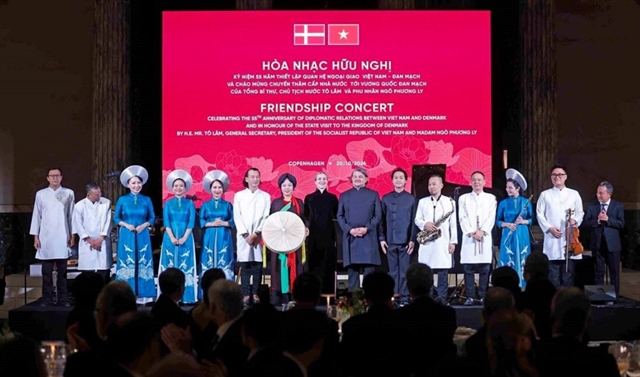
| Vietnamese artists gather for a group photo with foreign friends at a special friendship concert held during the recent State visit to Denmark by General Secretary and President Tô Lâm and his wife. — Photo courtesy of the MoCST |
On the “diplomatic front”, cultural diplomacy is now considered one of the three pillars of modern Vietnamese diplomacy, Phương stated.
Dr Nguyễn Phương Hòa, director of the Department of International Cooperation at the Ministry of Culture, Sports and Tourism (MoCST), highlighted the importance of cultural diplomacy, saying it has become an indispensable component in foreign affairs activities.
In 2025 alone, the MoCST organised seven high-level art programmes to serve the visits of the Party General Secretary and President Tô Lâm to key strategic partners such as Indonesia, Singapore, the US and Russia.
Vietnamese culture presented at global diplomatic events has also sent a strong message about the peaceful and friendly country.
On September 4, the United Nations General Assembly adopted a resolution launching the International Decade for Culture for Sustainable Development (2027-2036) under Việt Nam's initiative, upholding the pivotal role of culture in development.
This has not only marked a step forward for the country in multilateral and cultural diplomacy, but also elevated its standing and promoted its policies on cultural development, the expert said.
Promoting identity
Alongside presenting Vietnamese culture to the world, the strategy of bringing the world to Việt Nam by transforming the country into a destination and common home for global cultures also plays a crucial role in upholding the nation's position.
Events such as the World Cultural Festival in Hà Nội and the Huế Festival, which have attracted the participation of foreign countries, have become focal points for connecting and spreading nations' diverse values and identities around the world.
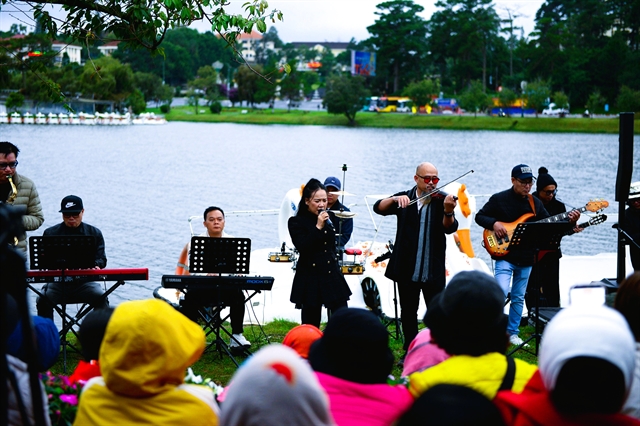
Contemporary art performances on stage are also helping to bring Vietnamese culture to the world stage.
Performances such as À Ố Show, Làng Tôi (My Village), Teh Dar and the Kiều ballet are gradually approaching the rigorous standards of international art, contributing to cultural exchange and export.
Professor Từ Thị Loan, president of the Việt Nam Association for Community Cultural Development, said that as technology is changing how people create, access and disseminate cultural values, Việt Nam is successfully using culture as a language for dialogue with friends around the world.
She added that culture is becoming a bridge of understanding, trust and cooperation between nations.
"Cultural, historical, artistic and national spirit have become catalysts for Việt Nam to conquer the world and position itself in the international community," Loan said.
However, the expert warned that "leveraging soft power is a long, persistent and unwavering journey." Citing the Republic of Korea as an example, she said that it took nearly three decades to spread K-pop and cinema globally through the government strategy of recognising culture as a key economic sector.
"For culture to truly be a constructive resource, Việt Nam needs to fully carry out strategic solutions, such as perfecting the legal framework to promote the cultural industry as cited in the draft Law on the Development of the Cultural Industry currently being submitted to the National Assembly for consideration, improving the effectiveness of cultural diplomacy activities and promoting the image of Vietnamese culture and people abroad," she said.
“Building and promoting Việt Nam's soft power of culture should not be solely the responsibility of the cultural sector, but a comprehensive national strategy to uphold the courage, intellect and stature of the nation in the new era.
"When culture becomes a national strength, Việt Nam will have a more solid foundation for rapid and sustainable development, upholding its position and positive influence in the region and the world." — VNS
Life & Style
 Life & Style
 Life & Style
 Life & Style
 Life & Style
 Life & Style
 Life & Style
 Life & Style
 Life & Style
 Life & Style
 Life & Style
 Life & Style
 Life & Style
 Life & Style