 Life & Style

LANDMARK Launches ‘Destination CENTRAL’: A District-Wide Invitation to Explore the Dynamism, Luxury, and Soul of Central
1.
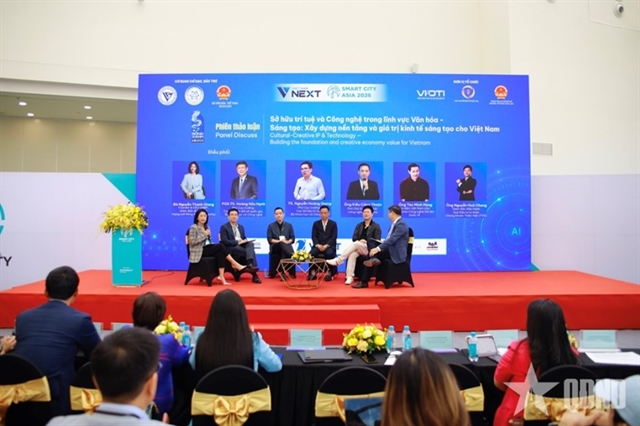 |
| Experts discuss at the 'Digital Technology and AI in Shaping the Creative Economy – From Cultural Resources to National Competitiveness' Forum in Hà Nội. — Photo qdnd.vn |
HÀ NỘI — Culture is not merely about preservative values but also a resource for generating cultural intellectual property (IP), products, brands, and new business models, experts have said at a forum held in Hà Nội.Culture is not just about preserving resources, but is also a way to generate intellectual property (IP), products, brands and new business models, experts said at a forum held on Thursday in Hà Nội.
Themed 'Digital Technology and AI in Shaping the Creative Economy: From Cultural Resources to National Competitiveness', the forum took place within the framework of the Vietnam NEXT and Smart City Asia 2026 programme.
The initiative is organised by the Vietnam Innovation and Digital Transformation Institute (VIDTI) in collaboration with the National Agency for Digital Transformation, under the Ministry of Science and Technology and the Việt Nam Union of Science and Technology Associations.
According to participants at the event, cultural resources can significantly accelerate the creative economy and enhance Việt Nam's soft power when combined with digital technology, AI and IP frameworks.
Experts at the forum highlighted a new approach to preserving and promoting cultural resources, in which digital technology and AI are regarded as key tools for transforming these resources into creative assets and sustainable economic value.
VIDTI Director Nguyễn Thị Bích Lan said that Việt Nam possesses vast resources of culture, heritage, indigenous knowledge and people's creativity.
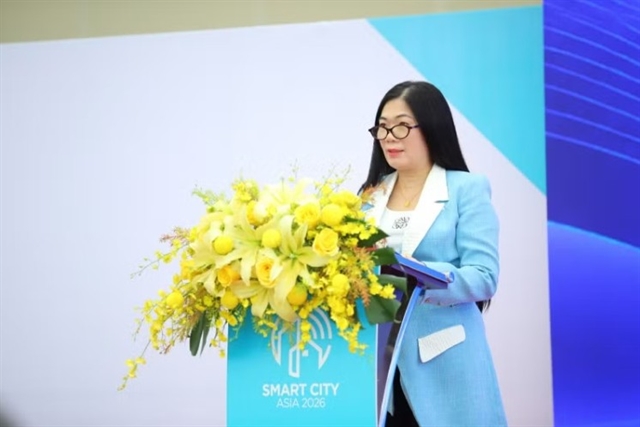 |
| Director of the VIDTI, Nguyễn Thị Bích Lan speaks at the forum. — VNA/VNS Photo |
Amid the rapid development of digital technology and AI, new tools are creating entirely different ways to identify, preserve, create, own and bring culture to market, she said.
According to Lan, the key challenge is how technology and AI can transform cultural resources into IP and IP into creative products, while also turning those products into economic value, brand strength and competitive advantage for Việt Nam.
Experts emphasised the distinction between technological IP and cultural IP.
While technological IP typically derives its advantage from technical solutions, cultural IP generates value through identity, stories and the ability to forge emotional connections with the public.
If properly developed and managed, a cultural asset can be leveraged across various sectors, ranging from entertainment and cinema to consumer goods and tourism.
Lawyer and IPCOM Vietnam Director Trần Thị Tám said that a single figure, story or element of folklore can be developed into a wide range of products across various platforms, such as film, music, games and destination branding.
When strategically developed, a cultural asset should not only be preserved, but also has the potential to create new experiences, reach new audiences and integrate into the creative economy's value chain, according to Tám.
However, for cultural IP to become a true economic asset, projects should develop an IP strategy from the start. They must clearly define the rights of holders, exploitation rights and mechanisms for cooperation and benefit-sharing, he said.
In particular, the exploitation of traditional materials must ensure respect for rights, acknowledgement of contributions and fair benefit-sharing with the communities that preserve the heritage, Tám added.
Deputy Director of the National Department of Digital Transformation and Associate Professor Hoàng Hữu Hạnh said 2026 is a pivotal year, as Resolution 57-NQ/TW identifies science, technology, innovation and national digital transformation as key strategic breakthroughs.
Hạnh stressed the need to integrate technology with culture and creativity, thus transforming cultural resources into a source of national competitiveness.
"Digital transformation must be measured by tangible benefits to citizens and businesses, rather than merely by the number of systems. Data and AI initiatives must align with institutional frameworks, security measures and clear accountability," Hạnh said.
"Innovation also requires collaboration between Government, businesses, research institutes, educational institutions and international partners."
Insights shared by experts at the forum show that digital transformation in the cultural sector goes beyond the mere digitisation of artefacts, documents or data.
Rather, it is a process of establishing an ecosystem where cultural value can be creatively leveraged to generate products, brands and intellectual property, allowing culture to contribute to economic development and the achievement of double-digit growth targets set by the Party Central Committee.
The Resolution of the 14th Party Congress, alongside the strategic orientations outlined in Politburo Resolutions 57-NQ/TW and 80-NQ/TW, define several requirements.
These include igniting the aspiration for national development while harnessing cultural values and the strength of the Vietnamese people; accelerating innovation and the application of science and technology to achieve breakthroughs in productivity, quality and competitiveness; and fostering a cultural ecosystem integrated with the digital environment that promotes innovation and maximises the role of the business community.
The convergence of culture, technology and creativity is taking place globally with unprecedented momentum. Technology serves as both a tool and an environment, paving the way for Vietnamese culture to reach the world more rapidly.
Digital technology and AI are creating opportunities to realise this goal. A traditional story, character or element can be transformed into films, music, digital content, games, destination brands or consumer products.
This represents a crucial pathway for developing cultural IP and enabling Vietnamese culture to integrate more deeply into the creative economy and the international market. — VNS
Life & Style
 Life & Style
 Life & Style
 Life & Style
 Life & Style
 Life & Style
 Life & Style
 Life & Style
 Life & Style
 Life & Style
 Life & Style
 Life & Style
 Life & Style
 Life & Style
 Life & Style