 Life & Style
Int’l cooperation helps address nuclear power workforce shortages
1.
|
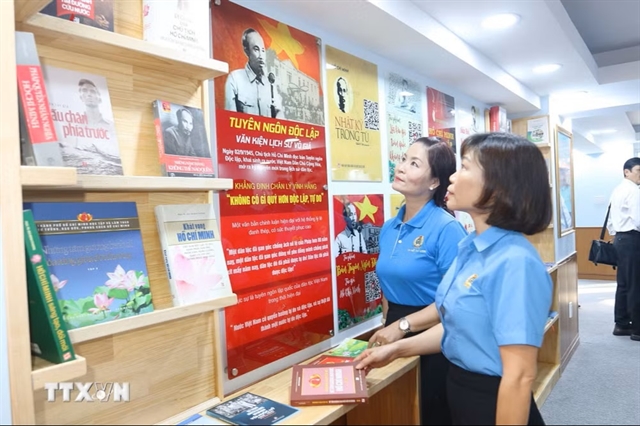
| Visitors at a Hồ Chí Minh cultural space. — VNA/VNS Photo |
HCM CITY — Building cultural spaces dedicated to President Hồ Chí Minh is no longer limited to setting up exhibition models, but is being linked with HCM City’s implementation of Politburo Directive No. 07-CT/TW on promoting the study and practice of the late leader’s thought, ethics, methodology and style in the new period of development.
The focus is on translating his thoughts and ethical values into standards of conduct in public service and daily life, while promoting them more widely in the digital environment.
Dr Nguyễn Thị Thanh Huyền, a lecturer at the Ho Chi Minh City Cadre Academy, said a Hồ Chí Minh cultural space is not simply an exhibition model. Rather, it is a cultural environment designed to ensure that his ideological, ethical and stylistic values are regularly present in social life, serving as a foundation for shaping the awareness and behaviour of officials, Party members and the people.
The transformation of awareness into action through experience, practice and education is a key distinction from traditional forms of communication and dissemination, she said.
Directive 07-CT/TW states that the study and practice of President Hồ Chí Minh’s thought, ethics, methodology and style should be linked with building a culture of leadership, a culture of public service and a sense of responsibility in carrying out official duties, as well as standards of conduct among officials and Party members.
At the end of August, the municipal Party Committee issued a directive on continuing to build and promote the effectiveness of such cultural spaces in the new period of development. The move aims to make them a genuine spiritual foundation, driver of development and distinctive feature of the southern metropolis in the new era.
Huyền said that alongside developing physical spaces, the city needs to build a “space of values”. This is at the heart of efforts to establish ethical standards, cultural norms of behaviour, working styles and lifestyles among officials, Party members and the people.
A cultural space can only truly live up to its purpose when these standards are translated into activities of each agency, organisation and residential community, she said.
After three years of implementation, more than 7,840 models, competitions, programmes, projects and cultural institutions associated with such spaces have been established across the city. More than 3,560 libraries, book collections, reading spaces and thematic facilities devoted to the founder of modern Việt Nam have also been developed, along with more than 3,900 cultural establishments incorporating content on studying and following his example.
President Hồ Chí Minh’s ideological, ethical and stylistic values have gradually become more deeply embedded in social life. The models established have taken diverse forms, including reading rooms, thematic libraries, areas displaying photographs and artefacts, learning corners devoted to the late leader, digital exhibitions, QR-code information systems, digital museums, 3D technology applications and multimedia communications products.
Dr Bùi Thị Ngọc Trang, former Deputy Director of the Ho Chi Minh City Cadre Academy, stressed that the municipal Party Committee’s directive also calls for greater development of the spaces in the digital environment, identifying this as an important means of broadening access.
Particular attention is being paid to building a digital culture based on ethical standards and civility online, she said. The digital space may be highly modern, but the way people behave and communicate in it should still be rooted in fundamental values – showing care and respect for others, acting honestly and responsibly, and living for the benefit of the community.
Hồng Kim Ngọc, head of the culture and arts division under the municipal Party Committee’s Commission for Publicity, noted that amid digital transformation, the spaces are no longer confined to physical locations but are expanding online through websites, social media platforms, digital databases, digital museums, QR codes and multimedia communications products.
This is creating opportunities for such values to reach a wider range of people, particularly younger generations. — VNA/VNS
Life & Style
 Life & Style
 Life & Style
 Life & Style
 Life & Style
 Life & Style
 Life & Style
 Life & Style
 Life & Style
.jpg) Life & Style
Life & Style
 Life & Style
 Life & Style
 Life & Style
 Life & Style
 Life & Style