 Life & Style
European higher education week opens new opportunities
1.
|
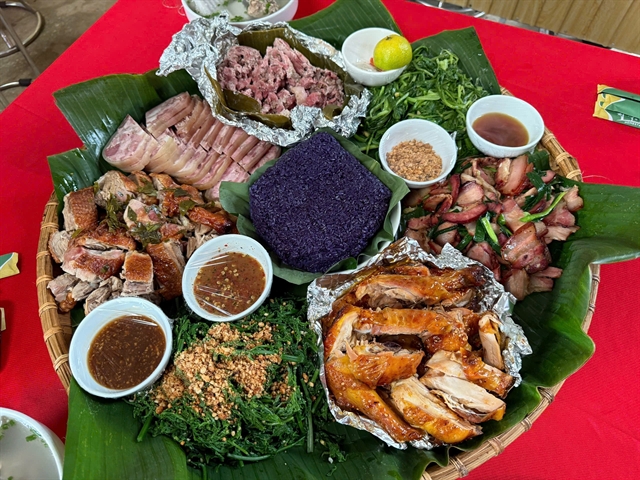
| Vietnamese cuisine is a vibrant, health-conscious cuisine celebrated for its balance of five fundamental flavours. — VNS Photo Thanh Hà |
Thanh Hà
Cuisine could be a key pillar to help promote Việt Nam's tourism industry, as the country is home to a rich culinary heritage that blends indigenous traditions with a philosophy of balance and harmony.
Because gastronomy is central to cultural identity, the United Nations World Tourism Organisation (UN Tourism) has promoted food tourism as a key driver of cultural heritage and local economic growth.
According to UN Tourism, an average of 25 per cent of a tourist's total travel budget is dedicated to food and beverage expenses. In higher-cost destinations, this allocation can rise to 68.5 per cent of daily travel expenditures.
More than 50 per cent of tourists chose their destination based on culinary experience, while 81 per cent of international visitors express their excitement to try out local cuisine on their first visit to a new location.
These numbers show that heavy investment in culinary tourism can help promote national culture and directly boost spending, extend lengths of stay and increase return rates for international visitors.

|
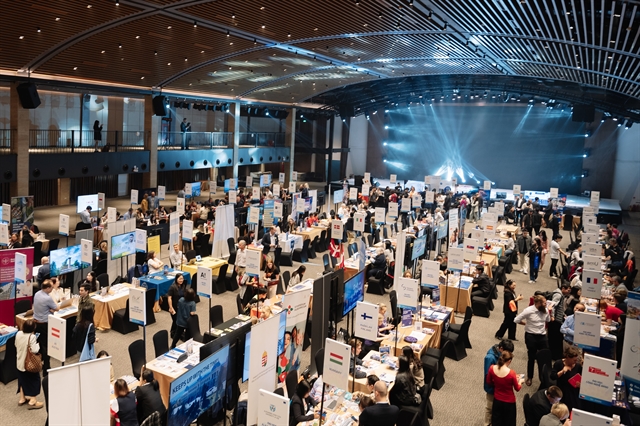
| Participants at a recent seminar on the role of food culture in boosting tourism development. — VNA/VNS Photo |
The Ministry of Culture, Sports and Tourism is therefore looking for ways to promote culinary tourism in Việt Nam, highlighting the cultural aspects of the nation's cuisine, rather than simply marketing the food itself.
This move is in line with the goals of the Politburo's Resolution 80 on promoting cultural values, strengthening international integration, celebrating national identity and leveraging cultural heritage to enhance the country's soft power.
Speaking at a recent Việt Nam Michelin Guide selection announcement, Tananya Nimasdavut, vice president of Michelin Lifestyle for East Asia, Oceania and the Middle East, said that cuisine offers memorable experiences and also drives tourism, fosters cultural connections and inspires the exploration of destinations around the world.
She noted that the value of cuisine lies in its ability to promote a destination's image, and is directly reflected in visitors' spending behaviour.
|
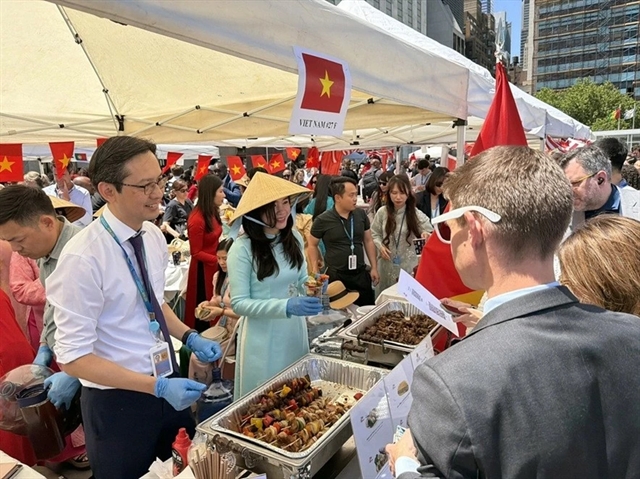
| Vietnamese food is introduced to international friends at the UN International Bazaar in New York. — VNA/VNS Photo |
After thousands of years of history, Việt Nam's rich and diverse culinary landscape is a distillation of the cultures of its 54 ethnic groups, encompassing everything from royal and traditional cuisine to street food, culinary craft villages and local specialties.
According to experts, this diverse food culture represents a unique asset for tourism development.
Deputy Director of the Việt Nam National Authority of Tourism Nguyễn Thị Hoa Mai said that countries with world-renowned cuisines, such as Japan, Thailand, South Korea, China and Italy, have all developed comprehensive national strategies to promote food tourism.
Rather than simply marketing their signature dishes, they present their culinary traditions as a reflection of their history, customs and cultural identity, helping to build a distinctive national brand and elevate their destinations on the global culinary map.
“Each dish in Việt Nam has its own historic and cultural values and indigenous knowledge, which can be shared through fascinating stories that would greatly impress our visitors," Mai said.
At the seminar, experts agreed that tourists increasingly favour authentic, personalised experiences rich in cultural identity. Amid this trend, culinary tourism can definitely help boost destinations' competitiveness and attractiveness.
|
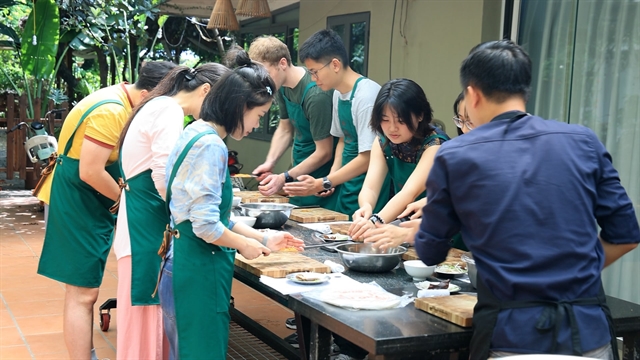
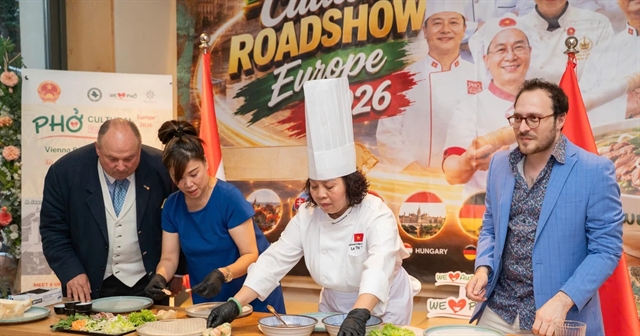
| A Vietnamese cooking show, part of the the Phở Cultural Roadshow Europe 2026 in March. |
Hoàng Thị Bình, deputy director of the Việt Nam Institute of Culture, Arts, Sports and Tourism, told Việt Nam News that Việt Nam has every reason to be proud of its diverse culinary culture, a distinctive ecosystem that holds special potential for tourism development.
"In recent years, our culinary scene has gained global recognition as numerous restaurants have been selected by the Michelin Guide, and many cities have developed culinary tours, food festivals and experiential products deeply rooted in local culture. These achievements demonstrate that cuisine is gradually becoming a competitive advantage for Việt Nam's tourism sector," she said.
Bình noted that major policies are being carried out to develop science and technology and the private sector, alongside strategies to expand the tourism and cultural industries.
Cuisine should be considered as a cultural resource, a creative asset and a driver of economic growth, she added.
According to Nguyễn Thị Lan Hương from the institute's Tourism Research Department, the sector needs to shift its mindset from just selling food to 'building experiences'.
Tourists don't simply consume food, but actively participate in food preparation, exploring craft villages and traditional markets and interacting with artisans, Hương said.
This approach could be an effective strategy to enhance visitors' experiences, preserve culinary heritage, create sustainable livelihoods for local communities and boost the competitiveness of Việt Nam's tourism sector.
At the seminar, delegates also pointed out many problems that are hampering the development of Việt Nam's culinary tourism.
They also suggested solutions, such as improving the connectivity between authorities and firms; creating distinctive tourism products deeply rooted in national identity; stepping up workforce training; and building a national culinary database and map.
|
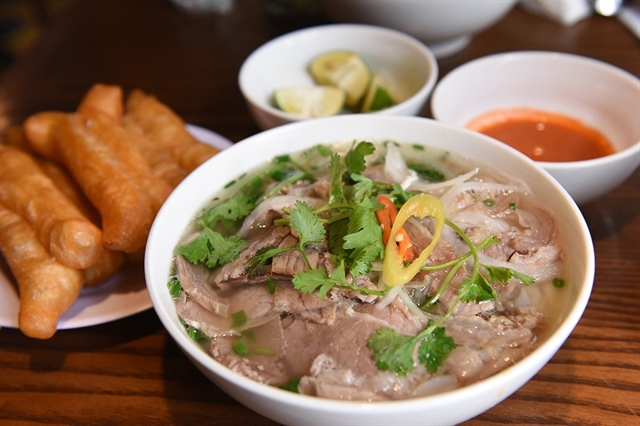
| Phở, a signature dish from Việt Nam, has become popular among international diners. — Photo vietnamtourism.gov.vn |
Mai said that, drawing on international experience and global tourism trends, the national tourism authority has advised the Ministry of Culture, Sports and Tourism to build a project proposal to promote Vietnamese tourism and cuisine internationally over the next five years.
Cuisine should be placed at the heart of Việt Nam's tourism branding strategy, aiming to enhance the competitiveness of the country's destinations.
The authority outlined a system of objectives and specific task groups aimed at positioning Việt Nam among the top five most attractive culinary destinations in Asia.
It also proposed several solutions, such as building a national brand for culinary tourism; developing standardised culinary streets; refining quality standards; expanding the network of Vietnamese restaurants abroad; intensifying international promotion; developing Halal tourism; and fostering collaboration among localities and businesses in product development. — VNS
Life & Style
 Life & Style
 Life & Style
 Life & Style
 Life & Style
 Life & Style
 Life & Style
 Life & Style
 Life & Style
 Life & Style
 Life & Style
 Life & Style
 Life & Style
 Life & Style
 Life & Style