 Life & Style

Việt Nam, Laos firms sign deals on property, smart farming projects
1.
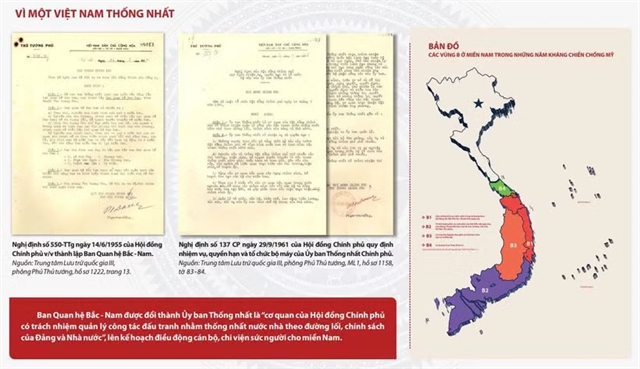 |
| The Thanh Xuân Gửi Lại (Youth Left Behind) exhibition marks the 79th anniversary of War Invalids and Martyrs' Day. — Photo vietnamplus.vn |
HÀ NỘI — Archival documents, photographs and personal keepsakes tracing the lives of Vietnamese officials who served in southern Việt Nam during the American War will go on display in Hà Nội this week in an exhibition marking the 79th anniversary of War Invalids and Martyrs' Day.
Titled Thanh Xuân Gửi Lại (Youth Left Behind), the exhibition will open on July 17 at the headquarters of the State Records and Archives Department of Việt Nam under the Ministry of Home Affairs.
The exhibits are selected from a rich collection of over 72,000 archival records and personal keepsakes of B-bound cadres – officials and personnel sent from northern Việt Nam to work and serve in the south during the war – preserved at the National Archives Centre III and donated by veterans and their families.
A highlight of the exhibition is the Ký Ức Đi B (Memories of B-bound Cadres) section, which features more than 100 original archival documents, photographs and treasured keepsakes. The volunteer applications, diaries, family letters, photographs and personal belongings carried by or left behind by B-bound cadres before their departure will take visitors back to a defining chapter in the nation's history.
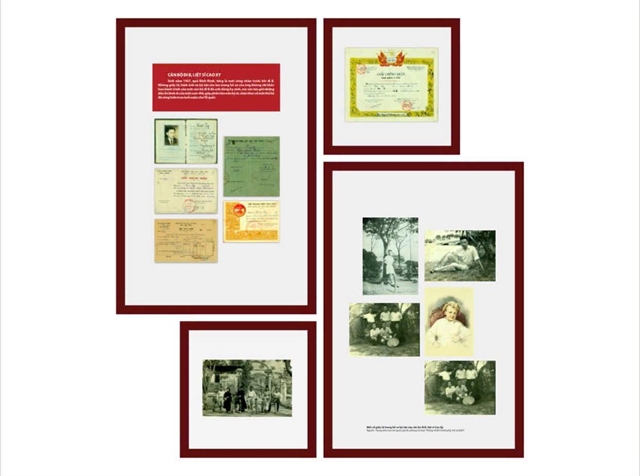 |
| Some of the original archival documents, photographs and treasured keepsakes exhibited at the event. — Photo courtesy of the State Records and Archives Department of Việt Nam |
The exhibition also includes selected photographs and archival materials provided by the Vietnam Centre and Archive at Texas Tech University in the US, offering a broader perspective on this chapter of Vietnamese history.
Visitors will be able to explore the records and keepsakes of many prominent figures who have left an enduring mark on Việt Nam's cultural and artistic history, including poet Nguyễn Khoa Điềm, writer Nguyễn Quang Sáng, songwriter Phan Huỳnh Điểu and martyred doctor Đặng Thùy Trâm.
Through these materials, the exhibition offers a vivid portrayal of the contributions, sacrifices and revolutionary ideals of a generation that devoted its youth to the nation's cause.
Youth Left Behind also highlights the initial achievements of the 500-day campaign to locate, recover and identify the remains of fallen soldiers whose identities remain unknown.
Beyond commemorating their contributions, the exhibition highlights the role of archival preservation in safeguarding historical memory. It also showcases efforts to identify, preserve and return personal records and keepsakes to veterans and their relatives, helping reconnect families with pieces of their shared history.
In addition to the exhibition, visitors will be able to search the records of B-bound cadres preserved at the National Archives Centre III through an electronic database. The initiative is intended to facilitate access to archival materials for the families of fallen soldiers and researchers, supporting the verification of entitlements and benefit policies, the search for information about relatives, and historical research.
This service also underscores the role of digital transformation in unlocking the value of archival records for public benefit, an effort in which the National Archives Centre has taken a leading role. The initiative is in line with the Politburo resolution that calls for breakthroughs in science and technology, innovation and national digital transformation.
According to the National Archives Centre III, many families and descendants of B-bound cadres remain unaware that the archival records and personal keepsakes of their loved ones are still being carefully preserved at the centre. Today, this collection has become a unique historical legacy, serving as tangible testimony to an extraordinary chapter in the nation's history.
Youth Left Behind is open to the public until September 2. — VNS
Life & Style
 Life & Style
 Life & Style
 Life & Style
 Life & Style
 Life & Style
 Life & Style
 Life & Style
 Life & Style
 Life & Style
 Life & Style
 Life & Style
 Life & Style
 Life & Style
 Life & Style