 Life & Style
Sơn La holds second coffee festival, targeting stronger businesses in future
1.
|
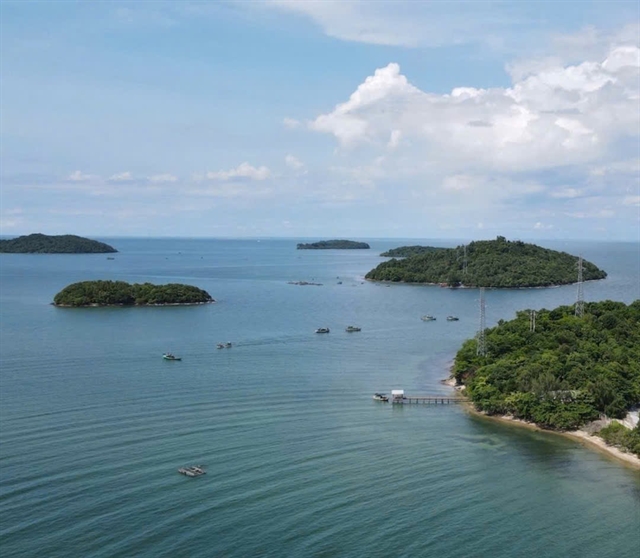
| Đông Hồ Lagoon in Hà Tiên Ward, An Giang Province. — Photo dulichhatien.com.vn |
AN GIANG — Hà Tiên Ward, a key border area in An Giang Province and the Mekong Delta, is positioning itself as a pioneer in digital transformation, with ambitions to become a smart tourism and trade hub in Việt Nam’s southwest region.
Leveraging its natural landscapes, historical and cultural heritage, and strategic location as a border gateway, Hà Tiên is developing a comprehensive trade and tourism promotion ecosystem aligned with national and provincial digital transformation strategies.
Nguyễn Thị Mộng Quyên, director of the Hà Tiên Trade and Tourism Promotion Centre, said the locality is implementing the Politburo's Resolution 57-NQ/TW on breakthroughs in science, technology, innovation and digital transformation by gradually digitising its tourism sector.
“We are building a comprehensive digital ecosystem to promote destinations, manage data and enhance visitor experiences, contributing to Hà Tiên’s goal of becoming a smart, modern and sustainable tourism centre in the Mekong Delta and beyond,” she said.
At the core of this effort is the integration of tourism data into digital platforms, allowing visitors to easily access information on destinations, festivals, cuisine and accommodation. Technologies such as virtual reality and augmented reality enable users to explore well-known sites including Mũi Nai Beach, Thạch Động Cave, Đông Hồ Lagoon, the Memorial House and the Mạc Cửu historical and cultural complex.
Traditional festivals, including the Tao Đàn Chiêu Anh Các festival, are also being promoted through digital channels, while QR codes installed at historical sites provide instant access to information via smartphones. A multilingual digital tourism map and library further support international visitors in navigating around the destination.
The ecosystem also connects businesses and tourists through online booking platforms, electronic payments and digital tour services, offering greater convenience and transparency. For local businesses, this reduces marketing costs while enabling data collection to better tailor products and services.
Beyond improving visitor experience, the system allows authorities to manage tourism more effectively, with tools for data analysis, forecasting and transparent oversight. This is expected to strengthen Hà Tiên’s competitiveness and enhance its presence on Việt Nam’s digital tourism map.
|
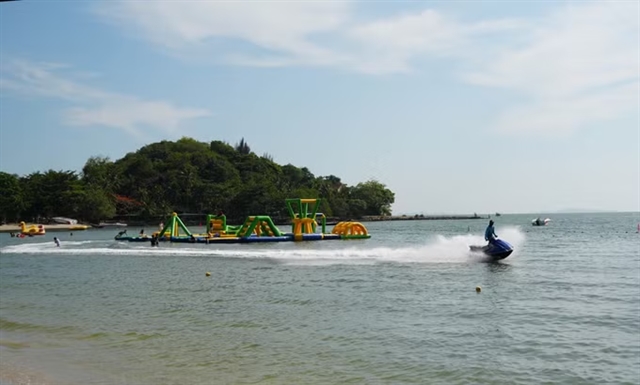
| Jet skis are available for tourists on the sea off Hà Tiên. — VNA/VNS Photo |
Phạm Quý Hùng, CEO of GBi Ecoz Enterprise Ecosystem Co., Ltd., noted that many localities have focused on building isolated digital systems that fail to connect with one another, limiting overall efficiency.
“In Hà Tiên, the goal is not just to build a standalone platform, but to create a standardised ecosystem that connects all stakeholders, from promotion agencies to individual tourism businesses, into a unified system,” he said.
According to Hùng, this interconnected approach reflects the core of the digital economy, where all components operate on a shared platform to maximise efficiency. The Hà Tiên system can be installed on mobile devices like a banking application, enabling seamless interaction for users.
Tourists can access comprehensive information on destinations, accommodation and dining options, with support for up to 150 languages. This allows international visitors to easily search for information, book services and make purchases without the need for intermediaries.
Mộng Quyên added that more than 90 per cent of administrative documents in Hà Tiên have been digitised, with digital signatures widely adopted. At major tourist sites such as Mũi Nai and Thạch Động, ticketing systems have been fully digitised, helping to improve visitor management while promoting a more civilised tourism culture through QR-based access.
The locality is also introducing electronic tour guide systems to enrich visitors’ understanding of Hà Tiên’s cultural heritage. With the support of search engine optimisation and artificial intelligence, the keyword 'Hà Tiên Tourism' now provides more reliable information online, helping strengthen the destination’s digital presence.
Hùng added that the development of the digital ecosystem has helped address previously fragmented and sometimes negative information about Hà Tiên online. By creating a connected community of tourism businesses, the system forms a continuous value chain while providing official, consistent information to visitors.
Looking ahead, Hà Tiên is expected to play a central role in An Giang’s development strategy. Secretary of the ward’s Party Committee Nguyễn Lưu Trung said that by 2030, Hà Tiên, along with Rạch Giá, Long Xuyên and Châu Đốc will form a key development quadrilateral focused on logistics, cultural tourism, marine economy and border trade.
“Hà Tiên is concentrating resources to develop into a major centre for maritime economy, tourism and border trade in the southwest region, contributing to regional connectivity and international economic integration,” Trung said.
With its digital ecosystem taking shape, Hà Tiên is not only enhancing its tourism appeal, but also laying the foundation for broader socio-economic growth, reinforcing its role as a dynamic gateway on Việt Nam’s southwestern frontier. — VNS
Life & Style
 Life & Style
 Life & Style
 Life & Style
 Life & Style
 Life & Style
 Life & Style
 Life & Style
 Life & Style
 Life & Style
 Life & Style
 Life & Style
 Life & Style
 Life & Style
 Life & Style