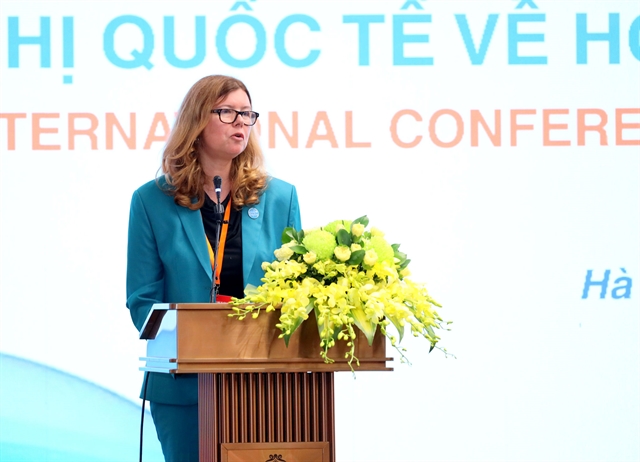
 Life & Style

Vietnamese crime gang busted in Scotland
1.
Dr Mattias Larsson*
The current Ebola outbreak in the Democratic Republic of the Congo and Uganda has again raised international concern about the risk of highly dangerous infectious diseases spreading across borders.
The World Health Organization (WHO) has reported more than 500 suspected cases and 130 deaths linked to the outbreak, which is caused by Bundibugyo virus disease, a rare form of Ebola for which there are currently no approved vaccines or specific therapeutics. Although WHO has not classified the outbreak as a pandemic emergency, neighbouring countries remain at high risk for further spread.
Ebola virus disease remains one of the world’s most lethal infectious diseases. The largest outbreak in history occurred in West Africa between 2013 and 2016, primarily affecting Guinea, Liberia and Sierra Leone. The epidemic caused enormous human suffering and major socioeconomic disruption. By the end of the outbreak, 28,616 infections and 11,310 deaths had been recorded, corresponding to a case fatality rate of approximately 40 per cent.
The first cases were identified in Guinea in late 2013. In March 2014, healthcare workers and Médecins Sans Frontières (Doctors Without Borders) alerted authorities about a mysterious and rapidly spreading disease. Liberia confirmed its first Ebola cases later that month, while Sierra Leone detected cases in May 2014. The epidemic escalated rapidly, particularly in urban areas.
In Liberia, the virus quickly reached the capital Monrovia. Images of people dying in the streets were broadcast worldwide, reflecting the collapse of the healthcare system. Fear among healthcare workers was widespread, and there were very few ambulances or isolation facilities available.
During August and September 2014, WHO repeatedly warned about the seriousness of the situation and emphasised that the greatest need was not primarily financial support, but international healthcare personnel willing to work in affected areas.
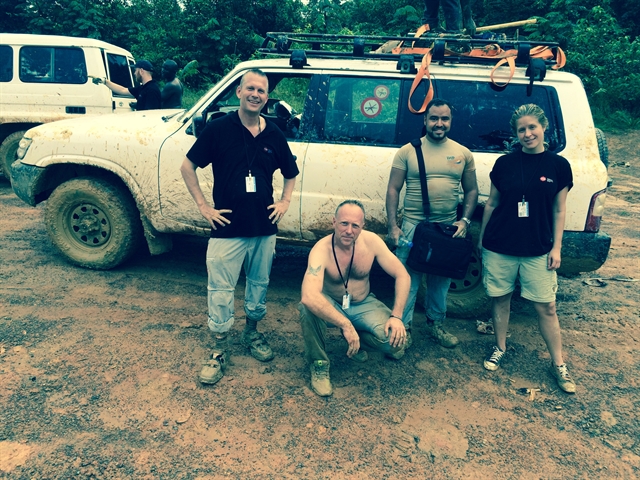 |
| Dr Mattias Larsson with Swedish, Cuban and Liberian healthcare workers during front line Ebola response efforts in Monrovia. — Photo courtesy of Dr Mattias Larsson |
At that time, I participated in meetings with the then Professor Hans Rosling, who warned that the epidemic could potentially become global if not rapidly controlled. I was subsequently recruited by the Swedish Civil Contingencies Agency (MSB) and deployed to Liberia as an Infection Control Officer.
Inside Liberia’s Ebola treatment units
Initially, I worked at the Ebola Treatment Unit (ETU) MoD1 in Monrovia, which had been built by USAID and staffed by Swedish, Cuban and Liberian healthcare workers. The ETU was divided into suspected, probable and confirmed patient zones.
The confirmed ward included critically ill patients suffering from haemorrhagic symptoms, such as bloody vomiting and severe diarrhea. Strict one-way movement through the facility was necessary to prevent contamination between zones.
Healthcare workers operated in full-body personal protective equipment (PPE), which was physically exhausting in the tropical climate. All equipment leaving the high-risk areas had to be either burned or thoroughly disinfected.
At first, mortality at the ETU exceeded 80 per cent. However, through improved infection prevention routines, better logistics, enhanced staffing structures and more aggressive supportive care, mortality later decreased to approximately 52 per cent.
Intravenous fluid treatment became routine, and electrolyte disturbances were identified as a major contributor to mortality, leading to potassium supplementation being introduced for patients.
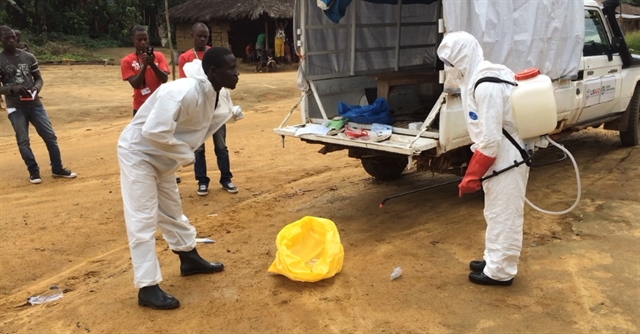 |
| Healthcare workers in PPE during the Ebola response in Liberia, where extreme heat and strict decontamination procedures created major physical challenges. — Photo courtesy of Dr Mattias Larsson |
An equally important change was psychological. Improved safety procedures and the presence of international staff inside the "hot zone" reduced fear among local healthcare workers. Instead of entering patient areas only once daily, healthcare teams began conducting repeated daily rounds, substantially improving patient monitoring and care.
Beyond the ETU, I also assessed clinics and helped establish triage systems for early Ebola detection. The objective was to strengthen local facilities’ ability to identify infected patients without exposing other patients or healthcare staff. This involved both training local healthcare personnel and implementing infrastructural improvements.
Fighting a rural Ebola outbreak
Later, our team was deployed to Sinoe County, approximately 350 kilometres south of Monrovia, where a localised Ebola outbreak had emerged. We conducted active case finding and contact tracing. Five infections were identified within a single family, while a one-year-old child remained uninfected.
The child was disinfected with chlorine solution and cared for by an Ebola survivor believed to have protective immunity. Ultimately, three of the five infected family members survived.
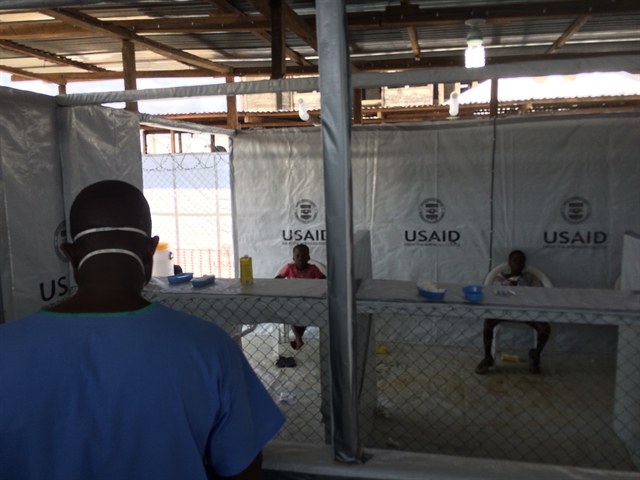 |
| Rapid isolation and contact tracing became essential to containing localised outbreaks. — Photo courtesy of Dr Mattias Larsson |
Twenty contacts were identified and monitored. The village became heavily stigmatised and isolated, requiring organised food deliveries. It rapidly became clear that the local hospital lacked sufficient isolation capacity, leading to implementation of the Rapid Isolation and Treatment of Ebola strategy.
Within one week, MSB transported equipment to Greenville and constructed a small 'mini-ETU' that allowed rapid isolation and safer patient management.
Lessons for future epidemics
The international response to the 2014 Ebola epidemic was initially too slow, although later massive efforts from countries including the US, China and European nations helped contain the outbreak. Many large ETUs were constructed, but several became operational only after the epidemic had already peaked.
One important lesson is that future epidemic preparedness must emphasise flexible and rapidly deployable mobile isolation units rather than relying solely on large centralised facilities.
Although vaccines now exist for some Ebola strains, there is currently no approved vaccine specifically targeting Bundibugyo virus disease. Although there is no current pandemic emergency, countries should prepare for testing capacity in case suspected cases appear, not only for Ebola, but also for other emerging zoonotic diseases, including the recently reported hantavirus outbreaks. — Family Medical Practice
.jpg) |
| Dr Mattias Larsson. — Photo courtesy of Family Medical Practice |
*Dr Mattias Larsson is Medical Director and Paediatrician at FMP Hà Nội and an Associate Professor at Karolinska Institute, and has a long experience in research on infectious diseases. He has worked with the Oxford University Clinical Research Unit and the Ministry of Health of Việt Nam. He is fluent in English, Swedish, Vietnamese, German and some Spanish.
FMP Healthcare Group operates medical centres in major cities including HCM City, Hà Nội and Đà Nẵng, offering consultations with international doctors, check-up centres and emergency ambulance services.
Visit FMP Hà Nội 24/7 at 298I Kim Mã Street, Ngọc Hà Ward.
To book an appointment, please call us at (024).3843.0784, or contact us via WhatsApp, Viber or Zalo on +84.944.43.1919 or email hanoi@vietnammedicalpractice.com.
Life & Style
 Life & Style
 Life & Style
 Life & Style
 Life & Style
 Life & Style
 Life & Style
 Life & Style
 Life & Style
 Life & Style
 Life & Style
 Life & Style
 Life & Style
 Life & Style
 Life & Style