 Life & Style
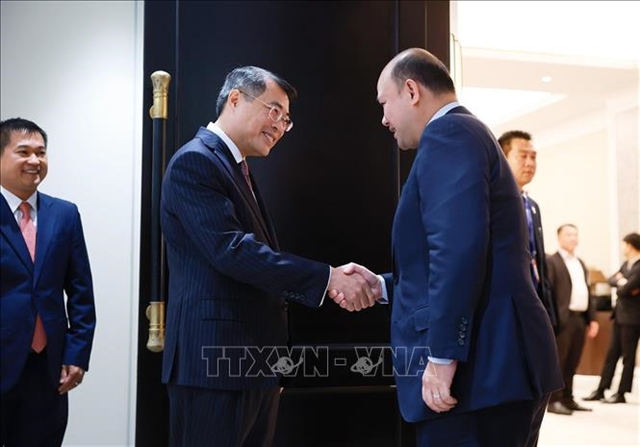
Vietnamese PM pays courtesy visits to Cambodian King, Queen Mother
1.
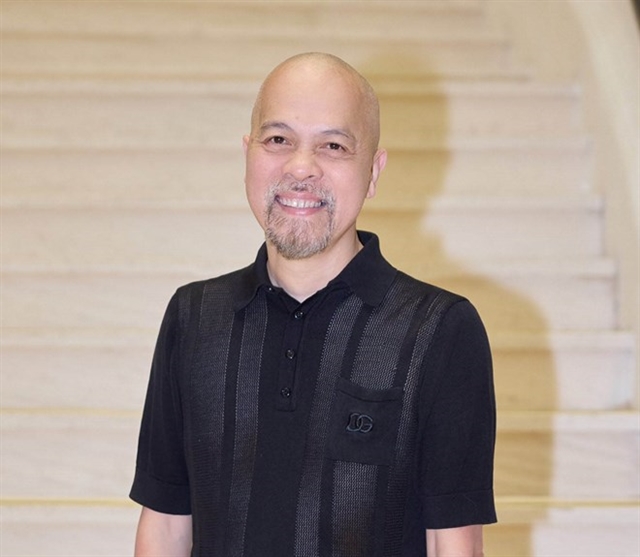 |
| Artist Đức Hùng. — Photo laodong.vn |
Ambitious plans to turn Việt Nam’s cultural industries into globally competitive brands are set out in Politburo Resolution No. 80, which aims to develop sectors such as cinema, cultural tourism and fashion design through 2030.
Water puppetry artist Đức Hùng, who is also widely known as a fashion designer, spoke to the media about his views on fashion as well as investment in and the development of cultural industries.
Which role would you most like audiences to remember you for: puppeteer, fashion designer or actor, given your many acclaimed television series?
I was trained as an actor from the age of 16. After more than 40 years, many still see me primarily as a fashion designer. In fact, it was my appearances in television dramas, including Người Phán Xử (The Arbitrator) that brought me to a wider audience, prompting many to wonder how a designer could perform in such a way.
In fact, I am a stage actor by profession, having trained from 1983 to 1986. Whether on screen or on stage, acting has always been my core craft. However, as I do not appear frequently, my presence often comes as a surprise to audiences.
While I have attained a measure of success and broader recognition in fashion, I have allowed instinct to guide my choices at each stage of my career. What matters most, I believe, is finding joy in my work and committing to delivering the most refined creative output to audiences.
Traditional influences are deeply embedded in your designs. How do you keep them fresh and relevant, ensuring that international audiences see them as fashion pieces rather than mere souvenirs?
I was born in Hà Nội’s Old Quarter and raised on traditional art forms of chèo (traditional opera) and water puppetry, so traditional culture influences run deep in me.
That said, simply reproducing tradition in its original form is not effective. Instead, I incorporate subtle traces of heritage and reinterpret them through contemporary silhouettes.
Fashion reflects the rhythm of life and must keep moving. Rather than altering its essence, I translate it through modern materials and tailoring so that even western wearers can embrace it with confidence.
What do you think about the current generation of young Vietnamese designers in their efforts to bring the country’s fashion onto the international stage?
Young designers today are talented, but many of them have yet to master how to present themselves. I see that international designers are often very effective at self-promotion, supported by professional teams that elevate their image, while Vietnamese designers tend to be more modest and hesitant to speak about themselves.
My message to them is don’t hold back and prove your worth. Be confident in promoting your personal brand. Fashion is not just about the garment; it is about the story behind the brand.
Resolution 80 places high expectations on the fashion sector. In your view, what kind of roadmap is needed over the next five years to achieve a genuine breakthrough?
I believe that among the cultural industries, fashion is an exceptionally powerful tool, if not the leading spearhead, because while films or music are not consumed all the time, clothing is something people engage with every day.
To achieve a breakthrough, we need coordinated investment and must recognise fashion as a true economic sector, not merely entertainment. This requires stronger linkages between designers, manufacturers and national media channels.
When we build fashion brands of national stature, that is when Vietnamese culture can be known in the world most naturally and effectively.
In addition to being an established designer, your work in water puppetry has earned you the title of Meritorious Artist and multiple festival medals. How have you managed to achieve success in both fields?
I began pursuing water puppetry at the age of 16. However, after finding success in fashion in 1992, I drifted away from the stage and Thăng Long Water Puppetry Theatre no longer took me back.
Fortunately, in 1993, I was invited to return to the theatre. A year later, I toured France and Switzerland with a puppetry troupe. In 2003, I received my first gold medals at both the International Puppetry Festival and the National Puppetry Festival. I feel I have been more than rewarded.
Many people often say I have an excess of energy, or affectionately call me cụ rối (the puppet elder). A puppet is always innocent, while a puppet elder is someone older who retains that innocence, enriched by experience.
I believe that sense of innocence is a valuable source of material for creativity and for taking on multiple responsibilities.
In general, and in my profession as well, passion alone is not enough. What matters even more is an awareness of sacrifice.
Looking back on my youth, at 17 or 18, I did not spend my time socialising like young people do today. I devoted myself entirely to the work I loved. And that, in itself, was a form of sacrifice.
Passion demands a great deal of sacrifice. To achieve success, one must recognise this – passion without sacrifice will not lead far.
Thăng Long Water Puppet Theatre continues to attract steady audiences. In your opinion, what fundamental strengths allow Vietnamese water puppetry to remain resilient in the face of increasingly diverse modern entertainment?
In my view, its greatest strength lies first in the uniqueness of this art form, dating back nearly 1,000 years, that exists only in Việt Nam. That very distinctiveness is what attracts international visitors.
Secondly, water puppetry is performed on a water-based stage, where puppets rise from beneath the surface, evoking a sense of curiosity and wonder among audiences.
Over the course of a 45-minute show, audiences are immersed in water puppetry, filled with laughter and the distinctive charm of the figures: an experience that leaves international visitors with a vivid impression of Việt Nam as home to a one-of-a-kind art form.
This strong appeal has attracted a large volume of foreign tourists to Thăng Long Water Puppet Theatre, generating substantial revenue. It has also spurred the development of additional water puppet venues nationwide, including in Nha Trang and Vũng Tàu. — VNS
Life & Style
 Life & Style
 Life & Style
 Life & Style
 Life & Style
 Life & Style
 Life & Style
 Life & Style
 Life & Style
 Life & Style
 Life & Style
 Life & Style
 Life & Style
 Life & Style
 Life & Style