 Life & Style
General Secretary and President Tô Lâm witnesses exchange of Việt Nam-Denmark cooperation agreements
1.
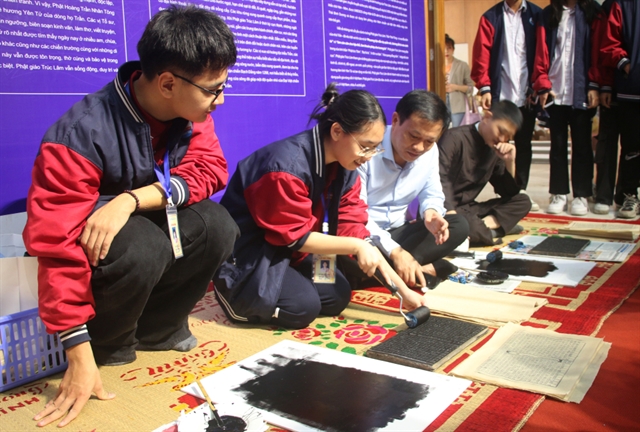 |
| Large numbers of students participate in experiencing woodblock printing and rubbing on dó paper. — Photo baoquangninh.vn |
HCM CITY — As Việt Nam advances its cultural development strategy, Resolution 80-NQ/TW is placing documentary heritage at the heart of digital transformation and public engagement efforts.
Archival records are more than historical documents preserved in storage. They constitute the living memory of the nation, bearing authentic testimony to Việt Nam’s nation-building, defence and development.
The implementation of Resolution 80-NQ/TW issued by the Politburo on cultural development in the new era has created an important political foundation for the archives sector to further affirm its role as a distinctive cultural institution, contributing to the preservation and promotion of the country’s documentary heritage.
Heritage steps beyond preservation
Resolution 80 underscores the requirement to develop culture on par with the economy, politics and society, while promoting cultural values, national traditions and aspirations for development. It also highlights the need to preserve and promote heritage in tandem with science, technology and digital transformation.
Within this framework, documentary heritage, particularly national archival records, is recognised not only as a primary historical source but also as an important resource of soft power, strengthening national identity, fostering patriotism and enhancing Việt Nam’s international standing.
In 2016, the Prime Minister approved projects on the preservation and promotion of the Nguyễn Dynasty Woodblocks and the Nguyễn Dynasty Imperial Records (Châu bản), both recognised by UNESCO under the Memory of the World Programme.
These collections are not only invaluable national assets but also part of humanity’s shared documentary heritage.
As the agency directly responsible for managing these collections, the State Records and Archives Department of Việt Nam under the Ministry of Home Affairs has consistently pursued the principle that preservation must go hand in hand with promotion, and that archives must serve society.
Over the past decade, the department has implemented comprehensive preservation, restoration and digitisation measures in line with UNESCO standards.
Thousands of deteriorated woodblocks and imperial records have been restored, treated and reinforced, while entire collections have been digitised in high resolution and secured through microfilm backups.
From a focus on safeguarding materials, the sector has shifted towards facilitating long-term public access.
The launch of an online archival portal in January 2026, enabling round-the-clock access, marks a significant step in applying science and technology in archival management, in line with the digital transformation objectives of Resolution 80.
Beyond preservation, documentary heritage is increasingly reaching the public through exhibitions, documentary films and publications.
National Archives Centres have adopted modern methods such as virtual exhibitions, 3D mapping technology and digital publications, expanding access, particularly for younger generations.
This direction is consistent with the 2024 Law on Archives, which emphasises the rights of citizens to access information and the responsibility of archival agencies to proactively promote heritage values, thereby enhancing public cultural enjoyment.
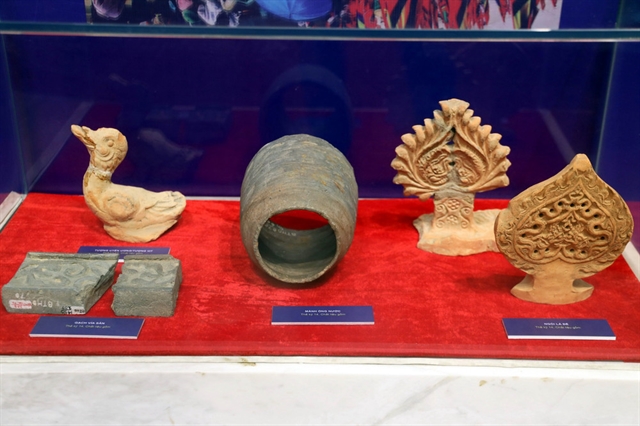 |
| Ceramics from the Trần Dynasty displayed in the thematic exhibition space ‘Trần Dynasty Culture and Yên Tử Buddhism'. — VNA/VNS Photo |
Resolution in action
A key milestone in implementing Resolution 80 is the launch of the Exhibition Space for Việt Nam’s World Documentary Heritage and Outstanding National Archival Records in late January 2026.
Open to visitors free of charge on weekdays, the space reflects a stronger community-oriented approach.
The exhibition is comprised of a modern media area, a section dedicated to World Documentary Heritage and outstanding archival records, and a section presenting the history of Việt Nam’s archives sector.
Archival materials are presented through interactive digital platforms, allowing visitors to explore documents via touchscreen displays and multimedia applications.
Among the highlights are original versions of the 1946, 1959 and 1980 Constitutions, along with documents relating to national symbols.
Preserved for more than eight decades, these materials provide valuable insights into the country’s legislative and historical development.
According to leaders of the archives sector, Resolution 80 has created both opportunities and responsibilities for agencies managing documentary heritage to strengthen preservation efforts while expanding public access.
Digital transformation is viewed not merely as a technical upgrade but as a change in the way archival information is delivered and utilised.
Aligned with Resolution No. 57 on science, technology, innovation and national digital transformation, the archives sector has identified digital transformation as a strategic priority in serving society in the new period.
Through concrete steps in conservation, digitisation and public engagement, the spirit of Resolution 80 is gradually being translated into practical outcomes.
As archival materials are safeguarded, modernised and brought closer to the public, documentary heritage is emerging as an internal cultural resource contributing to the country’s sustainable development. — VNS
Life & Style
 Life & Style
 Life & Style
 Life & Style
 Life & Style
 Life & Style
 Life & Style
 Life & Style
.jpg) Life & Style
Life & Style
 Life & Style
 Life & Style
 Life & Style
 Life & Style
 Life & Style
 Life & Style
.jpg)