 Life & Style
Education in the age of AI
1.
|
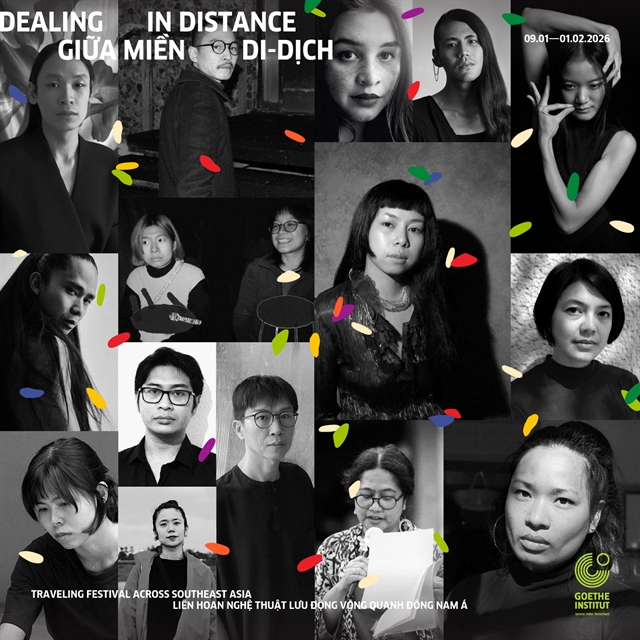
| Poster of the Dealing in Distance Festival which feature artists from Southeast Asia and Southeast Asian in Germany will take place in Hà Nội on January 9-11. — Photos courtesy of Goethe-Institut Hà Nội |
HÀ NỘI — Dealing in Distance, a travelling festival across Southeast Asia on diaspora, an identity shaped by migration and displacement, will bring outstanding multidisciplinary art to Việt Nam in January.
The collaborative project brings together 15 Southeast Asian and diasporic artists based in Southeast Asia and Germany to reflect on migration and identity across distance. Through their works, they invite audiences to learn, unlearn and relearn the practice of diaspora and migration in Germany.
Initiated by four Goethe-Institutes in Southeast Asia in 2023, the concept of the small-scale festival was developed through a workshop in Germany in 2024.
Dealing in Distance explores diaspora as a relational and ever-evolving identity. Like a rhizome, a horizontal and entangled network, this identity takes shape through connections across distances, languages, histories and artistic approaches.
As the culmination of this journey, Dealing in Distance presents new works developed through three residencies in Indonesia, the Philippines and Việt Nam, alongside pieces selected by a jury through an open call.
The festival opens in Hà Nội from January 9 to 11, before travelling to HCM City on January 16 to 18, Denpasar in Bali, Indonesia from January 22 to 25 and Manila in the Philippines from January 30 to February 1.
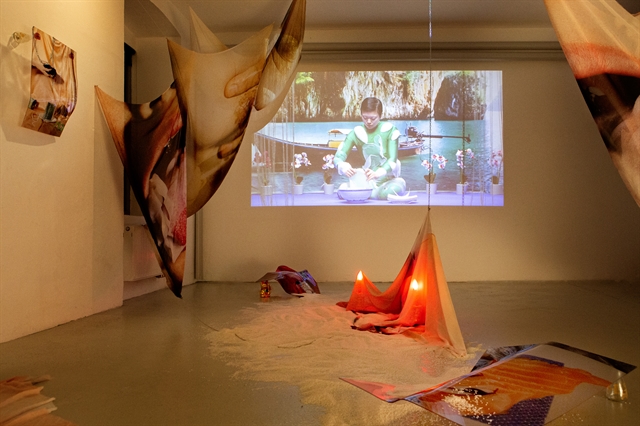
At each stop, between 12 and 15 artists will take part in exhibitions, visual art, performance, dance, poetry and a range of public programmes from Southeast Asia and Germany, including film screenings, collective cooking experiments and shared meals, tailored to the local context.
|
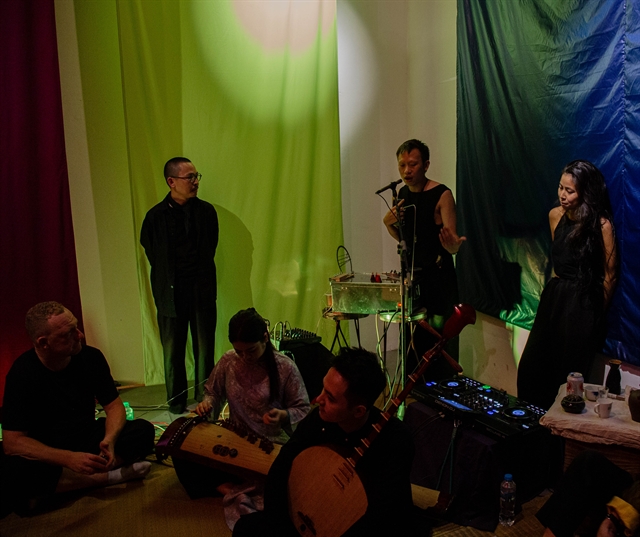
| Nguyễn Phương-Đan (left) and artists will present their works at the Complex 01. |
They flesh out cross-cultural dialogues between artists, between artists and local communities, where multiple stories, memories and sensibilities intertwine into a shared sense of home.
Oliver Brandt, director of the Goethe-Institut Hà Nội, said that experiences of migration and identity when moving or living far from home are not only life stories but also rich sources of artistic inspiration.
The festival’s theme is shaped by the process of migration, reflecting humanity’s ongoing engagement with history, language and memory.
In Hà Nội, the festival, featuring participating artists and groups, will be held at Complex 01, a cultural space for young people. Reconstructed from an old factory, it aims to foster interdisciplinary connections and promote artistic and cultural exchange among different community groups.
Among the artists is Nguyễn Phương-Đan, who has a background in cultural anthropology, photography and film, and moves fluidly between roles as curator, cultural organiser, DJ and producer.
|
| Many prominent works of different arts will be available for public. |
Hà Thúy Hằng is a Vietnamese multimedia composer, sound artist and electronic improviser whose diverse practice centres on exploring local artistic culture at the intersection of tradition and modernity.
Jules Leaño is a Scottish-Filipino artist based between Berlin and Scotland. With a background in experimental film and visual anthropology, her work examines the relationship between visual media, collective memory and a range of social and political realities.
groundtable, a Thai-German group, explores the socio-anthropological dimensions of culinary heritage and migration. The interdisciplinary, research-led artist duo has been based in Weimar, Germany since 2024.
Nindya Nareswari is an Indonesian light artist and designer based in Berlin, Germany. Her practice engages with themes of human perception and ephemerality, using light as a universal yet deeply personal medium to reconsider how people engage with the world.
Noutnapha Soydala is a Lao dancer and co-founder of the Fanglao Dance Company, which aims to develop contemporary dance practice and encourage international artistic cooperation. — VNS
Life & Style
 Life & Style
 Life & Style
 Life & Style
 Life & Style
 Life & Style
 Life & Style
 Life & Style
 Life & Style
 Life & Style
 Life & Style
 Life & Style
 Life & Style
 Life & Style
 Life & Style