 Life & Style

Agoda Makes Bangkok Its Largest Office Worldwide, with More Than 4,500 Staff
1.
.jpg)
|
| The Dao Quần Chẹt women in the traditional costume. — VNA/VNS Photo Việt Cường |
PHÚ THỌ — Nestled among rugged mountain ranges, where gentle winds sweep through forested hills and streams weave through rocky crevices, the Dao Quần Chẹt people of northern Phú Thọ continue to safeguard their vibrant cultural heritage.
At the heart of this heritage lies their traditional costume, which is far more than fabric. Each garment is a spiritual map, weaving together history, beliefs and timeless aesthetics.
The Dao Quần Chẹt are a small subgroup within Việt Nam’s Dao ethnic community, with a long history of settlement in the northern mountains. Ethnographic sources suggest their ancestors migrated from China around the 13th century, following rivers such as the Chảy and Lô into what is now Việt Nam.
Today, many Dao Quần Chẹt still live in Mai Châu Commune in Phú Thọ Province.
The name 'Quần Chẹt' derives from the distinctive trousers traditionally worn by Dao women. These trousers are fitted from the knees down, creating a neat and elegant silhouette. They are also known as Dao Nga Hoàng, after the Nga Hoàng locality in Phú Thọ.
|
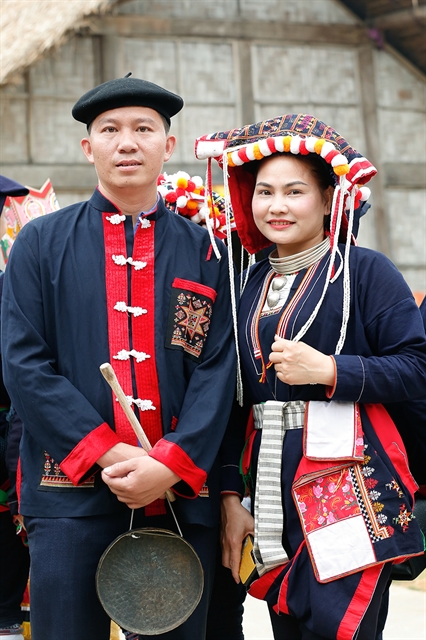
| The attire of the Dao Quần Chẹt leaves a lasting impression with its deep indigo hues and intricate embroidery techniques. — VNA/VNS Photo Việt Cường |
The attire of the Dao Quần Chẹt leaves a lasting impression with its deep indigo hues and intricate embroidery. For women, the traditional ensemble features a long indigo blouse with a round neck, fastened to the right with fabric buttons.
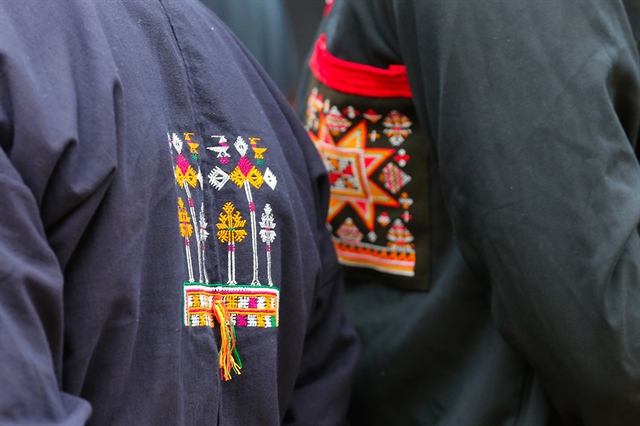
Hand-stitched patterns embellish the collar, chest and sleeves, showcasing a rich variety of motifs. Triangular shapes symbolise mountain peaks, wavy lines represent flowing streams and stylised floral designs express a longing for prosperity and growth.
At the heart of the Dao Quần Chẹt identity are their form-fitting trousers, known as chẹt. Practical for navigating the forested mountains, they are also a distinctive symbol of the community’s culture. The traditional headscarf, wrapped several times and occasionally cascading lightly down the back, adds an element of modest elegance.
The belt is another essential component of the attire. Older women typically wear a dark blue fabric belt, while younger girls opt for belts of red or pink silk. The number of belts carries cultural significance: unmarried girls usually tie two or three, while married women wear just one.
Silver jewellery worn on the neck, wrists and ears sparkles not only as decoration but also for its protective value, believed to ward off evil spirits and safeguard the body.
|
| A close-up at the intricate hand-embroidery of the Dao Quần Chẹt people. — VNA/VNS Photo Việt Cường |
The hand-embroidery of the Dao people is an unmistakable expression of their artistic soul. Tiny, precise stitches are passed down from mother to daughter, from grandmother to granddaughter, embodying generations of tradition. Without the aid of sketches or measurements, these intricate patterns are preserved solely in memory and technique. Creating a complete outfit can take weeks or even months, reflecting not just skill but also a deep commitment to cultural legacy.
The Dao people in Phú Thọ believe that as long as women continue to embroider, their cultural identity remains alive. This belief drives mothers in the community to teach their daughters the art of selecting threads, mastering stitches and maintaining traditional colours – a silent yet profound responsibility ensuring that the rich heritage of the Dao is preserved from one generation to the next.
While the daily attire of the Dao people is simplified for practicality, featuring plain indigo blouses with minimal embroidery and fitted trousers, their festive garments present an entirely different world.
During celebrations such as the Cấp Sắc (maturity) ritual, weddings or village festivals, vibrant red takes centre stage.
Women don thickly embroidered jackets adorned with intricate details, cinched at the waist with rich red sashes, and adorn themselves with more silver jewellery. Men also present a polished appearance, wearing indigo shirts highlighted with red bands that symbolise fire, representing vitality and protection.
In significant rituals, men's headgear serves as a marker of status, symbolising the transition from boyhood to spiritual adulthood. Each stitch and colour is intentional: red represents fire and rebirth, white signifies new beginnings and black serves as a foundation, evoking the earth itself.
In the Dao communities of Yên Lãng, traditional clothing remains a vibrant part of everyday life. Some families have established embroidery classes in village cultural centres, where middle-aged women pass down age-old techniques. These lessons cover the intricacies of pattern layout, the preservation of vibrant red hues and the methods for creating texture on indigo fabric.
|
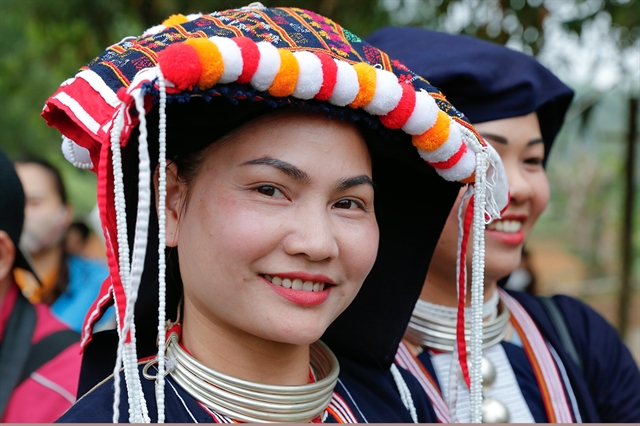
| The unique culture of the Dao Quần Chẹt is one of the tourist attractions of Phú Thọ Province. — VNA/VNS Photo Việt Cường |
The unique culture of the Dao Quần Chẹt, along with that of various ethnic communities in Phú Thọ Province, has fostered favourable conditions for the sustainable development of community-based tourism, significantly enhancing local livelihoods in recent years. The province has therefore identified the preservation of culture linked to tourism development as a key element of its new development strategy.
A visit to the villages of the Dao Quần Chẹt on a journey to explore Phú Thọ is not just a simple travel experience. It also offers visitors the opportunity to gain a deeper understanding of a vibrant community that diligently preserves its cultural heritage amidst modern life. — VNS
Life & Style
 Life & Style
 Life & Style
 Life & Style
 Life & Style
 Life & Style
 Life & Style
 Life & Style
 Life & Style
 Life & Style
 Life & Style
 Life & Style
 Life & Style
 Life & Style