 Life & Style

AIMCONNECT 2026 Held in Singapore, Bringing Global Automotive Leaders Together to Explore the Future of AI, Trust and Connected Mobility
1.
|
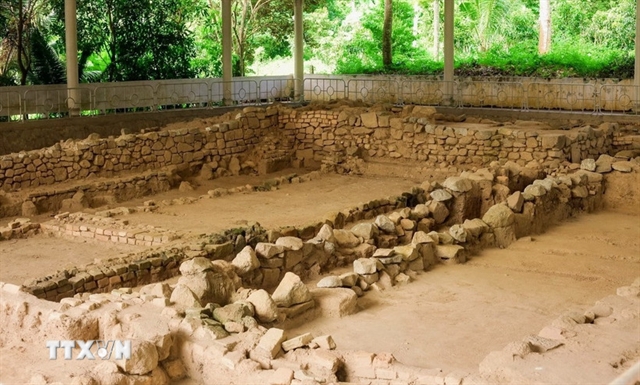
| The Gò Thành site has been identified as part of the Óc Eo Civilisation. — VNA/VNS Photo |
ĐỒNG THÁP — The Gò Thành archaeological site, with its remarkable historical, cultural, and archaeological significance, is not only a treasured heritage of Đồng Tháp Province but also a vibrant resource brimming with potential for education and sustainable tourism.
Located in Tân Thành Hamlet of Chợ Gạo Commune (formerly Tân Thuận Bình Commune of Chợ Gạo District, Tiền Giang Province), the Gò Thành site has been identified as part of the Óc Eo Civilisation. This was an ancient civilisation that flourished across the southern region from the first to the eighth century.
Lê Ái Siêm, former Director of the Tiền Giang provincial Museum (now Đồng Tháp Museum), shared that the Tiền Giang Museum and the Centre for Archaeology under the Việt Nam Academy of Social Sciences in HCM City carried out two excavation seasons and one exploratory survey at the site between 1988 and 1989.
Phan Văn Hòa, 58, Party Cell Secretary of Đăng Phong Dưới hamlet in Chợ Gạo Commune, who witnessed the 1988 excavation, recalled that over 100 gold artefacts were unearthed, including leaf-shaped ornaments, oval beads, and gold pieces shaped like six-petal flowers or quadrangles engraved with elephant motifs. Other finds included six bronze objects (two rings, a small tube and trapezoid fragments), 22 stone artefacts, notably an intact Vishnu statue, and numerous terracotta items such as spouts, and coarse or fine ceramics decorated in red or brown.
Experts regard Gò Thành as a rich and diverse site, featuring multiple types of remains and artefacts representing one of Southeast Asia’s earliest civilisations. The site was listed as a national relic in 1994. Notably, the Vishnu statue was recognised as a national treasure in 2017, followed in 2021 by a collection of 18 gold leaves engraved with elephant images. These treasures are currently preserved and displayed at the Đồng Tháp Museum.
Nguyễn Thị Khắc Diệp, a guide at the site, noted that Gò Thành receives around 1,000 visitors annually, including university students seeking to study its cultural and archaeological significance.
Before excavation began, the site had served as a simple football field for local residents. After heavy rains, villagers occasionally found small, thin pieces of gold (around 16 carats). Brick layers, coloured pottery fragments, broken statue pieces, and abundant pebbles were visible on the surface.
Excavations revealed that the site lies on an artificial mound of about one hectare, rising three metres above sea level. Cultural layers visible along the canal bank contained pottery shards and animal bones and teeth, indicating a variety of relic types, including habitation remains, architectural structures, and burials. The architectural remains were particularly notable, featuring several temple bases of varying scale arranged next to one another.
Archaeologists also uncovered 12 graves on the mound, each with a square shaft covered by brick or brick rubble forming a raised structure of over 100 sqm. Most shafts were filled with pebbles mixed with grey sand, topped with brick. At the bottom of each was a rectangular burial chamber built of either brick or wood, containing sand, ash and thin gold artefacts. — VNA/VNS
Life & Style
 Life & Style
 Life & Style
 Life & Style
 Life & Style
 Life & Style
 Life & Style
 Life & Style
 Life & Style
 Life & Style
 Life & Style
 Life & Style
 Life & Style
 Life & Style