 Expat Corner

First electric barge powered by renewable energy launched in Việt Nam
1.
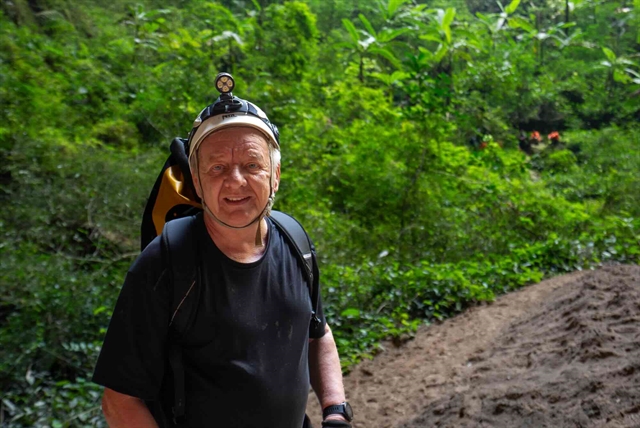 |
| Howard Limbert in his journey to discover caves in Việt Nam. — Photo courtesy of Oxalis Adventure |
After more than 35 years exploring Việt Nam’s caves, British explorer Howard Limbert has spent the past 15 years living in Phong Nha Commune, Quảng Trị Province. What began as a journey into the unknown has evolved into a lifelong commitment to the region and its people. Through his decades of exploration and dedication, Limbert has become closely associated with Phong Nha – Kẻ Bàng National Park, a UNESCO World Natural Heritage site.
Limbert and his team have surveyed more than 800 caves across Việt Nam, from Quảng Trị to Ninh Bình and Quảng Ninh. Yet, even after mapping hundreds of kilometres underground, he believes there are still many more caves waiting to be discovered, particularly in the North.
Born in Bradford, the UK, in 1957, Limbert graduated with an honours degree in Medical Science. But the pull of caving, with its promise of places untouched by human footsteps, eventually drew him away from medicine and into Việt Nam’s limestone mountains.
When he first arrived in Quảng Trị in the early 1990s with a team from the British Cave Research Association (BCRA), at the invitation of Professor Nguyễn Quang Mỹ of Hà Nội National University, Phong Nha was largely unexplored. There were no detailed maps, modern GPS equipment or reliable information about the world hidden beneath the karst landscape.
The early expeditions relied on determination, experience and a shared passion for discovery.
“When we first started visiting Việt Nam, the purpose was purely the joy of exploration, and it remains the same today. Tourism has simply been a by-product of the fact that Việt Nam probably has some of the most spectacular caves discovered anywhere in the world,” Limbert said.
 |
| Howard Limbert (in yellow) and Debora Claire Limbert (in stripes) meeting late General Võ Nguyên Giáp in 1992. — Photo courtesy of Oxalis Adventure |
A meeting with late General Võ Nguyên Giáp in 1992 strengthened his resolve to continue exploring the region. Discoveries followed. In 1992, Paradise Cave, stretching 18.5km, was discovered. Seven years later, the discovery of Khe Ry Cave – the world’s longest river cave – further underscored the immense geological scale of the Kẻ Bàng massif.
The defining moment came in 2009, when Limbert and his team, guided by local man Hồ Khanh, surveyed Sơn Đoòng and established its status as the world’s largest natural cave. International coverage, including reports by National Geographic, the BBC and CBS, brought the caves of Việt Nam to the attention of a global audience.
For Limbert, however, exploration has always meant more than making new discoveries.
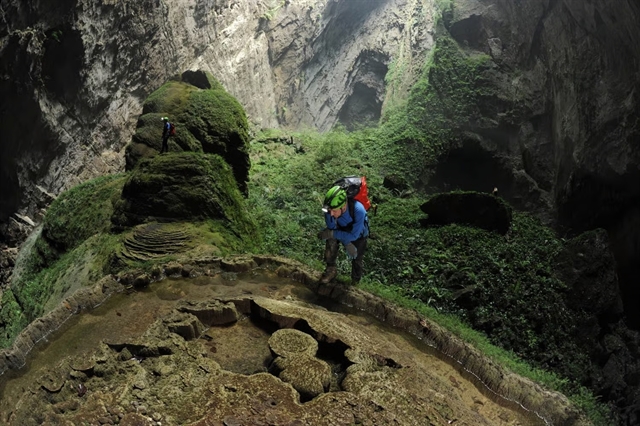 |
| Howard Limbert during a cave survey. — Photo courtesy of Oxalis Adventure. |
Understanding what lies beneath
Alongside his wife, Debora Claire Limbert, and fellow explorers, Limbert has spent decades working with scientists to understand the underground waterways connecting the caves of Phong Nha-Kẻ Bàng.
“After all these years, we now understand the area’s hydrological system very well,” he said.
Water shapes the caves over millions of years, carving passages through limestone and linking underground systems. By tracing its movement, explorers can identify connections between caves and predict where undiscovered passages might lie.
The work requires patience, repeated measurements and close observation. It has also contributed to more than 400km of cave surveys by the Limberts, helping scientists understand the landscape and providing valuable information for conservation.
Not every expedition has been a straightforward adventure. Limbert remembers trekking through forests where tigers still roamed in the late 1990s.
“Meeting tigers and being close to these magnificent animals was really exciting,” he said.
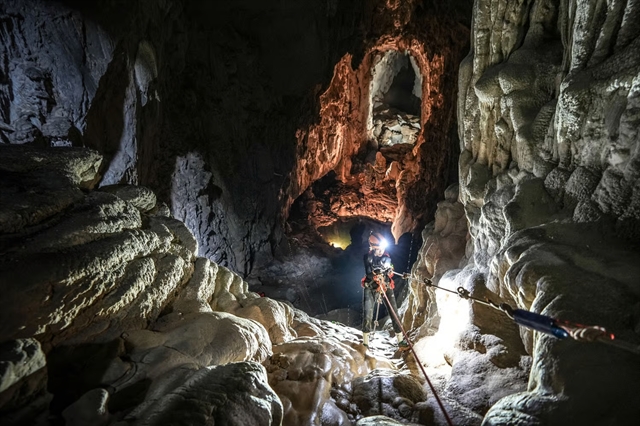 |
| A visitor exploring Sơn Đoòng Cave. — Photo courtesy of Oxalis Adventure |
A flash flood, however, brought a far more frightening experience when two members of his team were trapped inside a cave for 57 hours. Limbert and his colleagues worked to lower the water level and rescue them.
In Phong Nha, villagers who heard about the incident prayed for the team’s safe return. When the explorers finally made it back at 4am, a welcoming feast was waiting.
The experience left a lasting impression. Over the years, the relationship between the explorers and the community had grown beyond professional cooperation. The villagers had become friends who worried about their safety and welcomed them home.
A history written in stone
Caves have also offered Limbert glimpses into a much older story. Pottery fragments and stone axes dating back 4,000 to 5,000 years, found in Én Cave area, revealed evidence of human activity long before modern explorers arrived.
The finds broadened his understanding of the underground world. These were not simply geological formations but places where people had once sought shelter and lived their lives.
That history has strengthened his commitment to conservation. The challenge is to explore and study while disturbing the caves as little as possible, preserving their natural features and archaeological traces for future generations.
Limbert has carried the same principle into his work with local communities.
In 2011, he became technical adviser to Oxalis Adventure, a Vietnamese company specialising in cave exploration tours. His work has included helping improve safety standards and training local staff for expeditions in challenging terrain.
Many guides and porters once worked in the forest or engaged in illegal hunting. Limbert recognised their intimate knowledge of the landscape as an asset. He learnt from their experience while sharing his understanding of cave exploration and conservation.
One of the changes he values most is the growing sense of responsibility among local workers for protecting the environment.
“Local people have always been at the forefront of protecting the natural heritage,” he said.
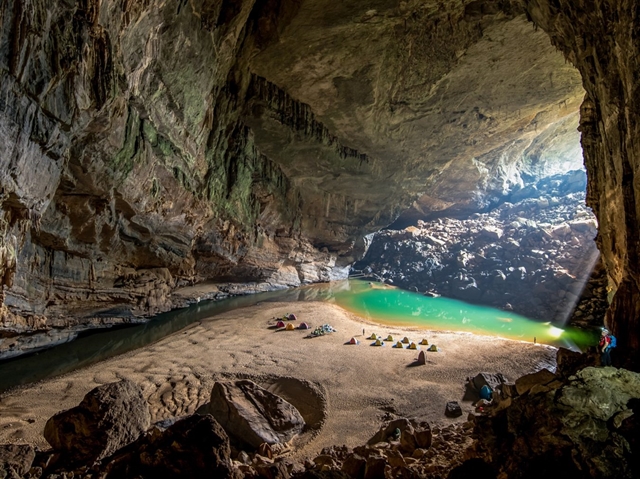 |
| A section of Én Cave, where ancient pottery and stone axes dating back 4,000-5,000 years have been found. — Photo courtesy of Oxalis Adventure |
During the team’s early expeditions, rubbish was often left at campsites. The explorers made a habit of collecting it whenever they came across it, and local guides and porters followed their example. Today, many take the initiative to clear rubbish left by visitors.
The change reflects a broader shift in livelihoods. Tourism has created jobs while giving local people a direct stake in protecting the landscape on which their work depends.
In April this year, Limbert and Oxalis Adventure opened a Cave Exploration Information Centre in Phong Nha. The centre offers free access to the history of cave exploration, including footage from international broadcasters and detailed reports available through QR codes. Its resources are updated through 2026, with material in Vietnamese and English and plans for Spanish, French and German versions.
Limbert hopes the centre will encourage younger generations to take pride in Việt Nam’s extraordinary cave heritage and understand the importance of preserving it.
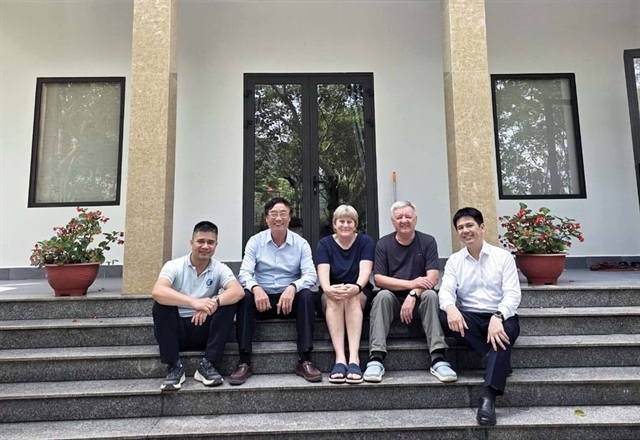 |
| Howard and Deb Limbert meet friends at their home in Quảng Trị. — Photo courtesy of Howard Limbert. |
A place to call home
Việt Nam recognised Limbert’s contribution in 2015, when he received the Labour Order, Third Class. But the reward he speaks of most readily is not an award or a discovery. It is the life he has built in Phong Nha.
His days remain busy with staff training, safety checks and trips into the forest to investigate caves that have yet to be mapped. Away from the expeditions, he and Debora have found a comfortable rhythm in the countryside of central Việt Nam.
He enjoys the tranquillity of the mountains, the warmth of village life and the way Phong Nha has grown more prosperous while retaining its character.
Although he occasionally returns to the UK to visit family, he has no plans to move back permanently.
“I have lived here for 15 years, only occasionally returning to the UK to visit my family for a month. I don’t consider Phong Nha my second home. It is my real home. I have so many friends here and have never thought about leaving to live full-time in the UK.”
For Limbert, the decision is clear. The caves may still hold countless secrets, but after decades of exploring the unknown, he has found something just as important in Phong Nha: a community he belongs to and a place he is happy to call home. — VNS
Expat Corner
 Expat Corner
 Expat Corner
 Expat Corner
 Expat Corner
 Expat Corner
 Expat Corner
 Expat Corner
 Expat Corner
 Expat Corner
 Expat Corner
 Expat Corner
 Expat Corner
 Expat Corner
 Expat Corner