 Economy

Việt Nam seeks to help businesses adopt greener production
1.
|
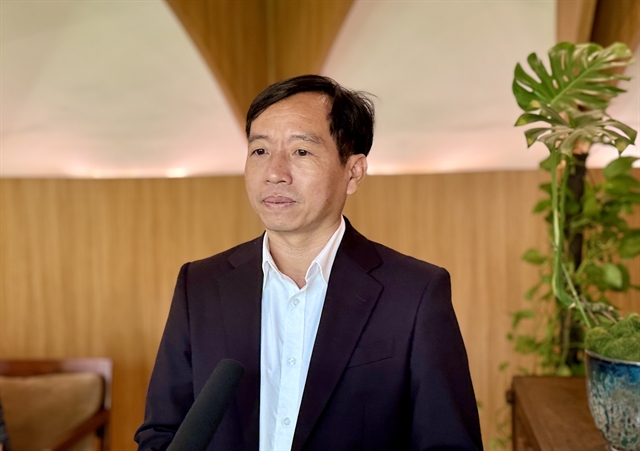
| Nguyễn Thanh Hiền, deputy head of the management board of the Agricultural High-Tech Park of HCM City. — VNS Photo Xuân Hương |
HCM City's geographical expansion offers new opportunities for high-tech agriculture, investment and stronger agricultural value chains. Nguyễn Thanh Hiền, deputy head of the city's Agricultural High-Tech Park management board, speaks to Việt Nam News about plans to expand the park network and the policies and financial support needed.
---------
How is HCM City planning to develop its network of high-tech agricultural parks, and what role will they play in developing agriculture and attracting investment?
The core functions of high-tech agricultural parks are to provide training, transfer technology, and support the application of advanced technologies in agricultural production.
There is considerable room for growth in this field. By 2030, the city aims to develop a network of high-tech agricultural parks that are interconnected, specialised and complementary, rather than operating in isolation.
The plan is being implemented in two phases. In the first, the city issued a decision establishing and issuing operating regulations for seven high-tech agricultural parks in the city.
In the second phase, six additional high-tech agricultural parks will be established.
The parks will specialise in areas such as cultivation, aquaculture and livestock farming, post-harvest processing, ecotourism and agricultural inputs. Each park will be developed based on local advantages in terms of land resources, natural conditions, infrastructure and agricultural products.
This network will provide a foundation for strengthening agricultural value chains and attracting investment.
Once production processes and high-tech applications are fully developed, these parks will form large-scale production zones, supplying raw materials for post-harvest handling and further processing for both domestic and export markets.
They will also serve as centres for spreading high-tech agricultural models across HCM City, the southeastern and southwestern regions and the country as a whole.
Combined with the city’s logistics infrastructure, the parks can help build an integrated system covering production, post-harvest handling and processing, improving agricultural efficiency and contributing to overall agricultural development.
What role does the city expect businesses and investors to play in these high-tech agricultural parks?
Businesses will play a central role. They are not only hubs for bringing technologies together, but also key drivers in disseminating them and leading agricultural value chains, particularly by increasing value through processing.
In the high-tech agricultural parks, we consistently earmark cleared land for investors. Once operational, businesses will work with State agencies, research institutes and centres on R&D, technology transfer, post-harvest processing and product commercialisation.
When these models are expanded to surrounding areas, they will become a powerful catalyst for the growth of high-tech agriculture in HCM City and across the country.
|
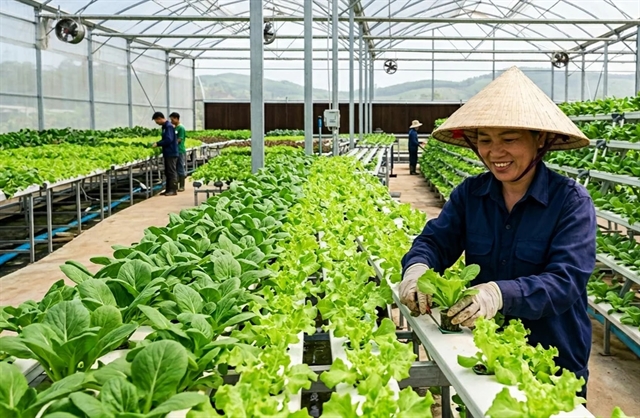
| Vegetables grown in a high-tech agricultural park in Bình Giã Commune, HCM City. The city is seeking to attract investment, expand its network of high-tech agricultural parks and strengthen value chains from production to processing and consumption. Photo courtesy of danviet.vn |
One of the major challenges is the market for high-tech agricultural products. What solutions are needed to address this bottleneck?
Consumers and markets are increasingly demanding clean products with clear origins, traceability and compliance with food safety standards.
We therefore want to encourage businesses to invest in the parks and develop fully traceable raw material production areas that comply with Vietnamese and international food safety standards.
Through these efforts, we can generate export-ready products capable of entering demanding markets such as Europe, the US, Japan and South Korea, thereby enhancing the overall value and efficiency of Vietnamese agriculture.
Besides markets, accessing capital is another major challenge for high-tech agricultural enterprises and incubatees. How can capital flows be unlocked to help businesses develop agricultural value chains?
Financial support is always a major concern for enterprises. Investing in high-tech agriculture requires substantial upfront capital expenditure and a long payback period, so strong support and partnership from the State are essential.
HCM City has implemented a number of policies to support investment in this field.
In particular, the amended Law on High Technology and Government Decree 263, issued last year, provide a range of incentives for businesses investing in high-tech agriculture.
Furthermore, the Law on Urban Development, which provides special mechanisms for HCM City and was recently passed by the National Assembly, is expected to open up stronger support for the sector.
On that basis, we are advising the city People's Committee to propose that the city People's Council issue a resolution providing more specific, preferential and effective investment policies.
The proposed policies will focus on providing financial resources for both businesses making direct investments and incubated enterprises operating in high-tech agricultural parks. This will serve as a vital financial pillar to support businesses entering the high-tech agriculture sector in the years ahead.
These resources will give businesses greater confidence to invest while encouraging incubated enterprises to pursue innovation. This will provide crucial momentum for breakthroughs, improve economic efficiency and drive the comprehensive transformation of the city’s high-tech agriculture. — VNS
Economy
 Economy
 Economy
.jpg) Economy
 Economy
 Economy
 Economy
 Economy
 Economy
 Economy
 Economy
 Economy
.jpg) Economy
 Economy
 Economy