 Economy



Understanding skin ageing key to more effective rejuvenation, dermatologist says
1.
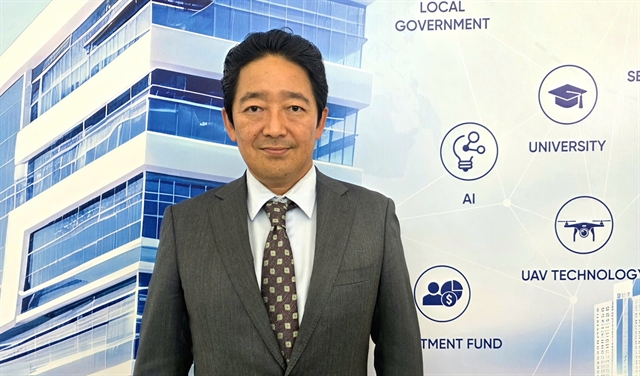 |
| Ishikawa Isamu, Deputy Ambassador of Japan to Việt Nam. —VNS Photo Ly Ly Cao |
HÀ NỘI — As Hà Nội seeks to attract higher-quality foreign direct investment and deepen its role in global value chains, Japanese investors are placing growing importance on skilled workers, a competitive living environment and predictable policies.
Technology transfer, meanwhile, will require incentives that recognise technology as a core competitive asset of foreign companies.
Ishikawa Isamu, Deputy Ambassador of Japan to Việt Nam, spoke about these issues in an interview with Việt Nam News on what Hà Nội can do to attract more high-tech and value-added investment from Japan, strengthen links between Japanese and Vietnamese enterprises and encourage technology transfer.
What should Hà Nội improve to attract more Japanese investors, particularly in high-tech, innovation and value-added projects?
First, I would like to express our sincere appreciation to the Hà Nội government. The city has fostered a fruitful and friendly relationship with Japanese enterprises operating here, and we hope communication and cooperation between Japanese companies and the municipal government will be strengthened further in the near future.
I believe one of Hà Nội's major strengths in attracting high-tech investment is its abundant supply of highly skilled personnel.
There are several high-standard universities in Hà Nội that educate and train skilled workers. Japanese companies are actively recruiting talent from educational institutions in the city, including Hanoi University of Science and Technology, Vietnam National University, Foreign Trade University and FPT University, among others.
The continuous supply of highly skilled labour is an important element for Hà Nội to attract investment in high-tech industries.
At the same time, attracting high-quality investment is not simply about providing companies with workers.
Foreign talent, particularly people involved in research and development activities, also want a good living environment for themselves and their families. That includes high-quality education as well as a good natural and cultural environment.
As Hà Nội develops under its long-term development plans, we expect the city's attractiveness from this perspective to increase further.
How can Hà Nội strengthen cooperation between Japanese and Vietnamese companies to promote technology transfer and enable local enterprises to participate more deeply in value chains?
Japanese companies operating in Việt Nam are already actively procuring products from domestic Vietnamese suppliers. They are also conducting worker development and providing technical guidance to Vietnamese employees.
However, when we discuss technology transfer, it is important to understand the position of companies themselves.
The technology possessed by each company is a core source of its competitiveness. Generally speaking, technology is something that each Japanese company protects.
If Việt Nam or the Hà Nội government intends to promote greater technology transfer from Japanese enterprises, or from other foreign-invested companies, to local companies, I think it will be necessary to design and provide appropriate incentive mechanisms to make that happen.
Some other countries in Southeast Asia already have such incentive mechanisms.
From the perspective of Japanese companies already operating in or considering investment in Hà Nội, is there a significant gap between what investors expect and what the city currently offers?
To tell the truth, I do not think there is such a big gap.
According to a survey conducted by the Japan External Trade Organization, about 60 per cent of Japanese enterprises in Việt Nam intend to expand their business here. That indicates continued interest among Japanese companies in developing their operations in the Vietnamese market.
There are some concerns, however.
Some Japanese companies perceive risks arising from sudden changes in laws or regulations without prior consultation. They can also encounter risks when administrative procedures are delayed.
Strengthening policy stability and predictability would help reinforce Japanese businesses' confidence, providing greater certainty for long-term investment and cooperation decisions.
We would therefore appreciate it if the Hà Nội government could handle those matters appropriately. — BIZHUB/VNS
Economy
 Economy
 Economy
 Economy
 Economy
 Economy
 Economy
 Economy
 Economy
 Economy
 Economy
 Economy
 Economy
 Economy