 Economy



HCM City honours fallen soldiers with solemn musical tribute
1.
|
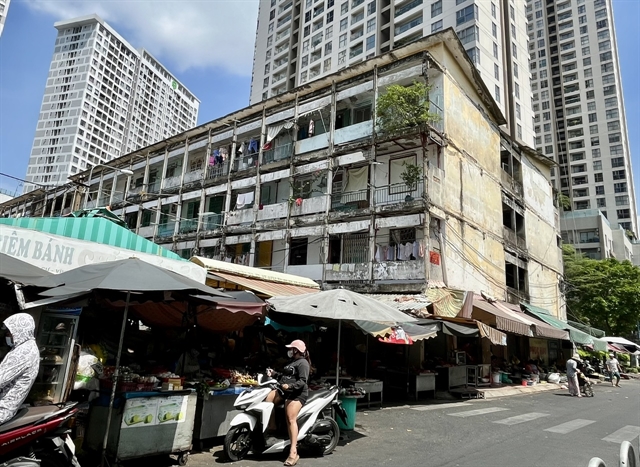
| An aging apartment building in HCM City. HoREA has proposed linking apartment building use periods to their design lifespan rather than imposing time-limited ownership. — VNS Photo Bồ Xuân Hiệp |
HCM CITY — The HCM City Real Estate Association (HoREA) has proposed that Việt Nam's revised Housing Law define the lifespan of apartment buildings based on their construction life rather than imposing a fixed term on apartment ownership, arguing the change would better protect property rights.
In comments submitted late last week on the draft Housing Law (amended), the association urged lawmakers to replace the phrase “time-limited apartment ownership” with “apartment building use period based on the building's design lifespan.”
HoREA said the revised wording would be more consistent with the orientation set out in Resolution No. 21 and would avoid the interpretation that apartment owners' property rights expire after a specified period.
The association argued that the time limit should refer only to the physical lifespan of a building rather than the duration of ownership.
Under its proposal, apartment ownership would continue to be recognised under the law and would end only when the building is demolished in accordance with legal provisions and owners no longer possess or use their apartments.
HoREA also proposed that the provision on building lifespan apply only to apartment projects developed after the amended Housing Law takes effect.
Existing apartments with long-term land use rights certificates should not be subject to the new rule, it said, arguing that retroactive application would undermine established property rights and conflict with the legal principle against retrospective restrictions on vested rights.
The association also called for clearer transitional provisions for apartment buildings constructed between 1995 and the effective date of the amended law.
The current draft defines “old apartment buildings” as those built in or before 1994 and makes them eligible for policies supporting renovation and redevelopment.
However, HoREA said the draft does not specify how apartment buildings completed from 1995 onwards, but before the new law takes effect, would be treated.
It proposed extending the same renovation and reconstruction policies to that group to ensure equal treatment of apartment owners.
For apartment buildings constructed after the amended law takes effect, HoREA proposed allowing owners to continue using the shared land for redevelopment once a building reaches the end of its design lifespan and is demolished.
Under the proposal, owners could either contribute reconstruction costs or cooperate with a developer to rebuild the project.
Each owner's financial contribution would be calculated based on the apartment's floor area multiplied by the prevailing construction cost per square metre at the time of demolition.
Owners unwilling or unable to contribute, or where residents fail to agree on a developer, could transfer the land to the State for allocation to another investor.
In such cases, they would receive compensation for land use rights in accordance with the law and be eligible for resettlement support.
HoREA said clarifying the scope of application, transitional arrangements and owners' financial obligations would strengthen the legal framework for apartment redevelopment.
The association added that the mechanism could gradually reduce the need for the State to use public funds to redevelop deteriorating apartment buildings while increasing owners' responsibility for maintaining their properties.
According to the Ministry of Construction, Việt Nam has around 2,500 ageing apartment complexes and collective housing blocks built in or before 1994.
Redevelopment has progressed slowly because of funding constraints, compensation and resettlement issues, and difficulties in reaching agreement among property owners. — VNS
Economy
 Economy
 Economy
 Economy
 Economy
 Economy
 Economy
 Economy
 Economy
 Economy
 Economy
 Economy
 Economy
 Economy
 Economy