 Economy


Manchester United, AC Milan and Inter Milan to play friendlies in Việt Nam in 2027
1.
|
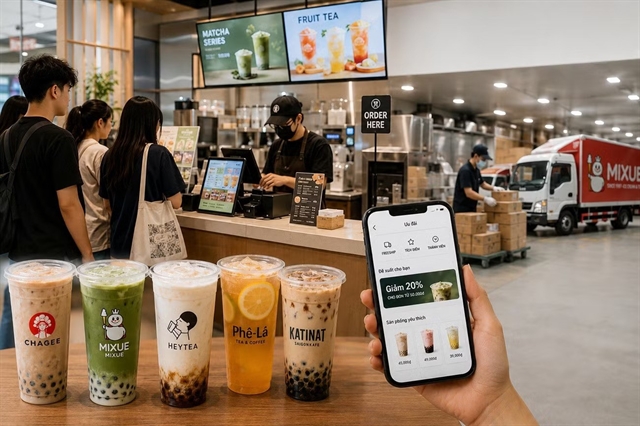
| Bubble tea has evolved from a youth-driven trend into an everyday purchase, shifting competition away from novelty products towards operating efficiency, supply chains and customer retention. — Photo thuonggiaonline.vn |
HÀ NỘI — Foreign bubble tea chains are stepping up expansion in Việt Nam, betting on rising consumer demand despite an increasingly crowded market, as the country's modern branded beverage sector continues to grow.
The arrival of new overseas brands and the continued expansion of established international chains have fuelled debate over whether Việt Nam's milk tea market can sustain further growth. Industry analysts said that the opportunity lies less in finding untapped demand than in changing consumer habits and the increasing size of the country's modern beverage market.
According to consultancy Momentum Works, Việt Nam's modern tea chain market generated gross merchandise value of about US$617 million by the end of 2025, up 28 per cent from 2023. Together with chain coffee outlets, the country's modern branded beverage market is expected to exceed $1.3 billion, making it the third largest in Southeast Asia after Indonesia and Thailand.
Analysts said bubble tea has evolved from a youth-driven trend into an everyday purchase, shifting competition away from novelty products towards operating efficiency, supply chains and customer retention.
Momentum Works said competition among beverage chains in Southeast Asia is increasingly centred on operational systems, digital infrastructure and supply chain efficiency rather than product innovation alone.
Recent entrants and expanding players include Chinese brands such as Mixue, CHAGEE, HEYTEA, ChaPanda, Molly Tea and Naixue, which — alongside international chains from other markets — also underscore growing confidence in Việt Nam's long-term consumer demand.
Nguyễn Thái Bình, a food and beverage industry expert and co-founder of Mapdy.vn, said the market was becoming increasingly polarised, with chains competing either on low prices backed by scale or on premium products and brand positioning.
The middle segment was under the greatest pressure, Bình told thuonggiaonline.vn.
He said brands that are neither inexpensive enough to encourage frequent purchases nor differentiated enough to justify premium pricing face growing competition from foreign chains with stronger operational capabilities.
Despite the influx of overseas brands, Bình said Vietnamese companies retain competitive advantages through local consumer knowledge and access to domestic tea varieties and ingredients.
While many international chains have popularised lighter teas highlighting natural flavours, he said Vietnamese consumers continue to favour stronger tea blended with condensed milk and familiar local ingredients.
Domestic brands, such as Phúc Long and Phê La, have built their identities around Vietnamese tea culture, while others have incorporated ingredients like Bảo Lộc, jasmine or lotus tea, along with coconut or taro, to appeal to local tastes.
Rather than imitating international competitors, Vietnamese operators should focus on defining their target customers, strengthening their business models and improving financial discipline, Bình said.
He said companies need to decide whether they aim to compete on price or premium experiences, while ensuring their operating models can be replicated efficiently as they expand.
Businesses should also focus on performance indicators including outlet profitability, contribution margins, payback periods and cash flow rather than headline revenue growth, he added. — VNS
Economy
 Economy
 Economy
 Economy
 Economy
 Economy
 Economy
 Economy
 Economy
 Economy
 Economy
 Economy
 Economy
 Economy
 Economy