 Economy


Tighter controls on livestream sales
1.
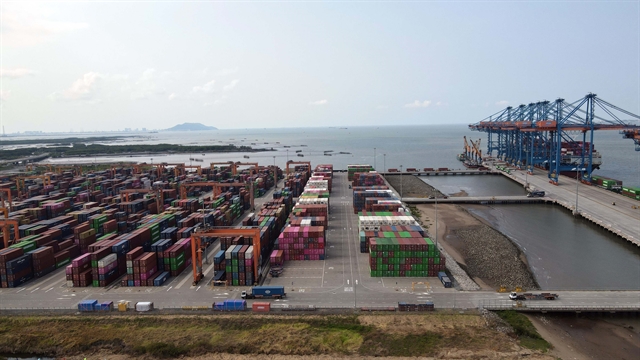 |
| The development of a maritime financial centre at VIFC HCM City comes amid major changes in the global maritime finance market. — VNA/VNS Photo |
HCM CITY — HCM City is seeking to transform itself from a major cargo gateway into a regional maritime finance hub, with the proposed Vietnam International Financial Centre (VIFC) expected to anchor a new ecosystem linking ports, logistics and global capital flows.
Experts say the strategy goes beyond establishing a single maritime exchange, aims to develop a specialised financial ecosystem serving the entire value chain of ports, logistics, shipping, and international trade.
Nguyễn Hữu Huân, deputy chairman of the VIFC HCM City executive board, said the concept of a maritime financial centre should be understood as a comprehensive system rather than a standalone trading platform.
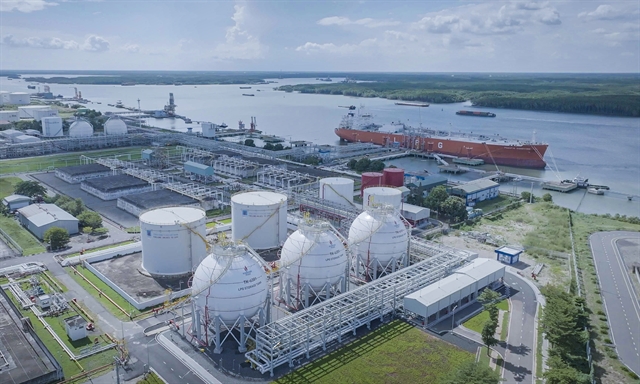
He pointed to the planned Cần Giờ International Transhipment Port, expected to spread over 570 hectares, that will cost more than VNĐ128,000 billion (US$5.1 billion) and have a long-term capacity of nearly 17 million TEU per year.
The port will be capable of receiving vessels of up to 250,000 DWT, creating significant physical infrastructure for the city.
However, Huân stressed that physical infrastructure alone would not be sufficient to drive growth.
“To turn ports into real growth engines, financial infrastructure must be developed alongside them. That is where the VIFC HCM City plays its role.”
"The maritime financial centre is expected to function as a gateway for capital mobilisation, allocation and risk management across the entire port and logistics value chain," he said.
“If ports such as Cần Giờ and Cái Mép–Thị Vải handle the movement of goods, then VIFC HCM City must handle the movement of capital, including insurance, credit, payments and investment products.
“This means the city should not only earn revenue from cargo handling but also attract international capital flows associated with shipping, logistics and supply chains.”
'Port to finance'
The proposed model, described as “port to finance”, aims to convert operational data into financial assets.
Data generated from cargo flows, transport contracts, electronic bills of lading, warehouse systems, and payment streams can be standardised and used to develop financial products such as trade finance, supply chain finance, maritime insurance, and port liability coverage.
Other instruments may include infrastructure bonds, blue bonds, securitisation of logistics cash flows, ship financing, leasing of port equipment, and derivatives to hedge risks related to freight rates, exchange rates and fuel prices.
Huân said stable revenue streams from ports, warehouses and logistics services could be structured into investment products to attract long-term international capital.
At the same time green port and low-emission logistics projects could access ESG-aligned funding through sustainable finance instruments.
The city’s ambition is not limited to attracting foreign direct investment into individual projects but extends to housing an international maritime capital market.
With appropriate regulatory sandbox mechanisms, internationally aligned legal frameworks, foreign currency transactions, and investor protection standards, VIFC HCMC could draw participation from global financial institutions.
Investors would be able to engage in Việt Nam’s maritime and logistics sectors through equity stakes, project bonds, infrastructure funds, trade finance, and insurance or reinsurance products.
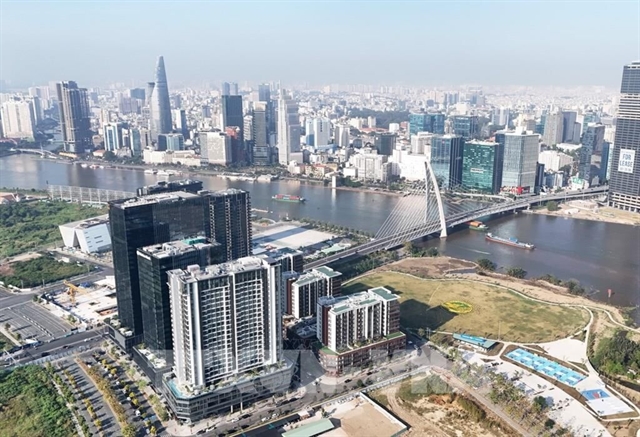 |
| The development of a maritime financial centre at VIFC HCM City comes amid major changes in the global maritime finance market. — VNA/VNS Photo |
Global shift
The development of a maritime financial centre comes at a time of significant change in global maritime finance.
A report by Z/Yen Group, which produces the Global Financial Centres Index in collaboration with the Busan Finance Center, shows that following the 2008 global financial crisis, many traditional banks reduced their exposure to shipping finance due to stricter regulations and risk management requirements.
This has created space for new financial institutions and opened opportunities for emerging financial centres to enter the market.
Analysts note that competitive advantage is no longer based solely on scale or historical legacy but increasingly on specialisation and the ability to serve niche segments.
Instead of competing directly with established centres such as London or Singapore, newer markets tend to focus on specific areas including ship leasing, supply chain finance and logistics-linked financial structures.
Another major trend reshaping the sector is the transition towards net zero emissions.
Demand for financing cleaner vessels, energy-efficient technologies and low-emission logistics systems is rising rapidly, driving growth in green finance products.
For emerging centres, this presents an opportunity to position themselves early as green maritime finance hubs.
Việt Nam is seen as having several advantages in this context.
Its strategic location along major international shipping routes, growing role in regional supply chains and strong export growth provide a solid foundation for developing financial services linked to maritime transport and logistics.
Segments such as ship leasing, supply chain finance and logistics-based financing are considered suitable entry points.
Capital hub
The Vietnam Ship Agents, Brokers and Maritime Services Association has also proposed establishing an international maritime centre to complement the financial centre.
According to the association, such a centre could contribute an additional 1.3 per cent to GDP each year, equivalent to $6 billion to $8 billion, while creating more than 100,000 high-quality jobs.
It could also attract between $20 billion and $30 billion in investment into infrastructure, shipbuilding, repair, and logistics.
Experts emphasise that a maritime financial centre will not only help attract capital but also retain high-value services within the domestic economy.
It will serve as a connecting layer between maritime operations and the financial system by providing data, transaction flows and related financial products, they point out.
However, they note that the decisive factor lies in the financial layer, including legal frameworks, product development and integration with international capital markets.
Without this, much of the value added in the maritime sector will continue to remain outside the domestic economy.
In the long term, if it can leverage global capital shifts and focus on appropriate market segments, the city can gradually strengthen its role not only as a logistics hub but also as a capital hub for the maritime economy in the region. — VNS
Economy
 Economy
 Economy
 Economy
 Economy
 Economy
 Economy
 Economy
 Economy
 Economy
 Economy
 Economy
 Economy
 Economy
 Economy