 Economy



OPPO Find X10 Pro Max to Debut Globally with MediaTek’s 2nm Flagship Dimensity 9600 Pro
1.
|
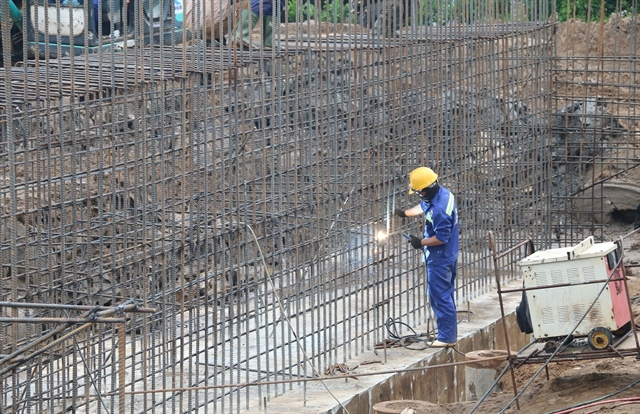
| Construction at Cao Lãnh - An Hữu highway, Đồng Tháp Province. Public investment disbursement remained sluggish in the first months of 2026, prompting calls to accelerate project implementation for faster spending. — VNA/VNS Photo Đức Tâm |
HÀ NỘI — Việt Nam’s public investment disbursement remained slow in the opening months of 2026, prompting renewed calls from the Government to accelerate project implementation and spending to support economic growth amid global uncertainties.
The latest figures from the Ministry of Finance showed that disbursement reached VNĐ153.9 trillion (roughly US$6 billion) as of May 7, equal to 15.2 per cent of the annual target assigned by the Prime Minister.
By May 7, only eight ministries and central agencies and 16 localities had recorded disbursement rates at or above the national average.
These included the ministries of Industry and Trade, National Defence, Public Security and Foreign Affairs, along with localities such as Hà Nội, Hải Phòng, Quảng Ninh and Khánh Hòa.
Meanwhile, 27 ministries and agencies and 18 localities posted disbursement rates below the national average. Several agencies recorded rates below 1 per cent or had yet to disburse any funds, including the State Bank of Vietnam, the Government Inspectorate, the State Audit Office of Vietnam, Voice of Vietnam and Vietnam Television.
The Government has repeatedly urged ministries and local authorities to speed up public investment disbursement this year, viewing it as one of the key drivers of economic growth.
The public investment plan for 2026 totalled nearly VNĐ1.03 quadrillion, including both central and local government funding.
Nearly VNĐ984.5 trillion of the total has been allocated in detailed funding plans for projects and programmes, equivalent to 95.8 per cent of the target assigned by the Prime Minister.
The remaining capital has not yet been allocated, mainly because investment procedures are still being finalised.
According to the Ministry of Finance, one of the main reasons for the slow pace was the unusually large public investment plan for 2026, which was 22.7 per cent higher than the 2025 plan.
A prolonged public holiday at the end of April also temporarily slowed construction progress and capital disbursement for many projects.
Other obstacles included difficulties in site clearance, compensation pricing and resettlement plans, shortages of construction materials and rising costs, shortcomings in investment planning and project preparation as well as limited capacity and weak accountability among some project investors, management boards and contractors.
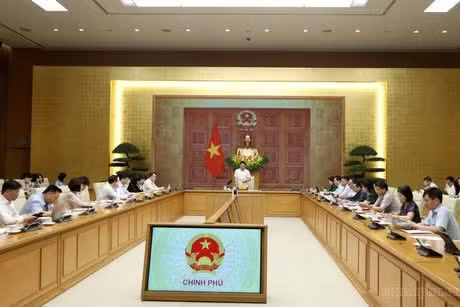
At a recent conference on public investment, Prime Minister Lê Minh Hưng called for stricter discipline in public investment management and greater accountability.
The Ministry of Finance said it would continue publishing weekly, monthly and quarterly disbursement data for ministries, central agencies and localities to improve transparency and accountability.
Meanwhile, the Ministry of Construction is developing a KPI-based assessment system to evaluate public investment disbursement performance across ministries and local governments. The system is expected to measure indicators including capital allocation, project planning and actual disbursement progress. — VNS
Economy
 Economy
 Economy
 Economy
 Economy
 Economy
 Economy
 Economy
 Economy
 Economy
 Economy
 Economy
 Economy
.jpg) Economy
Economy
 Economy