 Economy


Việt Nam has five Halal certification bodies recognised by Malaysia
1.
|
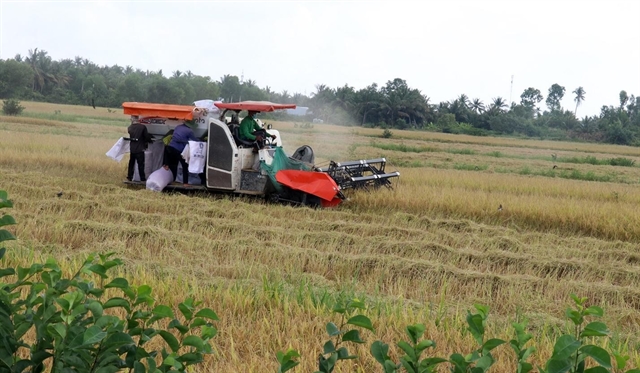
| A combine harvester on a rice field in An Giang Province during the harvest season as local cooperatives strengthen production linkages and mechanisation. — Photo laodong.vn |
AN GIANG — Authorities in An Giang Province have introduced policies and support mechanisms to strengthen the collective economy and cooperatives, helping farmers expand production linkages in value chains.
Đường Gỗ Lộ Agricultural Cooperative in Long Thạnh Commune is considered one of the province’s most efficient cooperatives in rice production, particularly in linking farmers with consumption of their crops.
Nguyễn Hồng Phương, director of the cooperative, said members had recently completed harvesting the 2025-26 winter spring crop on a total area of more than 220 hectares, with average yields exceeding 9.5 tonnes per hectare.
But they faced difficulties during the harvest season as fuel prices increased, leading to shortages of harvesting machines and affecting schedules and sales, he said.
The cooperative maintains close linkages with enterprises supplying agricultural materials and purchasing rice, helping farmers feel more secure,.
Under plans expected to take effect from the middle or end of 2026, several other cooperatives will be merged into it under instructions from authorities, aggregating its members’ total rice cultivation area to more than 1,000 hectares.
The management board and members hope to receive additional resources and greater authority so that the cooperative can become a link between farmers and enterprises, ensuring a complete rice production chain.
“Given current challenges and limitations in cooperative management and operations, along with forecasts that rice production under market mechanisms will become increasingly competitive, strengthening resources in finance, human resources and warehousing is considered essential,” Phương explained.
He added that with stronger support, the cooperative could directly purchase agricultural inputs, invest in tractors, tillers, combine harvesters, and straw balers, and itself buy rice when required to put a floor under prices.
The cooperative also seeks investment in embankments, transport infrastructure and irrigation systems to support farming and transportation.
Trần Thị Vỹ, director of Kênh 10 Agricultural Cooperative in U Minh Thượng Commune, said the cooperative had contributed to connecting the consumption of many local agricultural products over the past five years, including pineapples, bananas, dwarf taro, purple yam and ginger.
The cooperative also processes banana fibre for raw sales and weaving materials, creating jobs for more than 40 women.
But it continued to face difficulties because of shortages in warehouse facilities, machinery and capital, Vỹ said.
“The cooperative has repeatedly submitted proposals and followed instructions from relevant agencies to seek financial support for investment in a warehouse system equipped with drying machines. However, after nearly two years, we have yet to receive any assistance.
“As a result, banana fibre production cannot meet buyers’ demand, while agricultural product purchases remain limited due to inadequate storage facilities.”
|
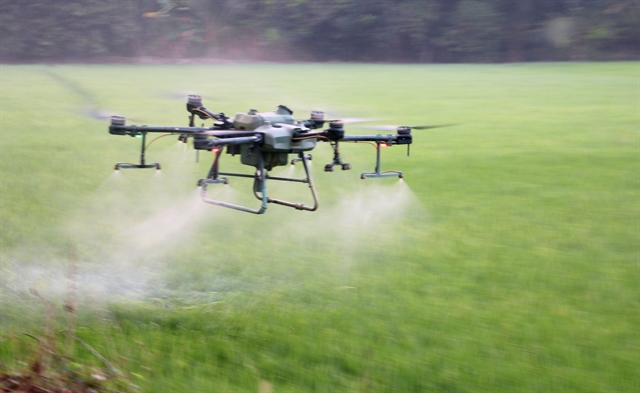
| Farmers in An Giang Province use drones for spraying fertilisers and pesticides, helping reduce cost and time. — VNA/VNS Photo |
According to the An Giang Cooperative Alliance, the province now has 3,579 cooperative groups and 862 cooperatives, 729 of the latter being agricultural, 91 of them non-agricultural and 42 being people’s credit funds.
Phạm Thành Trăm, chairman of the alliance, said the collective economy only accounts for a small proportion of the province’s economy.
Most collective economic models remain small in scale, with limited capital and competitiveness, he said.
He said Government support for cooperatives remains inadequate.
Many cooperatives operate on a small scale and only offer basic services such as irrigation pumping and land preparation, and their managers and staff often lack specialised training and operational skills to meet requirements in a market economy, he said.
The alliance would coordinate with provincial agencies to advise the local Party Committee, People’s Council and People’s Committee on implementing Party resolutions and State policies related to the collective economy and cooperatives.
It would review support policies and quickly addressing shortcomings to enable favourable conditions for cooperatives, he said.
“At the same time, the province will promote training and capacity building, especially digital technology application among managers, members and workers in collective economic organisations and cooperatives.”
He added that An Giang would strengthen trade promotion and create favourable conditions for cooperatives to participate in trade fairs and programmes to link up supply and demand. — VNS
Economy
 Economy
 Economy
 Economy
 Economy
 Economy
 Economy
 Economy
 Economy
 Economy
 Economy
 Economy
 Economy
 Economy
.jpg) Economy
Economy