 Economy



84 individuals investigated for transnational online frauds
1.

|
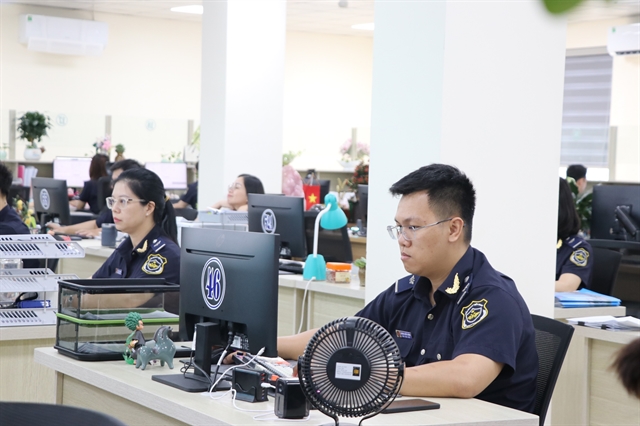
| Officials of the Cần Thơ Department of Taxation. The tax management systems will be developed in a smarter direction through the application of big data, AI, risk management and real-time monitoring. — VNA/VNS Photo Thu Hiền |
HÀ NỘI — Finance Minister Ngô Văn Tuấn has called on the Department of Taxation to step up the use of artificial intelligence (AI) and big data to modernise tax management while safeguarding public trust as Việt Nam pursues ambitious revenue targets.
Speaking at a meeting on May 12, Tuấn said the tax sector must continue upgrading its operations and effectively capture new revenue streams from the digital economy to support the country’s goal of achieving double-digit economic growth.
Tax policy should move beyond a narrow focus on budget collection towards broader revenue governance, Tuấn said, stressing the need to expand and sustain the tax base.
He instructed tax authorities to strengthen oversight of emerging revenue sources such as e-commerce, cross-border business activities, digital assets, cryptocurrencies and virtual currencies while tightening controls on invoice fraud, tax refund fraud and tax arrears.
He also stressed that tax collection must maintain public trust, calling for a more proactive and service-oriented approach towards taxpayers to encourage voluntary compliance and reduce administrative burdens.
For the 2026-30 period, the Ministry of Finance targets state budget revenue equivalent to at least 20 per cent of GDP, up from 18.8 per cent in the 2021-25 period, with tax and fee revenues accounting for at least 17 per cent of GDP.
“The task ahead for the tax sector will be very heavy amid continued global economic volatility and challenges,” Tuấn said.
In response, Director of the Department of Taxation Mai Xuân Thành said the sector would continue strengthening reforms, improving taxpayer services and enhancing the professionalism of tax officials while stepping up efforts to prevent corruption and misconduct.
He said modernising tax administration would be a strategic breakthrough, adding that management systems would be developed in a smarter direction through the application of big data, AI, risk management and real-time monitoring.
In the first four months of 2026, tax authorities collected nearly VNĐ1.01 quadrillion (US$38.2 billion) for the State budget, equal to nearly 45 per cent of the annual target and up 16.7 per cent year-on-year.
By the end of April, the tax authority was managing more than 44.7 million taxpayers, with over 99 per cent of businesses filing and paying taxes electronically on time.
The electronic invoicing system has processed nearly 24.5 billion invoices, while the eTax Mobile application has recorded more than 10.7 million downloads and 21.2 million electronic tax payment transactions during the period.
In the remaining eight months of the year, tax revenue is expected to reach more than VNĐ2.24 quadrillion, at least 10 per cent higher than 2025 levels.
State budget revenue targets for 2026-30 are projected at VNĐ16.4 quadrillion, including VNĐ14.6 quadrillion collected by tax authorities, 1.65 times higher than in the previous five-year period.
The goal is challenging as the Government plans to continue implementing support policies for businesses and citizens that could reduce state revenues by more than VNĐ1 quadrillion over the next five-year period. — BIZHUB/VNS
Economy
 Economy
 Economy
 Economy
 Economy
 Economy
 Economy
 Economy
 Economy
 Economy
 Economy
 Economy
 Economy
 Economy
 Economy