 Economy


Việt Nam, China seek stronger substantive parliamentary cooperation
1.
|
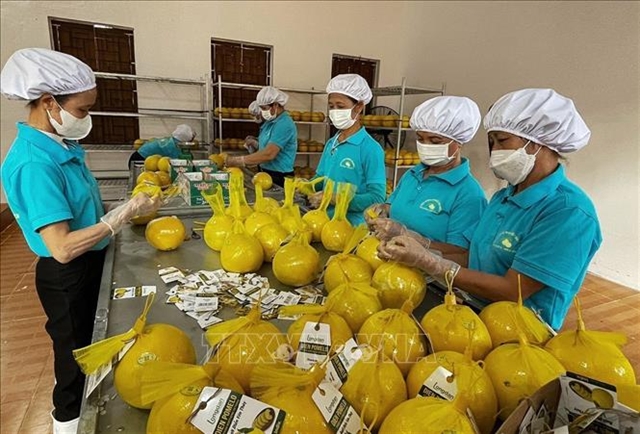
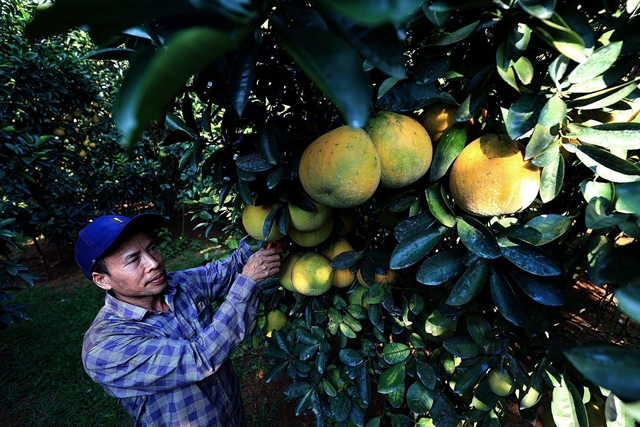
| Workers packaging pomelos for export to the UK at a cooperative in Hưng Yên Province. — VNA/VNS Photo |
By Ly Ly Cao
HÀ NỘI — Exporters are being urged to rethink their approach to the UK market as stricter standards, sustainability requirements and rising competition reshape trade opportunities despite strong bilateral growth under the UKVFTA and CPTPP frameworks.
At a recent seminar on opportunities and challenges in the UK market held on May 11, officials and business representatives said the United Kingdom remained one of the most promising export destinations for Vietnamese goods but warned that tariff preferences alone would no longer be enough to secure long-term market access.
According to Vũ Việt Thành, a representative from the Overseas Market Development Department under the Ministry of Industry and Trade (MoIT), the UK economy, valued at nearly US$4 trillion in 2025, continues to maintain strong purchasing power and deep integration into global trade despite the aftereffects of Brexit, inflation and the COVID-19 pandemic.
"The UK is a familiar market for many Vietnamese enterprises, but it is also a market that always needs to be approached with new thinking," Thành said.
"The UK is not only an import market for consumer goods but also a centre for services, finance, standards, technology and distribution."
Trade between the two countries has continued to expand rapidly. Vietnamese customs data showed bilateral trade reached around $9.38 billion in 2025, up 11.3 per cent year-on-year, with Việt Nam exporting approximately $8.39 billion worth of goods to the UK.
British statistics, meanwhile, showed total bilateral goods and services trade climbed to £10.4 billion in the four quarters ending in the third quarter of 2025, up 39.5 per cent from the same period previously.
Electronics continued to dominate Việt Nam's exports to Britain, with phones and components generating around $1.35 billion and computers and electronic products contributing another $1.3 billion in 2025.
Traditional sectors such as garments, footwear, seafood, coffee, cashew nuts and wooden products also maintained strong growth.
However, speakers at the seminar stressed that exporters were facing a rapidly changing business environment in Britain after Brexit, where lower tariffs were increasingly offset by tougher compliance requirements.
Lê Đình Bá, counsellor and trade representative from the Vietnamese embassy in the UK, described the market as more open in trade but stricter in standards following Brexit.
The UK's new border control regime, sanitary and phytosanitary (SPS) rules and Border Target Operating Model (BTOM) have become major barriers for exporters of food, agricultural and animal-origin products, according to Bá.
Businesses are now required to prepare more detailed documentation, inspection certificates and traceability systems before goods leave Việt Nam.
At the same time, Britain's environmental agenda is creating additional pressure on supply chains.
The UK's commitment to achieving net zero emissions by 2050 is pushing retailers and importers to demand more information related to carbon footprints, labour standards and sustainable sourcing practices from overseas suppliers.
Officials also highlighted growing concerns over Extended Producer Responsibility (EPR) regulations for packaging, which could increase costs for exporters using non-recyclable materials.
"Compliance is no longer an additional cost but a condition to access high-value distribution channels," Bá said.
|
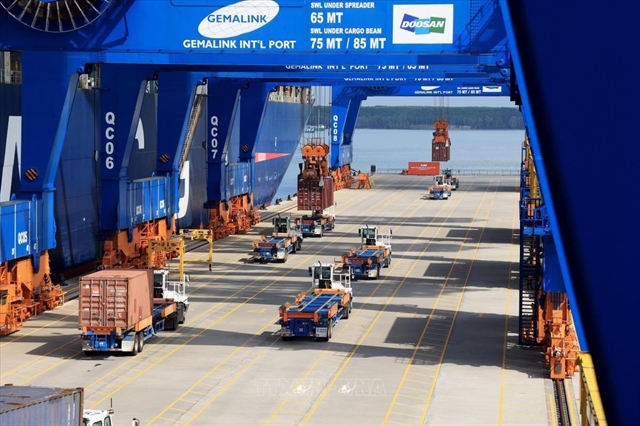
| Containers loaded on vessels for export at the international port Gemalink. — VNA/VNS Photo |
Industry experts said Vietnamese firms must move beyond a low-cost export strategy if they want to deepen their presence in Britain.
Thái Trần, managing director of TT Meridian Ltd, said Vietnamese businesses often underestimated the level of detail expected by British buyers during early negotiations.
"Vietnamese enterprises need to provide detailed product information right from the first stages, such as product introductions and quotations," he said.
"This is a major difference in business culture between Vietnamese and British partners."
He also warned that Vietnamese exporters were competing not only with China, India and Bangladesh, but also with ASEAN suppliers benefiting from similar tariff preferences.
"Products that are not manufactured sustainably under ESG standards will have little opportunity to get onto retail shelves," Thái said, adding that products carrying environmental and labour certifications are increasingly valued by both consumers and importers in the UK.
Against this backdrop, trade specialists encouraged exporters to explore the UK market through higher-value and niche-orientated products rather than relying solely on volume growth.
The UK's online retail market, which accounted for 27.5 per cent of total retail sales in 2025, was identified as a promising channel for small and medium-sized enterprises to test products and build brand recognition before entering major retail chains.
Representatives said products with strong local identity, sustainable packaging and traceable supply chains could gain traction among British consumers, particularly in segments such as speciality coffee, processed agricultural products, lifestyle goods and eco-friendly fashion.
The seminar also pointed to opportunities in higher-value manufacturing sectors, including electronics, green technology, pharmaceuticals and advanced industrial products, as Việt Nam's export structure continues to shift towards more technology-intensive goods.
Officials further advised exporters to build what they described as a UK export data room for each product line, including English-language company profiles, certificates, origin documentation, packaging data, traceability information and carbon-related records to improve responsiveness and credibility with buyers.
As a result, businesses seeking long-term growth in Britain should focus on building stable supply chains, improving product design and packaging, enhancing legal and logistics capabilities, and gradually developing their own brands instead of depending entirely on original equipment manufacturing (OEM) models. — BIZHUB/VNS
Economy
 Economy
 Economy
 Economy
 Economy
 Economy
 Economy
 Economy
 Economy
 Economy
 Economy
 Economy
 Economy
 Economy
 Economy