 Economy

Businesses need to expand share of online export market
1.
|
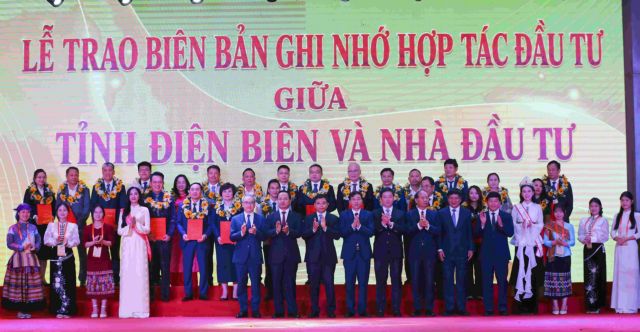
| Authorities in Điện Biên Province present investment approval decisions to enterprises at Điện Biên Province's Investment Promotion Conference on May 11. VNA/VNS Photo |
ĐIỆN BIÊN — At the Investment Promotion Conference in Điện Biên Province on May 11, Deputy Prime Minister Nguyễn Văn Thắng urged provincial authorities to continue accelerating substantive administrative reforms and improvements to the investment climate.
This year’s conference, held by the Provincial People’s Committee, attracted more than 1,200 delegates.
Participants included senior Party and State leaders and representatives from central ministries and agencies, diplomatic missions, international organisations, business associations and major corporations, as well as both domestic and foreign investors.
At the event, the Deputy PM praised the province’s efforts in administrative reform and improving the investment environment.
According to Thắng, Điện Biên has made a significant institutional breakthrough by introducing a 'green lane' mechanism, under which administrative procedures for priority projects will be shortened by between 70 and 90 per cent.
Thắng also called on the locality to build a service-oriented administration that actively facilitates development and maximises the effectiveness of the green lane mechanism.
In addition, the province was encouraged to quickly complete zoning plans, prepare its workforce and ensure that economic development is aligned with environmental protection, cultural preservation and national defence and security along border areas.
Thắng also highlighted Điện Biên’s development potential, noting the province’s advantages in historical tourism, cultural identity, renewable energy, commercial agriculture and cross-border trade.
In the next few years, Điện Biên should focus on developing tourism into a key economic sector based on three pillars: historical and spiritual tourism, ethnic and cultural tourism linked with nature exploration and resort, entertainment and wellness tourism, according to the Deputy PM.
At the same time, the province needs to make more effective use of over 400,000ha of land that could be converted to high-value crops, such as macadamia, coffee, fruit trees and medicinal plants, while also promoting industrial development, renewable energy and cross-border trade as new growth drivers.
The Deputy PM also urged central ministries and agencies to prioritise resources for the early implementation of Phase 1 of the Sơn La – Điện Biên – Tây Trang Border Gate Expressway project, while increasing efforts to mobilise ODA funding and attract strategic investors to support the province’s next phase of development.
Opportunities
Lê Văn Lương, chairman of the Điện Biên Provincial People’s Committee, described the conference as aimed at realising the goals set out in the 14th National Party Congress Resolution and the 15th Provincial Party Congress Resolution, with the objective of achieving double-digit economic growth during the 2026–2030 period.
He noted that Điện Biên holds a strategically important position in terms of national defence, security and border sovereignty, while also possessing considerable potential in tourism, agriculture, energy, cross-border trade and logistics.
As the only Vietnamese locality sharing borders with both Laos and China, with a frontier length of more than 455km, Điện Biên is well positioned to become a strategic trade gateway linking northern Laos, southwestern China and the Greater Mekong Subregion.
According to the provincial leader, strategic transport infrastructure is gradually being developed in a synchronised manner, including the Sơn La – Điện Biên – Tây Trang Border Gate Expressway and key national and provincial roads, creating new development opportunities for trade, services and logistics.
At the same time, Điện Biên benefits from favourable natural conditions, diverse scenic landscapes, rich historical heritage and the distinct cultural identities of its 19 ethnic groups, reflected in festivals such as the Hoa Ban Festival, Cherry Blossom Festival and traditional long-tail boat racing events.
In particular, with the nationally significant Điện Biên Phủ Battlefield historical complex, the province has identified tourism as a spearhead economic sector built around three pillars: historical and spiritual tourism; ethnic cultural tourism combined with nature exploration; and resort tourism.
|
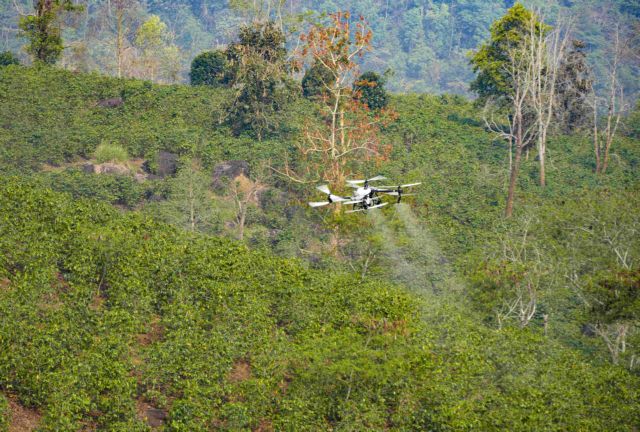
| Unmanned aerial vehicles (UAVs) are being deployed in the cultivation and maintenance of coffee plantations in Mường Ảng District, Điện Biên Province. VNA/VNS Photo |
Điện Biên aims to develop tourism in a modern, smart and sustainable direction, with the ambition of becoming one of the northwest region’s most attractive destinations.
Since January, the province has officially implemented its green lane mechanism for priority non-budget investment projects, pledging to cut at least 70 per cent of investment-related administrative processing time.
The province has also introduced preferential policies across agriculture, forestry, industry, construction, tourism and trade, while accelerating land clearance work to speed up project implementation.
Challenges
However, many businesses at the conference noted that despite Điện Biên’s strengths in land resources, renewable energy, agriculture and historical tourism, the province still needs to address bottlenecks related to transport infrastructure, electricity transmission networks, land policies and the availability of skilled workers.
Representatives from Denmark’s Vestas Group proposed upgrading the 220kV Điện Biên – Sơn La transmission grid and studying a suitable electricity pricing mechanism for the mountainous region to support renewable energy development.
Meanwhile, FPT Corporation suggested applying UAVs, drones and artificial intelligence technologies to agricultural production and transport to reduce logistics costs and improve farming efficiency.
TH Group and the Vietnam Macadamia Association emphasised the importance of developing agriculture through integrated value chains, promoting deep processing and building strong brands for Điện Biên’s signature agricultural products.
In the tourism sector, many delegates proposed that the province develop high-quality resort, wellness and cultural historical tourism complexes to increase visitors’ length of stay and spending levels.
Participants also recommended that Điện Biên strengthen regional connectivity, expand links with Laos and China, and invest more heavily in local workforce training to meet future development demands.
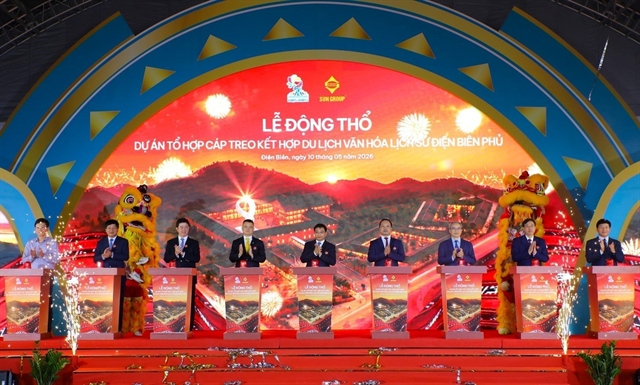
As part of the conference, the province granted 12 investment approval decisions and investment certificates to 11 investors with a combined registered capital exceeding VNĐ48.32 trillion, including three foreign-invested projects worth more than VNĐ14 trillion.
The investors included several major corporations and enterprises, such as Vingroup, Sun Group, Vestas Development A/S and Beijing Weineng Investment.
In addition, 22 memoranda of understanding on investment cooperation were signed, with total pledged capital surpassing VNĐ209.37 trillion across sectors including tourism, urban development, agriculture, industry, energy, logistics and innovation. VNS
Economy
 Economy
 Economy
 Economy
 Economy
 Economy
 Economy
 Economy
 Economy
 Economy
 Economy
 Economy
 Economy
 Economy
 Economy