 Economy



Hà Nội celebrates Liberation Day with spectacular fireworks
1.
|
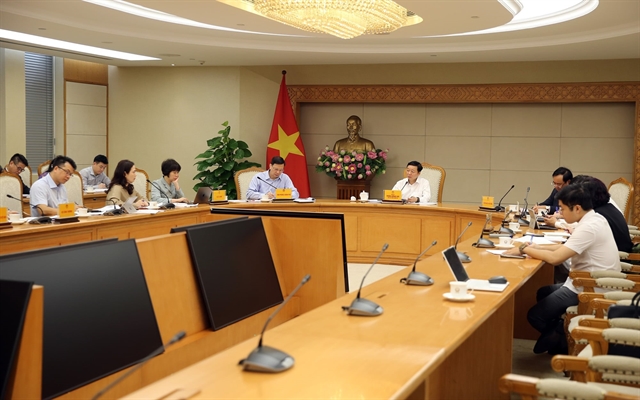
| Deputy Prime Minister Trần Hồng Hà presides over a meeting on a draft decree to boost private investment in agriculture and rural development. — Photos courtesy of the Government Portal |
HÀ NỘI — Vietnam is revising policies to attract greater business investment in agriculture and rural areas, with a draft decree reviewed yesterday at a meeting chaired by Deputy Prime Minister Trần Hồng Hà.
The Ministry of Finance, the lead drafting agency, said the proposal has been updated to reflect the Party’s latest orientations on developing agriculture, farmers and rural areas, while ensuring consistency with existing legal frameworks.
The draft prioritises sectors with significant growth potential, including aquaculture, large-scale livestock farming, slaughtering and processing facilities, agricultural preservation, and the development of raw material areas serving processing activities.
Several adjustments have been introduced to improve feasibility and avoid overlaps. Provisions on prioritising specific types of projects or enterprises have been removed, leaving such decisions to local authorities. The draft proposes a support cap of VNĐ10 billion (nearly US$380,000) per project for raw material zone development and lowers the minimum investment threshold for agro-processing and preservation projects eligible for incentives from VNĐ60 billion to VNĐ45 billion.
Support measures already regulated under other policies, such as those related to fishing ports and agricultural machinery, have been excluded from the draft.
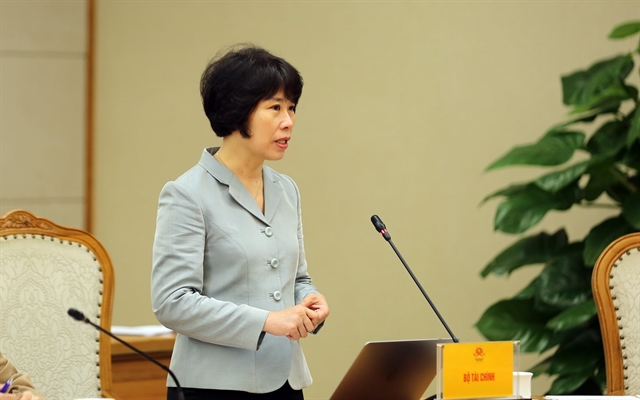
Deputy Minister of Finance Nguyễn Thị Bích Ngọc noted that while Decree No. 57/2018/NĐ-CP has encouraged enterprise investment in agriculture and rural areas, its overall effectiveness has remained limited.
|
| Deputy Minister of Finance Nguyễn Thị Bích Ngọc delivers a report. |
She emphasised that attracting investment to the sector requires not only financial incentives but also a comprehensive policy framework, particularly regarding land, environmental protection and specialised regulations.
The draft decree is built on several key principles, including selective inheritance of existing policies, targeted support for areas where private investment remains limited, and the application of caps to ensure resources are not spread too thin. Its implementation is designed to comply with public investment regulations, ensuring fiscal discipline and consistency.
Under the proposal, State support would cover up to 30 per cent of total investment costs, with specific limits for each project and conditions tied to project scale.
Participants at the meeting discussed the decree’s scope and highlighted the need for strong, practical support mechanisms, especially in credit, land access and science and technology. They also stressed the importance of maintaining policy coherence and avoiding overlaps across legal documents.
Concluding the meeting, Deputy PM Hà said that agriculture, farmers and rural areas remain a priority and have achieved significant results in recent years thanks to supportive policies.
However, he noted that the new decree must address shortcomings in previous regulations, particularly those that were too general or lacked implementation conditions and resources.
He tasked the Ministry of Finance, in coordination with the Ministry of Agriculture and Environment, to conduct a comprehensive review of existing mechanisms and policies to ensure better integration. Provisions already fully regulated elsewhere should not be repeated, while new and emerging issues should be incorporated where necessary.
The Deputy PM also stressed the importance of maintaining effective financial support measures, such as interest rate subsidies, while improving accessibility through simpler procedures and timely disbursement.
He called for more flexible support mechanisms, including disbursement based on project progress, alongside clear and feasible eligibility criteria.
Attention should also be given to transitional provisions to ensure continuity of policies, and to assessing budget resources to guarantee feasibility.
The draft decree is expected to be further refined to adopt a more comprehensive approach, covering areas such as rural development, environmental protection, waste treatment, infrastructure, human resource training and technology transfer.
Hà emphasised that the decree must align with existing policies to form a unified system while allowing enterprises to select the most suitable support measures. — VNS
Economy
 Economy
 Economy
 Economy
 Economy
 Economy
 Economy
 Economy
 Economy
 Economy
 Economy
 Economy
 Economy
 Economy
 Economy