 Economy



Quy Nhơn Dialogue on Climate and Transition to provide platform for open discussion
1.
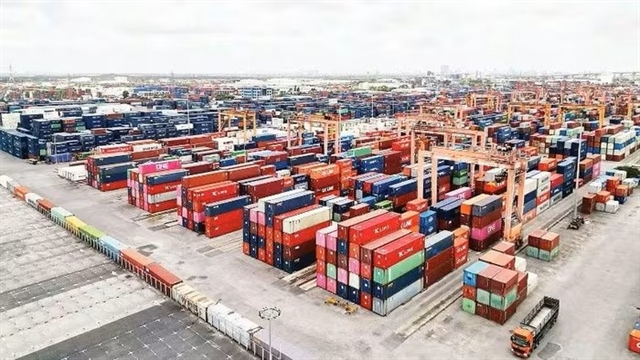 |
| Containers at the Tân Vũ Port in Hải Phòng, Việt Nam. VNA/VNS Photo |
HÀ NỘI — Vietnamese export-oriented manufacturers are striving to sustain production and protect jobs as rising fuel prices and the spillover effects of the Middle East conflict place mounting pressure on operations.
Recent volatility in petrol and oil prices has sharply increased logistics costs. According to Bùi Mạnh Toàn, Chairman and General Director of Vietnox JSC, transportation expenses have risen by between 30 per cent and 60 per cent, including domestic transport, ocean freight and container charges.
Previously, transporting a container of goods from Long An, now part of Tây Ninh Province, to Lạng Sơn Province cost around VNĐ70 million. The cost has now exceeded VNĐ100 million.
For companies where logistics accounts for a large share of production costs, the increase is directly affecting competitiveness. Vietnox Agri, an agricultural export subsidiary of Vietnox, said higher transport costs have significantly pushed up product prices, while firms have limited room to adjust selling prices due to their dependence on international markets.
Supply chain disruptions have also extended delivery times, generating additional warehouse and container storage costs. For fresh agricultural products, delays can affect quality and risk damaging credibility with overseas partners.
The textile and garment sector is facing similar difficulties. Trần Minh Hiếu, Director of TNG Investment and Trading JSC in Thái Nguyên Province, said the cost of transporting raw materials and finished goods had increased in line with rising fuel prices.
Transport partners proposed raising fees by about 10 per cent compared with levels before the Middle East conflict, while customers in the United States and Europe were requesting faster delivery schedules to reduce risks.
At the same time, raw material prices were also trending upward due to higher energy and transport costs, narrowing profit margins. With global demand still weak, some foreign partners were delaying orders or cutting purchasing volumes.
Dương Quang Trung, Director of Thiên Lộc Thanh Import–Export Services Co Ltd in Hồ Chí Minh City, said export volumes had dropped significantly since early March 2026 as fuel prices climbed.
Previously, the company handled export procedures and shipments for around 2,000 to 3,000 containers each month. The volume had now fallen by more than 50 per cent, with exports largely limited to essential goods such as food products, while shipments of wood products and garments had slowed.
A survey by the Hồ Chí Minh City Export Processing and Industrial Zones Authority covering 231 enterprises showed that 52 firms, about 22 per cent, have adjusted production plans to cope with rising input costs. Nearly 12 per cent have had to extend delivery schedules due to higher transport expenses and changes in logistics routes.
To mitigate the impact, companies are focusing on cost optimisation and operational efficiency.
Vietnox Agri has reviewed its entire operational chain, from raw material procurement to manufacturing and logistics, to reduce waste and improve productivity while keeping costs at reasonable levels. The firm is also working with multiple transport partners, adjusting shipping routes and renegotiating delivery terms with clients to share risks.
Meanwhile, TNG Investment and Trading JSC has been negotiating with transport providers to maintain reasonable freight rates while ensuring a stable supply of materials for production. The company has also stepped up the application of technology and automation in its garment production lines.
According to Dr Mạc Quốc Anh, Vice Chairman and Secretary General of the Hà Nội Small and Medium Enterprises Association, businesses should restructure cost management and export contracts to improve flexibility, negotiate risk-sharing mechanisms with partners, diversify logistics routes and expand markets.
Experts note that in an increasingly uncertain global environment, corporate resilience depends not only on financial resources but also on management quality and the ability to adapt quickly to changing conditions. — VNS
Economy
 Economy
 Economy
 Economy
 Economy
 Economy
 Economy
 Economy
 Economy
 Economy
 Economy
 Economy
 Economy
 Economy
 Economy