 Economy



AITO Looks Ahead to Europe, Building a Thriving Automotive Ecosystem
1.
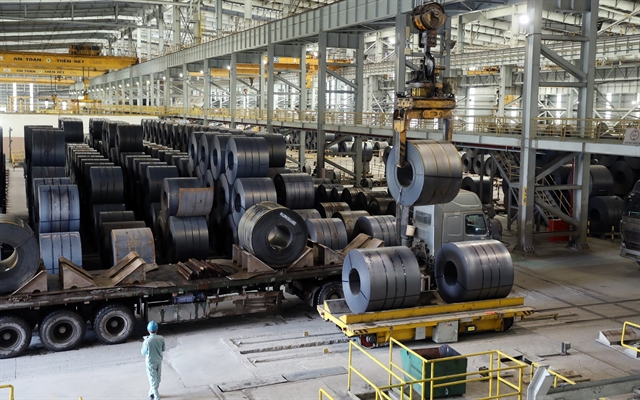 |
| Steelmakers announced a fresh round of price hikes effective from March 9 after fuel prices climbed sharply, adding to production costs. — VNA/VNS Photos |
HÀ NỘI — Construction material producers have raised prices for steel and cement, citing rising energy costs linked to tensions in the Middle East and continued pressure on input materials.
Steelmakers announced a fresh round of price hikes effective after fuel prices climbed sharply, adding to production costs, baodautu.vn reports.
Hoa Phat Hung Yen Steel Co has increased prices by VNĐ300,000 (US$12) per tonne for rebar, construction steel coils and wire rod products in the north. Viet Duc Steel Group has also raised prices by VNĐ300 per kilo for similar products in northern and central markets.
Companies said the adjustments were driven by higher prices for steel billets and other raw materials, as well as volatile supply chains.
A company representative said that increasing product prices was unavoidable, especially as the Middle East conflict pushes up production costs. Without price adjustments, profitability could not be ensured, the representative said.
Other producers, including Tung Ho Steel Vietnam Corp, VAS Group and Vietnam-Italy Steel Co, have announced similar increases of around VNĐ300,000 per tonne.
Cement producers are facing comparable pressures. Several foreign-invested companies such as Siam City Cement (Vietnam) and Fico-YTL have raised prices by about VNĐ100,000 per tonne for both bagged and bulk cement in March.
State-owned Vicem’s subsidiaries, including Vicem Hoang Mai, Vicem Bim Son and Vicem Ha Long, have also implemented similar increases since mid-March.
In addition to price hikes, some firms have reduced trade discounts. Dai Duong Cement JSC cut discounts by VNĐ20,000 per tonne in markets from Thanh Hóa northward.
Despite the adjustments, industry players say margins remain under pressure due to rising costs across the supply chain, including coal, plastics and packaging materials.
Demand has also weakened, with concrete producers reluctant to take on new orders and residential construction projects yet to recover, making bulk cement harder to sell.
At the same time, higher logistics costs and shipping shortages have slowed exports, raising the risk of domestic oversupply and intensifying competition.
Rising costs push up project budget
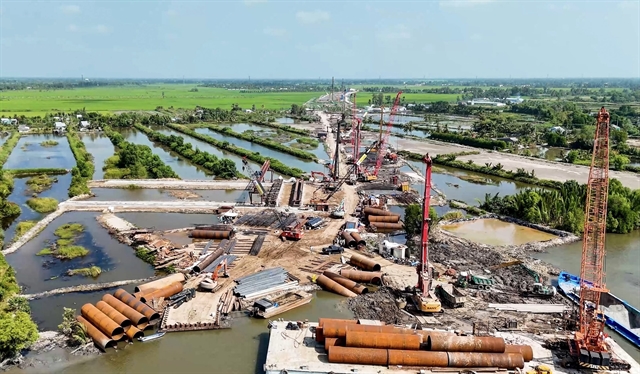 |
| Rising construction material prices are putting pressure on building and transport projects, driving up costs. |
Industry participants warned that material prices could continue to rise if Middle East tensions persist, driving oil prices higher and increasing the likelihood of supply disruptions.
Construction materials such as steel, cement and bricks are key inputs for infrastructure and housing projects. The Vietnam Association of Construction Contractors (VACC) estimates steel accounts for 20 per cent to 30 per cent of total material costs, meaning even modest increases can significantly raise overall project costs, especially for large-scale projects.
Most construction contracts are signed on fixed unit price terms, leaving contractors to absorb additional costs when material prices surge. Prolonged increases could significantly erode profits across the sector.
According to Trần Xuân Lượng, deputy director of the Vietnam Association of Realtors’ Institute for Real Estate Market Evaluation (VARS IRE), rising global prices for fuel and construction materials were an unavoidable external factor affecting Việt Nam’s economy and real estate market.
For public infrastructure projects, higher input costs could lead to delays or adjustments to total investment, analysts said.
The National Statistics Office's data showed housing and construction material prices rose by 0.56 per cent in February from the previous month, contributing 0.13 percentage points to overall consumer price index growth, driven by increases in maintenance materials and housing-related services.
With input costs continuing to climb, construction and project investment expenses in March are expected to exceed February levels.
The VACC has urged the Government to introduce support measures, warning that volatility in fuel and material prices is directly affecting contractors, particularly those involved in transport infrastructure projects that consume large volumes of fuel and bulk materials.
The association has proposed allowing fuel cost fluctuations to be factored into construction estimates, bidding prices and contract values, enabling contractors to be compensated for rising costs. It also called for temporary measures to stabilise fuel-related transportation costs until gasoline and diesel prices ease. — VNS
Economy
 Economy
 Economy
 Economy
 Economy
 Economy
 Economy
 Economy
 Economy
 Economy
 Economy
 Economy
 Economy
 Economy
 Economy