 Economy



AI training targets 1,000 teachers, 10,000 students in Hà Nội
1.
|
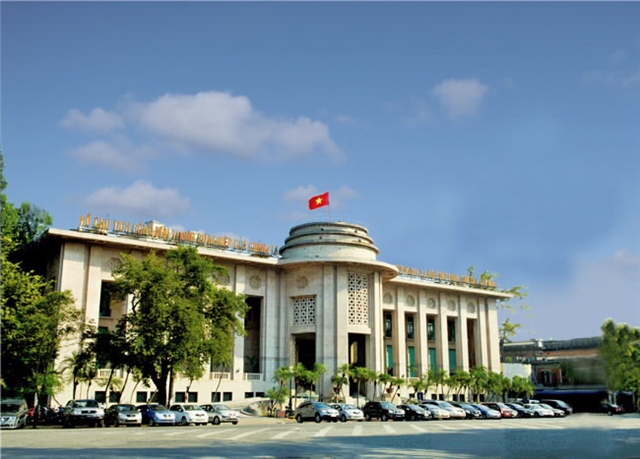
| Headquarters of the State Bank of Vietnam (SBV). In 2026, the SBV sets a credit growth target of 15 per cent, a relatively cautious figure compared to the 19 per cent rate in 2025. — Photo sbv.gov.vn |
HÀ NỘI — The State Bank of Vietnam (SBV) could loosen monetary policy in the second half of 2026 to help meet the Government’s double-digit growth target, experts have forecast.
Analysts from ACB Securities Company (ACBS) said in a macroeconomic report released this week that any loosening would depend on favourable macroeconomic conditions. They warned, however, that easing policy could push inflation and exchange rates higher than last year.
“If the nation’s foreign exchange reserves decline sharply, the cost of capital and the US dollar index (DXY) will remain high similar to 2022. Potential risks in the banking system, however, may be better controlled as liquidity pressure from the real estate market is eliminated,” the analysts said.
For 2026, the SBV has set a credit growth target of 15 per cent, lower than the 19 per cent rate in 2025. This cautious approach aligns with the Government’s strategy of reducing reliance on bank credit and curbing real estate speculation.
ACBS analysts also pointed to ongoing risks in the money market, including high oil prices and liquidity pressure. Global inflationary pressures, exacerbated by geopolitical tensions such as the conflict in Iran, could limit the SBV’s ability to cut interest rates. Many central banks, including the US Federal Reserve, Bank of England, European Central Bank, Bank of Japan, and Bank of Korea, have expressed concern over persistent inflation and high oil prices. The Fed’s slower-than-expected interest rate reductions in particular will constrain monetary policy easing in Việt Nam.
Domestically, interest rates continued to rise in February amid a gap between credit demand and deposit mobilisation. The six-month deposit rate at the four largest banks has climbed 0.7 percentage points since the start of the year, while lending rates for real estate currently hover around 10-14 per cent.
Analysts expect this trend to persist in the first half of 2026 until the exchange rate stabilises and geopolitical tensions ease, improving the flow of foreign currency into the domestic market.
Data from the SBV showed credit growth reached 1.4 per cent by the end of February compared with December 2025, outpacing deposit growth, which rose just 0.36 per cent. Liquidity pressures pushed interbank interest rates close to 20 per cent at times.
The DXY rose 1.6 per cent in the first two months of 2026, signalling strong demand for the US dollar. Analysts said close monitoring of exchange rates and banking liquidity will be essential to gauge interest rate volatility.
“A favourable exchange rate environment and abundant liquidity will be a suitable foundation for the SBV to expand its credit growth target in the second half of 2026,” ACBS analysts said. — BIZHUB/VNS
Economy
 Economy
.jpg) Economy
Economy
 Economy
 Economy
 Economy
 Economy
 Economy
 Economy
 Economy
 Economy
 Economy
 Economy
 Economy
 Economy