.jpg) Economy
Economy


"Thai Night Busan 2026" Makes a Grand Return, Connecting Thai Content with Global Partners to Create Business Opportunities and Strengthen Industry Collaboration
1.
|
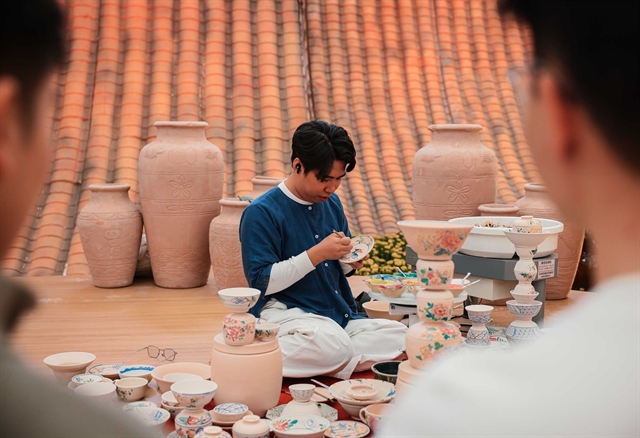
| Thái Liêu ceramic stall at the First Glorious Spring Fair. Việt Nam should integrate technological solutions into the organisation of trade fairs to foster innovation and enhance effectiveness. — VNA/VNS Photo Hoàng Hiếu |
HÀ NỘI — With spring crowds gathering and digital tools reshaping how people connect, Việt Nam should integrate technology into the organisation of trade fairs to foster innovation and improve effectiveness, Vietnamese Trade Counsellor to the Republic of Korea (RoK) Phạm Khắc Tuyên said, citing the RoK’s experience in blending exhibitions with festivals and online engagement.
Speaking to the Vietnam News Agency during the First Glorious Spring Fair in Hà Nội, Tuyên said that combining technology with traditional trade promotion would create favourable conditions for developing new ideas and improving the visitor experience.
The RoK has experience in combining conferences and trade fairs with seasonal festivals, he said. For example, spring in the RoK is typically marked by flower festivals during which local authorities organise trade promotion fairs to showcase regional products.
The RoK views this approach as a key driver of both local and national economic development, he said, adding that Việt Nam could study the RoK’s model and adapt it to the country’s own practical conditions.
In particular, the RoK places strong emphasis on digital tools to boost engagement before, during and after events, including the use of influencers, live-streaming booths and pre-registered business matching activities to attract both domestic and international buyers.
Việt Nam is currently hosting the First Glorious Spring Fair in Hà Nội from February 2 to 13 and already has large exhibition venues such as the Vietnam Exposition Centre in Đông Anh Commune, which would provide favourable conditions for developing new ideas if technological solutions are integrated more deeply, Tuyên stressed.
|
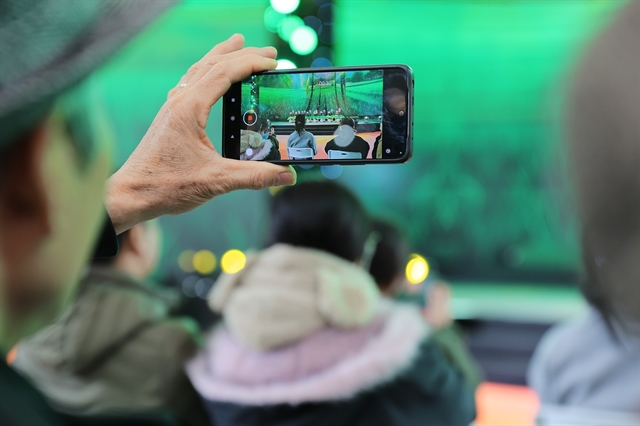
| A man is recording a performance at the First Glorious Spring Fair. — VNA/VNS Photo Lê Đông |
He suggested that Việt Nam could also learn from the RoK’s support policies for small- and medium-sized enterprises, particularly in four key consumer sectors: beauty, fashion, household goods and food. Through dedicated programmes, Korean SMEs receive assistance in branding, quality management and global marketing.
The RoK has a wide range of distinctive products well suited to the Spring Fair in Việt Nam, such as K-beauty cosmetics, functional foods and fashion items, he said.
While Korean brands have already earned the trust of Vietnamese consumers in terms of quality and design, the Spring Fair gives shoppers more choice, while the presence of Korean products allows Vietnamese producers to keep pace with market trends, Tuyên said.
On bilateral trade, Tuyên said Việt Nam’s exports to the RoK are shifting from raw commodities to deeper processing and branded agricultural products, forecasting that two-way trade will exceed US$100 billion in 2026.
He noted that Korean consumers are increasingly favouring Vietnamese tropical fruits such as dragon fruit, mango, banana and coconut, which are now widely available in major supermarket chains such as E-mart and Lotte Mart. Processed foods, textiles and footwear, and wooden furniture are also gaining ground in the RoK.
However, Tuyên said Việt Nam faces growing competition from other Southeast Asian and Latin American agricultural exporters. He called for continued investment in new product development, closer collaboration with content creators to align with Korean consumer trends and stronger capabilities in processing and manufacturing.
As the RoK faces an ageing population and labour shortages, Tuyên said, Việt Nam could have significant opportunities to play a larger role in global supply chains for shipbuilding, machinery and mechanical engineering. Several Vietnamese firms have already partnered with Korean companies on international bidding projects.
The high-tech sector also holds potential for bilateral cooperation, including cybersecurity, server manufacturing and renewable energy, which could help lift the value of bilateral trade beyond traditional goods. — VNS
Economy
 Economy
 Economy
 Economy
 Economy
 Economy
 Economy
 Economy
 Economy
 Economy
 Economy
 Economy
 Economy
 Economy
 Economy