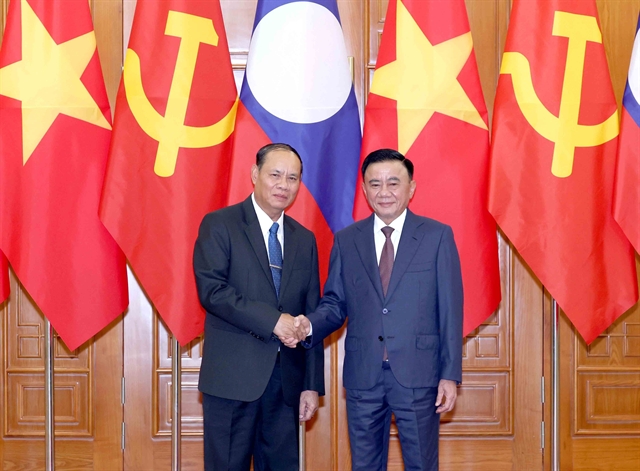
Việt Nam, Laos aim to raise bilateral trade to US$5 billion
1.

|
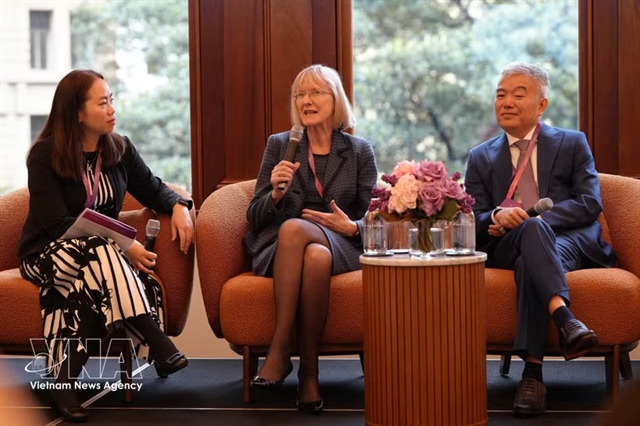
| Nguyễn Thị Phương Uyên, marketing director of Alibaba.com Vietnam |
During the first Glorious Spring Fair in 2026, the Trade Promotion Agency under the Ministry of Industry and Trade and Alibaba.com Vietnam Co Ltd jointly organised activities to promote the application of e-commerce in exporting goods, as Việt Nam steps up efforts to help local firms compete globally.
Through initiatives such as the Vietnam National Pavilion programme, the organisers aim to support Vietnamese enterprises, particularly small- and medium-sized enterprises, in strengthening their ability to access international markets, increase brand visibility and expand opportunities for sustainable business cooperation.
On this occasion, Nguyễn Thị Phương Uyên, marketing director of Alibaba.com Vietnam, spoke to Vietnam News Agency about the challenges and opportunities facing exporters.
In the context of increasingly intense competition in the global trade chain, what is the biggest challenge now for Vietnamese export enterprises?
Previously, the biggest challenges for Vietnamese export enterprises were mainly skills and the application of new solutions that international buyers were using.
However, after the COVID-19 pandemic, Vietnamese enterprises have seen significant improvements as they increasingly use technology to expand markets and communicate. Therefore, this is no longer the biggest challenge.
Instead, the challenge for Vietnamese exporters today is identifying which products are in high demand in international markets and reading and understanding market data.
What is the core objective of the Vietnam National Pavilion initiative? How does it differ from enterprises opening individual storefronts on the platform?
The Vietnam National Pavilion is a dedicated product space within the Alibaba.com platform that brings together products bearing Vietnamese brands.
The Vietnam Pavilion is positioned towards international buyers rather than casual visitors and brings together 200 representative Vietnamese enterprises.
That is the most obvious difference between the national pavilion and individual storefronts. In developing this model, we focus on training Vietnamese enterprises, helping them grasp the core aspects of export business and international trade, as well as how to apply skills and use tools on the e-commerce platform to drive sales.
In addition, we focus on creating opportunities for enterprises participating in the Vietnam National Pavilion programme to interact with successful international sellers in the market, enabling them to learn from and exchange experiences to strengthen their business skills in a more practical manner.
We hope that the Vietnam National Pavilion programme will become a place to promote the Vietnamese brand and image more strongly and credibly to the international community.
How is the Vietnam Pavilion expected to support Vietnamese enterprises in enhancing their export competitiveness, particularly in terms of image building, branding and access to international buyers?
The two most important missions of the Vietnam Pavilion programme are promoting the image of Vietnamese brands and helping enterprises enhance their ability to apply digital transformation in export promotion and revenue growth.
To fulfil these missions, we organised continuous training programmes in 2025, including 104 online sessions and 14 offline sessions, to support enterprises in updating their knowledge of import-export activities, skills in operating accounts on Alibaba.com, as well as negotiation and bargaining skills, so that they can more quickly and effectively convert enquiries into actual orders.
Which groups of Vietnamese enterprises will benefit most clearly from the Vietnam Pavilion, especially small- and medium-sized enterprises?
With the Vietnam Pavilion programme, Alibaba.com Vietnam has received support and close cooperation from State agencies, particularly the Ministry of Industry and Trade and the Trade Promotion Agency.
Our focus for the 2026–27 period is to support five key sectors, including agriculture; food and beverages; textiles and accessories; furniture; and handicrafts.
These are sectors that account for a large proportion of Vietnamese enterprises and have strong growth potential.
Notably, based on data from a continuous 300-day period starting from January 1, 2025, handicrafts is the sector with the fastest revenue growth and the highest search volume. — VNS
 Economy
 Economy
 Economy
 Economy
 Economy
 Economy
 Economy
 Economy
 Economy
 Economy
 Economy
 Economy
 Economy
 Economy