 Economy



HKSTP Partners with Leading Science and Technology Company Merck to Open a New Chapter in I&T Collaboration
1.

|
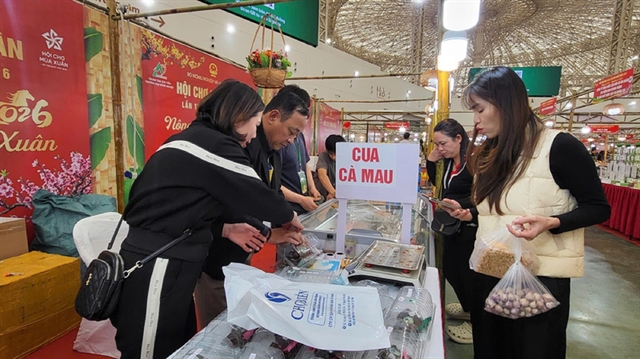
| A wide range of processed products made by HCM City-based firms showcased at the 2025 HCM City Products Week. — Photo courtesy of ITPC |
HCM CITY — HCM City’s food and foodstuff industry grew by more than 9 per cent in the first 11 months of 2025, and is expected to achieve double-digit growth in 2026.
Lý Kim Chi, chairwoman of the Food and Foodstuff Association of HCM City, said following its administrative merger with Bình Dương and Bà Rịa–Vũng Tàu, the city entered a new phase of development, with its population jumping to an estimated 14 million.
“This is far more than an administrative adjustment. It marks a turning point that opens up new development space and a growth axis where industry, services, logistics, and innovation converge.
“Within this broader framework, food processing continues to be identified as one of the city’s four key industrial sectors.
“In the first 11 months of 2025 the sector’s industrial production index rose by over 9 per cent, reflecting both strong market demand and the internal capacity of local enterprises. On this basis, the sector is forecast to post double-digit growth in 2026.”
Trần Phú Lữ, director of the Investment and Trade Promotion Centre of HCM City, underscored the sector’s strategic importance, noting that food processing is one of the city’s four priority industrial sectors, accounting for around 14–15 per cent of industrial production.
“The sector plays a vital role not only in ensuring food security and safeguarding public health, but also in contributing directly to economic growth.”
The municipal government had approved the development strategy of the city’s food processing industry to 2030, with a vision to 2050, aiming to maintain growth momentum while consolidating its position as a key manufacturing pillar, he said.
Following the reorganisation of provinces and cities, HCM City is now home to more than 345,000 active enterprises, with food processing companies accounting for a sizeable share.
These range from leading domestic corporations and major brands to a large number of small, medium-sized and micro enterprises.
Lữ highlighted the progress made by enterprises in improving product quality, adopting digital technologies, advancing digital transformation and using natural resources and energy more efficiently.
As a result, many products now meet the stringent standards of demanding markets such as the US, Japan and Europe, according to Lữ.
However, the merger not only creates new growth opportunities but also requires the sector to restructure towards a more modern and sustainable model with higher value added.
While food supply concerns previously centred on availability and prices, the focus has now shifted clearly towards quality and safety.
Lữ praised the sector for achieving solid growth last year despite considerable difficulties, saying this was clear evidence of the resilience and adaptability of local enterprises, even as sustaining growth becomes more challenging under tighter standards.
Chi described 2025 as a particularly challenging year for businesses.
Rising logistics costs, volatile export markets and sluggish domestic demand had put pressure on production and operations, she explained.
|
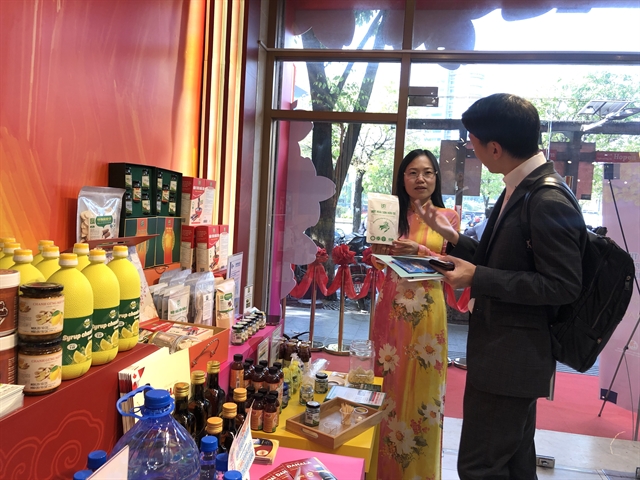
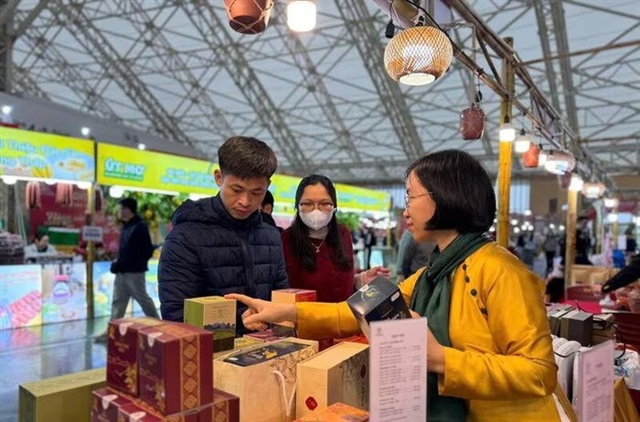
| A staff member introduces her company’s food products to a visitor at an event in HCM City. — VNS Photo Xuân Hương |
But new consumer trends such as green foods, alternative products, stricter traceability requirements, and higher food safety standards were reshaping the market and opening up new development opportunities, she said.
Looking ahead, the sector’s development orientation was shifting beyond serving domestic demand towards deeper participation in global supply and value chains, she said.
This transition required enterprises to move away from volume-based production towards quality-driven strategies, and from price competition to competition based on standards, branding and sustainability, she said.
“HCM City’s food industry stands at a turning point, where growth potential goes hand in hand with higher requirements for quality and sustainability. This is a tough transition, but one that cannot be avoided.”
Green food emerges as new growth driver
Green and health-oriented food products with clear origins and high safety standards are increasingly becoming the preferred choice of urban consumers.
In response, many enterprises have invested in technology and upgraded products towards natural formulations, reduced sugar content and additives and greater environmental friendliness.
Nguyễn Ngọc Hương, deputy director of Thiên Nhiên Việt Import-Export Co., Ltd., said the company focused on developing herbal tea products made entirely from natural ingredients, carefully combining flavours to maximise health benefits.
The products were designed not only for daily consumption but also as premium gift items, in line with the growing emphasis on green living and food safety, she said.
Võ Tuấn Anh, deputy director of trade promotion at Ban Mê Gold Co., Ltd., said his company was developing coffee products oriented towards health benefits, using natural ingredients and limiting refined sugar to allow consumers to enjoy coffee while maintaining long-term confidence in their health.
Chi emphasised that green transformation would no longer be a choice but an inevitable trend, and improving quality and ensuring transparency of origin were becoming a “passport” for enterprises seeking access to international markets and growth.
According to the Ministry of Industry and Trade, demand for green products in Việt Nam has grown at an average of 15 per cent a year, with 72 per cent of consumers willing to pay more for such products.
This provides a solid foundation for the country’s green and clean food market to enter a new phase of growth. — VNS
Economy
 Economy
 Economy
 Economy
 Economy
 Economy
 Economy
 Economy
 Economy
 Economy
 Economy
 Economy
 Economy
 Economy
 Economy