 Economy


China’s Professional Hair Care Brand ISYUN Announces Victoria song as Global Brand Ambassador, Accelerating Global Expansion with Strategic Focus on Southeast Asia
1.
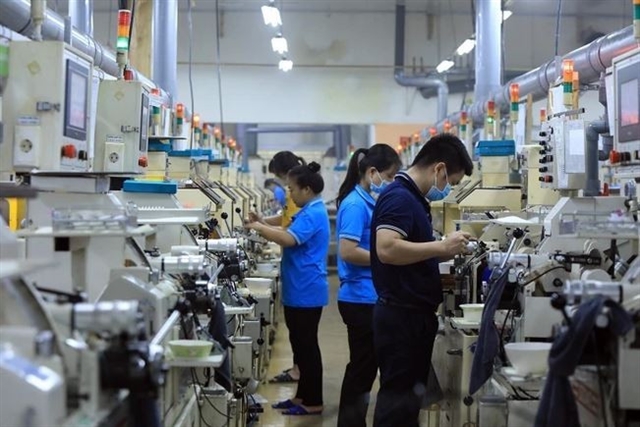 |
| Việt Nam is strengthening its position in the technology value chain, becoming a major manufacturing hub for complete consumer electronics products. — Photo vietnamplus.vn |
HÀ NỘI — Meeting new standards poses significant challenges but also opens opportunities for domestic enterprises to reposition competitiveness and move up the value chain, insiders said.
For years, Việt Nam’s electronics enterprises have joined global supply chains mainly through cost advantages and order-fulfilment capacity. However, this model is now under mounting pressure as major markets tighten environmental, social and governance (ESG) requirements.
Đỗ Thị Thúy Hương, a member of the Executive Board of the Vietnam Electronics Industries Association (VEIA), said ESG standards have become a cross-cutting requirement throughout business operations, particularly in electronics and high-tech sectors.
Compliance with environmental, labour, governance, and information transparency standards is no longer a voluntary choice, but a mandatory requirement for businesses participating in global supply chains or exporting to international markets, she noted.
According to the VEIA, the 2025–27 period will be a pivotal phase, especially for exporters to the European market, which will require strict adherence to ESG criteria, including net-zero emission roadmaps, labour standards, governance rules and transparency obligations. As one of Việt Nam’s strategic export industries, electronics is being directly affected by this transition.
Phạm Thị Ngọc Thủy, Director of the Board for Private Economic Development Research, which operates under the PM’s Advisory Council for Administrative Procedure Reform, said enterprises involved in export supply chains are experiencing the strongest ESG pressures, while firms focused on the domestic market are less affected. However, she stressed that amid fast-changing global and domestic policies, businesses cannot remain outside international trends if they aim for sustainable growth and market expansion.
Domestically, Việt Nam’s legal framework for environmental protection and sustainable development is being rapidly refined. Under the Law on Environmental Protection, more than 1,000 enterprises were required to conduct greenhouse gas emissions reporting by the end of 2025. The net-zero emissions target has also been reiterated in key Politburo resolutions, creating clear momentum for transformation across the business community.
In major markets, ESG requirements vary in approach but share a trend towards tighter standards. In the US, climate policies may differ by period and by state, while ESG requirements largely depend on corporations and supply chains. China has shown strong determination to turn environmental challenges into competitive advantages, quickly making green standards the new “rules of the game”. Meanwhile, the European Union continues to lead in setting sustainability benchmarks, introducing tools such as the digital product passport to monitor product life cycles and prevent “greenwashing”.
These differences mean Việt Nam’s electronics enterprises must not only comply with standards but also proactively select suitable market strategies to avoid exclusion from global supply chains.
Experts point out that a key bottleneck lies in corporate awareness. Many firms cite shortages of capital, technology or information as major obstacles. However, treating ESG merely as an add-on makes substantive change difficult. Only when ESG is integrated into core strategies and business models can transformation be sustained.
Trần Đức Tùng, Deputy General Director of Hanel PT JSC, said ESG implementation requires substantial investment in renewable energy, environmental monitoring and data governance. While short-term financial returns may be unclear, such investments strengthen governance capacity, improve productivity and enhance long-term competitiveness.
It is reported that the VEIA has proposed developing ESG guidelines tailored to domestic electronics enterprises and is rolling out specialised training programmes in cooperation with international partners. — VNS
Economy
 Economy
 Economy
 Economy
 Economy
 Economy
 Economy
 Economy
 Economy
 Economy
 Economy
 Economy
 Economy
.jpg) Economy
Economy
 Economy