 Economy


Digitalisation helps streamline cargo clearance
1.
|
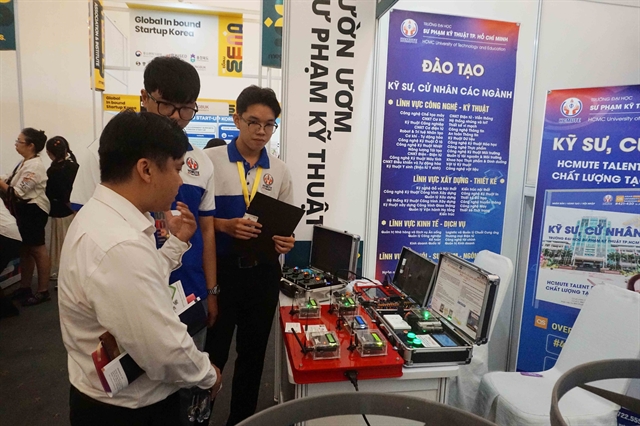
| HCM City regularly organises trade promotion activities to help enterprises expand markets, promote products and strengthen international partnerships. — VNA/VNS Photo |
HCM CITY — This year is expected to mark the beginning of a new cycle of strong socio-economic growth, driven by effective implementation of recently created mechanisms and policies, together with clearer development orientations for the next phase.
This view was shared by many firms at a conference on the implementation of tasks for 2026 held by the HCM City Business Association (HUBA) on January 20.
According to Nguyễn Ngọc Hòa, acting chairman of HUBA, in recent years the Party and the State have issued a series of important thematic resolutions on the development of the private and state sectors and the promotion of public–private partnerships.
These policy foundations have helped the business community better identify opportunities and challenges in the new period.
Hòa noted that 2026 is forecast to be a year of continued positive recovery for the city’s socio-economic landscape.
Recently introduced support policies are expected to show more tangible effects, while key growth drivers like public and private investment, foreign direct investment, consumption, tourism and exports will continue to be promoted.
Long-standing bottlenecks related to enterprises, investment projects and the real estate market are gradually being resolved, creating room for growth.
In particular, the rearrangement of administrative units and the expansion of the city’s development space are expected to facilitate stronger regional linkages, improved infrastructure connectivity and enhanced investment attraction.
Efforts to streamline the administrative apparatus and unify management focal points are also anticipated to significantly improve the investment and business environment over the medium and long terms.
However, during the transition period, adjustments in mechanisms and organisational structures may give rise to certain difficulties, requiring enterprises to proactively adapt while calling for timely support from authorities.
Hòa said: “Alongside favourable factors, the city’s economy remains exposed to unpredictable global economic fluctuations. At the same time the shift towards green, sustainable growth models and green consumption is placing increasing pressure on the business community.”
|
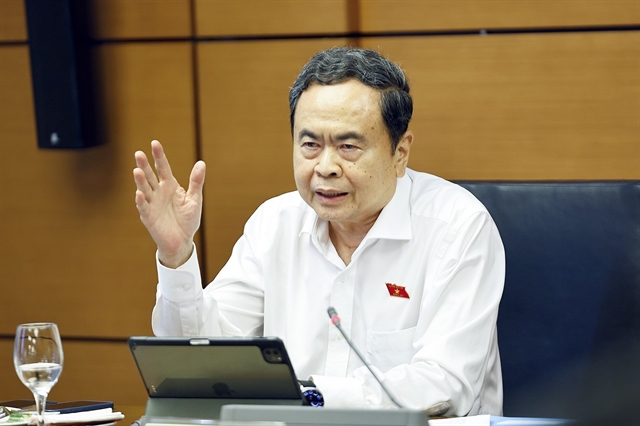
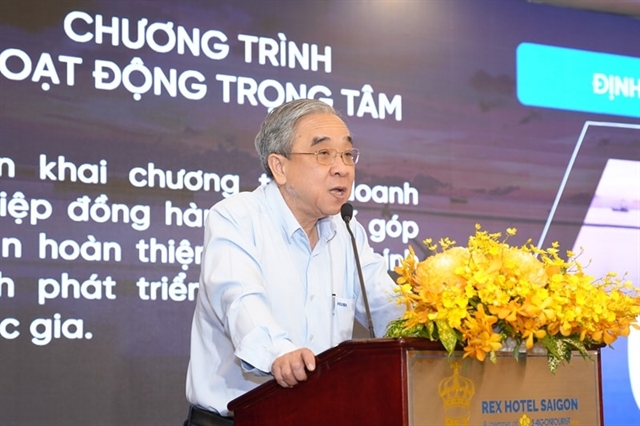
| Nguyễn Ngọc Hòa, acting chairman of the HCM City Business Association, speaks at a conference on the implementation of tasks for 2026 held by the HCM City Business Association (HUBA) on January 20. — Photo diendandoanhnghiep.vn |
To support enterprises in updating information and strengthening business connections, HUBA will continue to maintain and enhance the quality of its regular activities, such as the Entrepreneurs’ Coffee programme, domestic and international trade promotions and business networking conferences and seminars.
These initiatives aim to foster linkages in the consumption of products and services within the association’s membership system, thereby improving overall competitiveness.
The association also plans to consolidate its organisational structure in a leaner and more efficient manner, aligned with the new governance model.
This includes reviewing and refining internal regulations, strengthening decentralisation and delegation and enhancing coordination responsibilities across the system.
HUBA will further strengthen its role as a bridge between enterprises and authorities, organising diverse dialogue formats and meetings between city leaders and the business community, activating specialised committees and regularly gathering feedback from enterprises to promptly propose solutions for emerging difficulties.
Trade promotion activities will also be intensified, with plans to organise three to five business delegations to survey potential markets, expand international trade connections and continue hosting exhibitions showcasing outstanding Vietnamese products and services with more innovative and practical content.
The association has also called on city leaders to continue refining mechanisms and policies in the context of implementing the two-tier local government model, accelerate administrative reform, expand online public services, resolve outstanding issues related to taxation, land, investment and environmental procedures, and maintain regular dialogue channels with enterprises.
At the same time greater autonomy for business associations in rolling out support programmes is expected to further strengthen the business ecosystem.
From the perspective of the authorities, Lê Huỳnh Minh Tú, deputy director of the city Department of Industry and Trade, spoke highly of HUBA’s role over the past year.
In 2025 the city achieved GDP growth of over 8 per cent, with a significant contribution by its more than 500,000 enterprises.
HUBA organised numerous meaningful activities, including honouring green enterprises and exemplary products and services, while also actively contributing to social initiatives.
As the city continues to implement Resolution No. 98/2023/QH15 on piloting specific mechanisms and policies for the city’s development, Tú affirmed that the Department of Industry and Trade will continue to accompany HUBA in administrative reform, digital and green transformation support, building a sustainable business ecosystem, connecting large enterprises with small and medium-sized ones, and promoting cooperation between businesses and research institutes and universities.
“In the new acceleration cycle, the proactiveness and dynamism of the city’s business community are expected to make an important contribution to the goal of building HCM City into a dynamic, innovative and highly competitive economic hub in the region,” Tú said.
Nguyễn Đặng Hiến, general director of Tân Quang Minh Trading Production Co Ltd (Bidrico), said despite numerous challenges his company achieved robust growth in 2025 and has set ambitious targets for this year.
To achieve them it must strengthen partnerships, expand and consolidate distribution systems and be well prepared in terms of production and business capacity, he said.
“The global market remains fraught with uncertainties, particularly due to frequently changing tariff policies.
“For example, goods exported to the US may be subject to one tariff rate today, only to face a different rate tomorrow, creating severe risks for exporters. “
“So Bidrico is placing greater focus on the domestic market, which has steadier demand and considerable potential.”
He said the rapidly evolving consumer trends require enterprises to proactively adapt to market tastes.
They could not afford to stand still, and must continuously improve products, adjust formulations and develop new product lines aligned with the “my own style” trend and modern lifestyles, he warned.
“Each enterprise needs to clearly assess its situation and prepare a well-thought-out production and business plan for 2026, avoiding a passive stance. Most importantly, solutions must be flexible and tailored to the conditions of each company.” — VNS
Economy
Economy
 Economy
 Economy
 Economy
 Economy
 Economy
 Economy
 Economy
 Economy
 Economy
 Economy
 Economy
 Economy