 Economy



AXA Global Healthcare Mind Health Report reveals global differences in how cost and stigma affect access to professional mental health care
1.
|
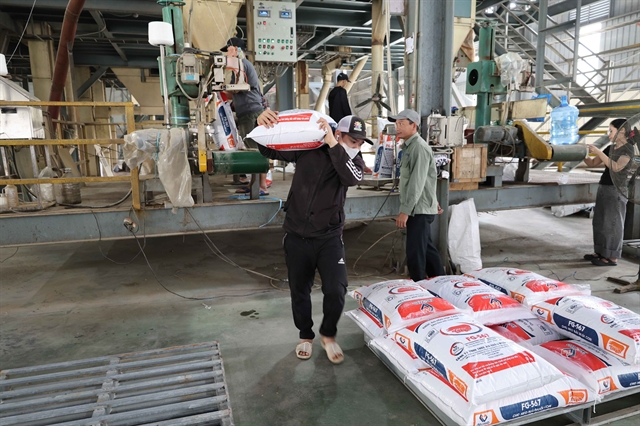
| Production at the FAGO Central feed processing plant in Gia Lai Province. Nearly two months after the storm, the company still awaits insurance confirmation. — VNA/VNS Photo Kha Phạm |
HÀ NỘI — The final months of 2025 were marked by the most destructive rains and flooding the South Central Coast and Central Highlands had seen in years. Storm No. 13 tore through industrial parks, ripped the roofs off factories, ruined inventories and raw materials, and severed transport and power networks. The shock was especially acute in Gia Lai and Đắk Lắk – two provinces where processing and manufacturing industries form the backbone of economic activity.
Yet amid the wreckage, a different story began to unfold: one of resilience, continuity, and strategic necessity. Rather than waiting for full recovery, many businesses restarted production as soon as the water receded, choosing to rebuild and operate simultaneously. Local authorities stepped in with supportive measures, helping preserve industrial output, protect employment, and keep provincial growth targets within reach.
Production returns
The FAGO Central feed processing plant in Gia Lai epitomises the post-storm struggle. The facility was among the hardest hit, with collapsing roofs and stores of raw materials soaked beyond use. Prime Minister Phạm Minh Chính visited the site personally to assess damage and direct recovery efforts. But FAGO did not wait for repairs to be completed. Within days, operations resumed under tarps and temporary coverings.
General Director Nguyễn Thị Ánh said the decision was unavoidable: “Stopping production would break our supply lines, affect partner farms, and disrupt our entire ecosystem.” FAGO continues to operate even while insurance claims remain unresolved and reconstruction is unfinished. The company is hunting for financing from every available source just to stay afloat.
In Đắk Lắk’s eastern region, the picture has been much the same. Factories there faced roof damage, lost inventory, short-circuited electrical systems, and days-long outages. Minh Toàn Co., Ltd. resumed operations almost immediately despite the destruction. Director Nguyễn Văn Thạnh recalled how a crew of workers returned first, clearing debris and restarting machines. The rest followed, allowing production to scale back up within weeks.
The incentive was clear: falling behind risked more than profit margins. For export- and supply-chain-linked firms, late deliveries mean loss of credibility, dissolved contracts, and forfeited customer relationships painstakingly built over years.
Production pace holds up
Despite infrastructure damage and logistical strain, both provinces posted surprisingly strong industrial numbers for 2025.
Gia Lai recorded an industrial production growth rate of more than 9.3 per cent, with processing industries expanding more than 6 per cent and electricity production rising nearly 20 per cent. Food processing – especially livestock feed and frozen products – led the gains.
Đắk Lắk’s industrial sector grew nearly 11 perc ent, with manufacturing up close to 10.9 per cent. Output of key commodities such as roasted coffee products surged almost 29 per cent, and processed cashews rose more than 35 per cent. Together, these industry clusters helped stabilise the regional economy even as some sectors – beverages and wood products – struggled with weaker markets.
A crucial driver behind the resilience is momentum from earlier investment. Between 2024 and 2025, more than 180 industrial projects with nearly VNĐ18 trillion in capital either came online or moved into late-stage construction. This new capacity has cushioned weather disruptions and facilitated recovery.
Just as importantly, entrepreneurship remains vibrant. Around 5,700 new businesses were registered in the two provinces in 2025 alone, signaling confidence rather than retreat.
Capital is the missing piece
But even as industry keeps moving, financial strain is mounting.
For firms directly damaged by floods, liquidity is a lifeline. Without upfront capital, factories cannot repair equipment, restock inputs, or scale back up to pre-storm output. Yet many remain stuck in limbo, unable to access bank loans because insurance adjustors have not completed damage assessments – reducing collateral value and delaying claims needed to unlock credit.
FAGO is a case in point. Nearly two months after the storm, the company still awaits insurance confirmation. “We are operating at minimum capacity and losing market share because capital is tied up in unresolved claims,” its director said.
Businesses not directly damaged are also constrained. Agrifood processors, coffee roasters, and exporters say working capital for innovation is especially hard to secure, even though it is essential to move up value chains. Aeroco Coffee Director Lê Đình Tư noted that consumer tastes shift constantly and packaging must evolve. “Sometimes, we complete a new product and the market changes immediately. R&D needs patient money, not short-term loans.”
The financing gap is not due to lack of liquidity. In Đắk Lắk, deposits rose more than 20 per cent and loans more than 11 per cent in 2025. But credit access in Gia Lai grew by only 7.2 per cent, far below the surge in deposits, indicating that capital exists – but is not flowing where it is most needed.
A call for flexible lending
Industry analysts argue that banks should not apply normal lending constraints to abnormal circumstances. Independent consultant Nguyễn Văn Quốc believes what is needed now is temporary flexibility: extending repayment terms, raising short-term limits, and coordinating closely with local authorities and insurance providers.
“The challenge isn’t weak demand. It is slow insurance, damaged collateral, and rigid lending processes,” he said. “If banks can adjust, capital will circulate quickly into productive firms that are already proving their resilience.”
Looking toward a stronger industrial future
Despite ongoing challenges – damaged infrastructure, delayed insurance payouts, cautious bank lending – the broader narrative emerging from Gia Lai and Đắk Lắk is positive.
The provinces are simultaneously recovering, expanding, and upgrading. Post-merger administrative reforms are opening more space for industrial zones, logistics connectivity, and value-chain development. New factories and local suppliers are emerging. Deep processing – such as high-quality roasting and specialty coffee – signals a shift from commodity exports to higher-value manufacturing.
The path to industrial transformation is clearer than ever: firms that rebuild stronger, innovate in processing, and secure adequate capital will anchor a more resilient regional economy.
If credit and policy align at the right moment, Gia Lai and Đắk Lắk’s industrial bases will not just recover from the storms of 2025 – they will define the region’s next phase of growth, jobs, and economic transformation in years to come. — VNS
Economy
 Economy
 Economy
 Economy
 Economy
 Economy
 Economy
 Economy
 Economy
 Economy
 Economy
 Economy
 Economy
 Economy
 Economy