 Sci-Tech

European higher education week opens new opportunities
1.
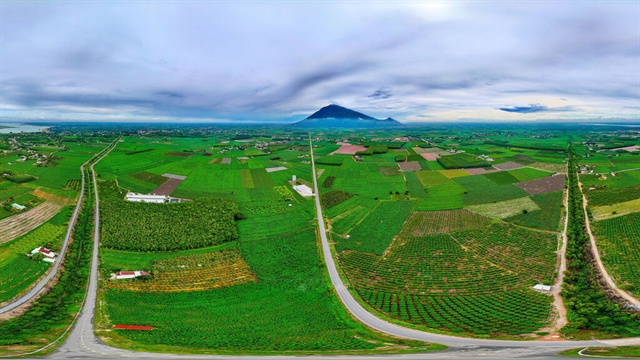 |
| Farmland at the foot of Bà Đen Mountain is planned for cassava, rubber and fruit trees, creating concentrated farming zones and improving land-use efficiency in Tây Ninh Province. — VNA/VNS Photo Minh Phú |
TÂY NINH — Farmers in the southern province of Tây Ninh are improving incomes by applying technology, joining value chains and developing co-operative models.
In Lộc Ninh Commune’s B4 Hamlet, Phạm Văn Toại’s softshell turtle farm reflects a shift in production thinking as he adopts new techniques.
“Farming today does not rely only on labour, it requires technical skills and information,” Toại, 60, said.
By applying proper processes, from water treatment to nutrition, his turtles grow well, face fewer diseases and generate stable income, he said.
Besides adopting advanced techniques, farmers have linked with companies and co-operatives to develop value chains.
The HCM City-based Chanh Viet Trading and Investment Joint Stock Company has linked with thousands of farmers in the province to develop a seedless lemon growing area of nearly 7,000ha, meeting export standards for demanding markets.
Nguyễn Văn Hiển, the company’s chairman, said: “We aim to fully exploit product value while supporting farmers with both techniques and product purchasing.”
The company has invested in production and deep processing to improve value, he said.
Farmers who link with companies have achieved higher efficiency.
Võ Thị Thu Thảo, who has grown sugarcane in Thạnh Bình Commune for more than 21 years, has linked with a company, a move that improved efficiency thanks to its support in supplying materials, transferring techniques and promoting mechanisation.
Mechanisation, especially drones for spraying, has reduced labour costs, saved time and improved pest control while ensuring safety, she said.
Her family cultivates 13ha of sugarcane, with average yields of more than 80 tonnes per hectare, she said.
However, she added that to keep sugarcane a sustainable income source, enterprises should continue supporting farmers in developing new varieties and expanding mechanisation as labour becomes scarce and costs rise.
Along with companies, co-operatives play an important role in reorganising production and improving value.
The Thạnh Hòa Agricultural Service Co-operative in Thạnh Lợi Commune has more than 30ha of lemons from 15 members. Its lemons are grown to Vietnamese and global good agricultural practices (VietGAP and GlobalGAP) standards and are purchased at stable prices.
Đặng Văn Phải, its director, said these linkages and standards have brought clear changes to local lemon farming.
Previously, farmers worked on a small scale with unstable markets and prices, he said, adding that after joining the co-operative, production is managed more consistently, output is stable and livelihoods have improved.
The co-operative’s lemons have been exported to the Netherlands and several Asian countries.
“When products meet standards, selling prices are higher and profits increase,” Phải said.
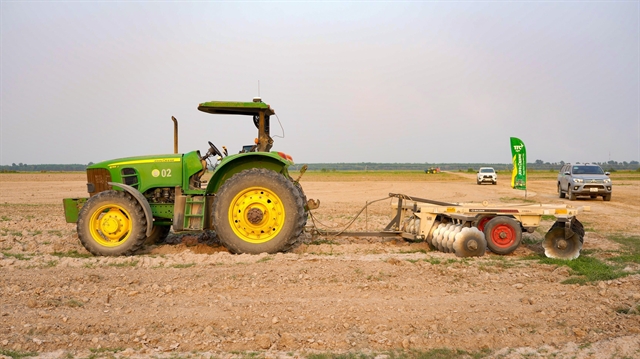 |
| Machinery and mechanised equipment are being introduced across Tây Ninh Province, modernising the agricultural sector. — VNA/VNS Photo Minh Phú |
Participating in co-operatives and farmers’ groups has helped farmers raise incomes and develop clean, sustainable farming.
In An Lục Long Commune, the Cầu Đôi Farmers’ Club is helping bring scientific advances to farmers.
Trương Minh Trung, director of the Long Hội Co-operative and head of the club, said the model allows farmers to share experiences and update market information.
Established in 2019 with 22 members, the club now has nearly 100 participants.
It holds monthly meetings with scientists, businesses and agricultural extension officers to provide technical guidance and connect product consumption.
About half of its members also belong to the Long Hội Co-operative, which grows dragon fruit and other crops.
Joining the club helps improve cultivation skills and build a clean, sustainable dragon fruit value chain with stable output, according to Trung.
As a result, livelihoods have improved, with more stable jobs and income, he said.
Trương Tấn Đạt, deputy director of the provincial Department of Agriculture and Environment, said the province plans to allocate more than VNĐ100 billion (US$3.8 million) to implement 89 projects linking agricultural production and consumption in 2026–30.
These will focus on key products such as shrimp, dragon fruit, durian, high-quality rice, honeydew melons and bamboo shoots, along with high-tech models tied to value chains.
The province is also promoting mechanisation, especially drones, to cut costs and improve efficiency, he said.
Training, technology transfer, brand building and certification of safe production standards will be prioritised to help farmers expand markets.
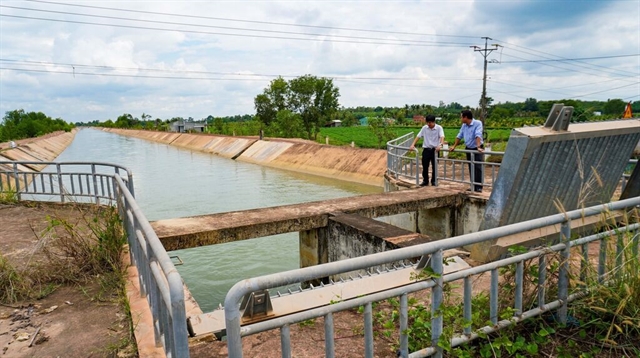 |
| Irrigation canals in Tây Ninh Province bring water directly to the fields, enabling farmers to plan production and boost crop yields and efficiency. — VNA/VNS Photo Minh Phú |
Lê Văn Hẳn, chairman of the provincial People’s Committee, said agriculture remains a key pillar of the local economy.
The province is restructuring the sector based on regional advantages and developing large-scale specialised farming areas linked with VietGAP and GlobalGAP standards.
The use of new varieties, mechanisation and low-emission farming models is helping raise productivity, reduce costs and improve competitiveness.
Livestock farming is moving towards industrial and high-tech models, while aquaculture remains stable with improved efficiency.
“With comprehensive solutions, the agriculture, forestry and fisheries sector is expected to grow by 3–3.5 per cent in 2026, contributing to food security, improving livelihoods and supplying raw materials for processing and export,” Hẳn said. — VNS
Sci-Tech
 Sci-Tech
 Sci-Tech
 Sci-Tech
 Sci-Tech
 Sci-Tech
 Sci-Tech
 Sci-Tech
 Sci-Tech
 Sci-Tech
 Sci-Tech
 Sci-Tech
 Sci-Tech
 Sci-Tech
 Sci-Tech