 Sci-Tech

European higher education week opens new opportunities
1.
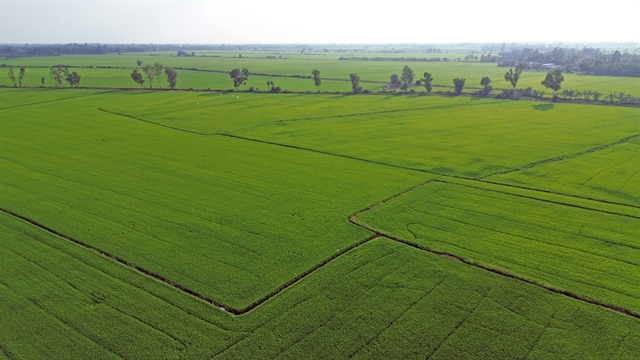 |
| A high-quality rice field in An Giang Province. — VNA/VNS Photo Trần Việt |
HÀ NỘI — Việt Nam’s agricultural sector is entering a critical phase of transformation driven by advanced technologies and the digitalisation of farming areas, with standardised databases and traceability seen as essential to ensuring greener and more sustainable development.
The sector has long been characterised by fragmented production and heavy reliance on traditional practices, leading to inconsistent quality, low value, and limited competitiveness in international markets.
According to Phạm Huy Hoàng, General Director of VNPT Information Technology Company (VNPT-IT), transitioning from raw exports to high-value products requires a strong data foundation, including information on farming areas, production processes and markets. Such data underpin traceability systems, improve transparency, and enhance consumers' trust.
As major markets such as the European Union, the US and Japan are tightening import requirements, insufficient data transparency has become a major barrier for Vietnamese farm produce. In contrast, products with clear and comprehensive data on origin and quality are more likely to access these markets and secure better prices.
Nguyễn Thị Thanh Hoa, General Director of EUBIZ Việt Nam JSC, noted that while small-scale production can rely on manual methods, digital technologies become indispensable when expanding cultivation areas and output. Data play a crucial role in increasing product value, especially in the development of processed and organic products, she noted.
From practical implementation, many localities have identified agriculture as a key pillar of the economy in the coming years. Deputy Director of the Lào Cai provincial Department of Agriculture and Environment Nguyễn Thái Bình said that in the 2026–2030 period, the province will prioritise digital transformation across the entire production chain to improve management efficiency, increase product value, and support sustainable agricultural and forestry development. He further stated that building and standardising agricultural databases is seen as a core task in this strategy.
Experts stressed that digital transformation should be implemented in phases, aligned with farmers’ capabilities. At the cultivation stage, shifting from manual record-keeping to electronic systems is crucial to help farmers gradually adapt to technology, alongside the application of tools for pest and weather monitoring, irrigation management, and pesticide control.
At the processing stage, digital technologies should be used to fully digitise production processes, allowing strict control over quantities, ingredients, and technical standards required by markets, especially international ones. In the market stage, leveraging e-commerce platforms and social media can help promote products more effectively and support brand building through professional images, content, and videos.
However, as most farmers still have limited technological skills, the implementation must go hand in hand with step-by-step training programmes that are easy to understand and apply. The involvement of consulting and implementation units is also essential to directly support farmers.
To address the data challenge, the role of technology enterprises is indispensable. These firms are actively building digital platforms, developing shared databases, and deploying Internet of Things solutions in agriculture. Such platforms not only facilitate data collection and management but also connect stakeholders across the value chain, from regulators and businesses to farmers. When data are effectively shared and utilised, the entire agricultural ecosystem will operate more smoothly and transparently.
Close coordination among the State, businesses and farmers is also crucial. While the State provides regulatory frameworks, enterprises drive the market, and farmers supply data, effective incentives are needed to encourage farmers’ participation. When tangible benefits are clear, farmers will be more willing to adopt technology and engage in the digital ecosystem. — VNA/VNS
Sci-Tech
 Sci-Tech
 Sci-Tech
 Sci-Tech
 Sci-Tech
 Sci-Tech
 Sci-Tech
 Sci-Tech
 Sci-Tech
 Sci-Tech
 Sci-Tech
 Sci-Tech
 Sci-Tech
 Sci-Tech
 Sci-Tech