 Sunday/Weekend
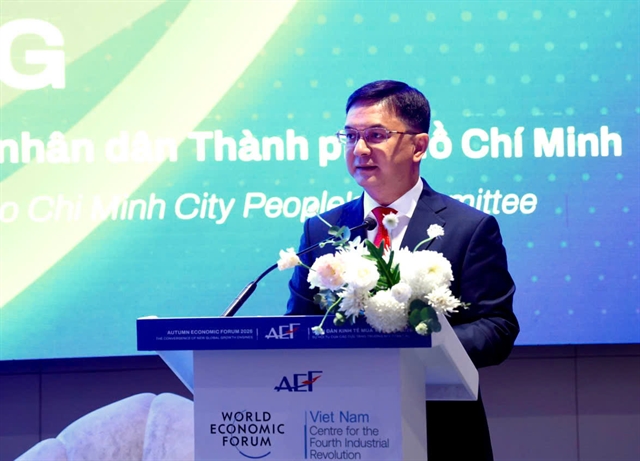
HCM City, India seek deeper cooperation in future technologies
1.
|
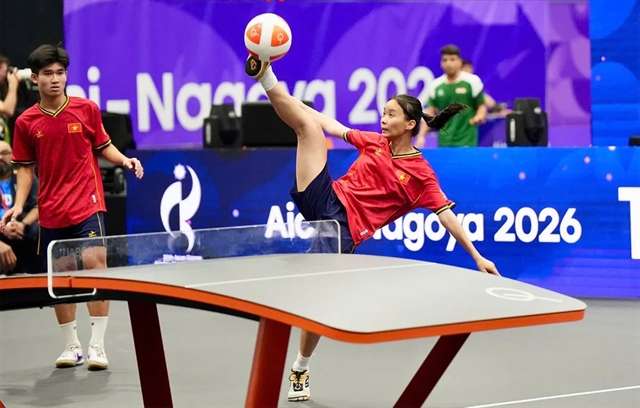
| Nguyễn Hoàng Minh Tân (left) and Trịnh Gia Nghi compete at the 20th Asian Games in Japan. They won a bronze medal in the mixed doubles, marking a milestone for Vietnamese teqball.— Photo webthethao.vn |
Thanh Nga
Việt Nam’s first teqball medal at the 20th Asian Games (ASIAD) has provided a boost to the emerging sport, highlighting the potential of investment from non-State sources in developing athletes from grassroots participation to elite competition.
The bronze medal won by Nguyễn Hoàng Minh Tân and Trịnh Gia Nghi in mixed doubles marked a milestone for Vietnamese teqball. Having switched from other sports and trained in teqballfor just over a year, the pair reached the podium at the continental event.
Their achievement offered early evidence that efforts to develop teqball through wider participation, training opportunities and support from non-State partners are beginning to pay off.
“Besides competing, we always try to introduce teqball to more people. We hope this medal will encourage more people to take up the sport,” Nghi said.
Việt Nam made its Asian Games debut in teqball with four athletes competing in three events. The mixed doubles bronze was the highlight, while the men’s doubles pair of Bá Trường Giang and Lê Anh Khoa also produced encouraging performances against strong opposition.
They overcame several established pairs, including an Indian duo who had won a world bronze medal and a South Korean pair. Although they did not reach the podium, their performances demonstrated the team’s growing ability to compete at a high level.
Southeast Asian countries claimed 11 of the 20 teqball medals at ASIAD 20. Thailand won three golds in men’s doubles, women’s doubles and mixed doubles, while South Korea took the men’s singles title and Myanmar won the women’s singles title.
The results underlined the region’s strength in the sport and offered Việt Nam a benchmark for future progress. For Tân and Nghi, the bronze was an important first step, but further development will be needed to compete consistently with the region’s leading teams.
|
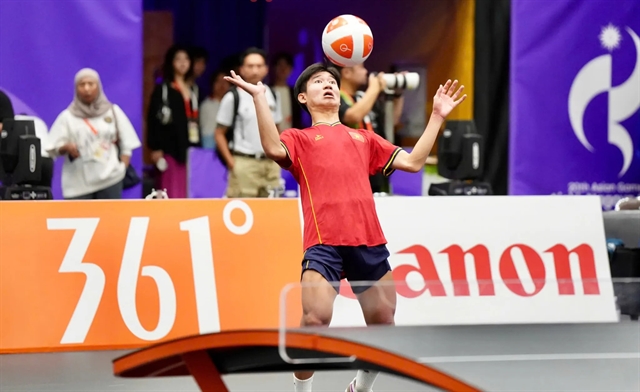
| Nguyễn Hoàng Minh Tân only began training in teqball in 2025 but quickly became one of Việt Nam’s leading players. — Photo webthethao.vn |
HCM City has played a leading role in developing teqball, particularly after hosting the 2024 Teqball World Championships.
The Hoa Lư Sports Centre was assigned responsibility for managing the sport, developing elite athletes and expanding grassroots participation.
With support from the International Teqball Federation, the municipal Department of Culture and Sports distributed specialised tables and balls to sports centres, training facilities and sports units at the ward and commune levels.
Grassroots growth
Making equipment available at local facilities has helped introduce teqball to more people while creating opportunities to identify promising athletes.
The first HCM City Teqball Championships were held in 2025, attracting 12 participating teams and organisations. Training courses led by international specialists, including Hungarian expert Milan Szabo and Thai expert Pornthep Wapisiri, have also helped Vietnamese athletes improve their technical and tactical skills.
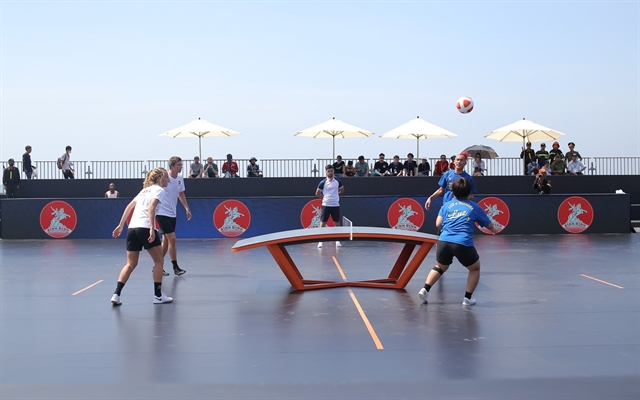
Việt Nam’s hosting of a Teqball World Series event in the former province of Bình Định and the world championships in HCM City in 2024 further raised the sport’s profile and gave domestic athletes opportunities to gain experience of international competition at home.
These initiatives show how resources from non-State sources can support equipment provision, coaching, competition organisation and talent development. For a relatively new sport, such support is important in building a pathway from grassroots participation to elite competition.
|
| Athletes compete at the Teqball World Series 2024 held in Việt Nam. — Photo baophapluat.vn |
Teqball combines elements of football, table tennis and sepak takraw, requiring precise ball control, quick reactions, coordination and tactical awareness. Drawing athletes from other sports can therefore provide a practical route to building a competitive team.
Tân and Nghi are examples of this approach. Tân switched from sepak takraw to teqball, while Nghi moved from shuttlecock kicking. They then made rapid progress despite their limited experience in the sport.
Their adaptation, however, is not yet complete. They still need time to refine their techniques, improve their tactical understanding and become more accustomed to the demands of international competition. The Asian Games bronze nevertheless gives the pair added motivation to continue improving and aim for stronger results in the future.
Việt Nam’s men’s doubles bronze at the 2025 SEA Games, followed by the mixed doubles medal at ASIAD 20, suggests that the country’s initial development efforts are beginning to produce results.
Nguyễn Hồng Minh, head of the Vietnamese sports delegation at ASIAD 20, said the achievement reflected effective cooperation between the State and the public in developing sport.
He said mobilising non-State resources could support not only mass participation but also the development of elite and professional athletes. The result was an encouraging sign for Vietnamese sport as the country strengthened its presence in regional and continental competition.
Team leader Trần Duy Khâm sees the Asian Games bronze as a starting point rather than a final destination. Việt Nam’s priorities include expanding grassroots participation, identifying and training young athletes, improving coaching standards and providing more opportunities to compete internationally.
The Vietnamese team is set to compete at the World Series in Thailand in late October and the Asian Indoor and Martial Arts Games in Saudi Arabia in December. — VNS
Sunday/Weekend
 Sunday/Weekend
 Sunday/Weekend
 Sunday/Weekend
 Sunday/Weekend
 Sunday/Weekend
 Sunday/Weekend
 Sunday/Weekend
 Sunday/Weekend
 Sunday/Weekend
 Sunday/Weekend
 Sunday/Weekend