 Inner Sanctum

Foreign Minister calls for enhancing Việt Nam – RoK cooperation effectiveness
1.
 |
| Nobuko Otsuki (left), chief representative of the Japanese Foundation for International Development/Relief (FIDR) in Việt Nam, presents gifts to members of a local ethnic community during a community support programme. — Photo courtesy of Otsuki |
Nobuko Otsuki, chief representative of the Japanese Foundation for International Development/Relief (FIDR) in Việt Nam, has spent years working alongside ethnic minority communities to preserve traditional handloom weaving and support sustainable livelihoods. She speaks with Việt Nam News about why cultural heritage lies at the heart of community development.
Why did you focus on reviving traditional handloom weaving in Việt Nam?
My first visit to Việt Nam was 21 years ago. At that time, I visited former Quảng Nam Province, now part of the enlarged Đà Nẵng City, which is well known for the handloom weaving traditions of the Cơ Tu people, and I had the opportunity to see their textiles firsthand.
FIDR determined that these textiles possess extremely valuable and unique qualities, even on a global scale. Furthermore, following strong requests for support from local authorities and the Cơ Tu community, we decided to provide assistance.
How has the preservation of this traditional craft progressed among ethnic groups, especially women in remote and disadvantaged areas?
The women weavers have not only gained economic benefits, such as increased daily income through cloth sales, but have also grown confidence. They recognised the value of Cơ Tu weaving as a cultural treasure, and came to take pride in it not only as a personal achievement, but as a shared asset of the community.
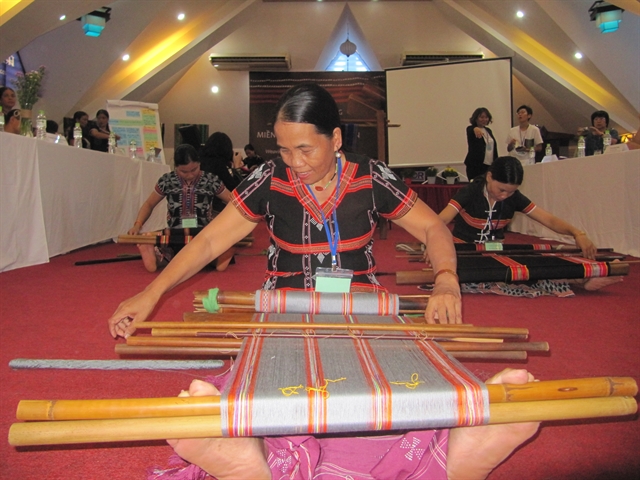 |
| A Cơ Tu woman demonstrates traditional fabric weaving at an event in Hội An. VNS Photo Công Thành |
What is your assessment of products made from ethnic handloom fabrics and their long-term potential in the global market?
Currently, the products from Cơ Tu Zara Village are not only at international airports in Japan, but also variety stores and events.
Most of these opportunities stem from tourists visiting Cơ Tu villages through community-based tourism in former Quảng Nam. Through hands-on weaving experiences in Zara Village, visitors come to appreciate the beauty and cultural value of the textiles, and many later introduce them to retailers and consumers in Japan.
Therefore, I believe that promoting Cơ Tu textiles through tourism offers potential for growth, not only in Japan but also internationally. Our goal is to actively engage with global markets in the years ahead.
What kind of future do you envision for handloom products and the living standards of ethnic communities?
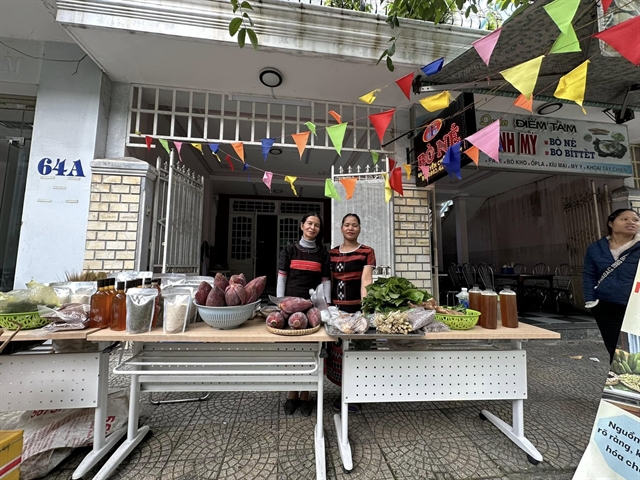 |
| A farm-produce pavilion of the Cơ Tu ethnic group in Đà Nẵng, supported by the Japanese Foundation for International Development/Relief in Việt Nam. Photo courtesy of FIDR |
Việt Nam possesses many treasures worthy of global pride, including its natural landscapes, traditional culture and the everyday lives of its people.
Among these, the cultures of ethnic minority communities play an essential role in shaping Việt Nam's diverse and profound cultural heritage.
It is important to introduce the world not only to tourist destinations, but also to daily life, rural spaces and the people who sustain them. I believe it is possible to improve living standards while allowing both individuals and communities to shine in their own way.
How will FIDR continue its support in the future?
Under the changing administrative landscape, FIDR plans to clearly identify priority areas for rural and community-based tourism development within Đà Nẵng. We also aim to develop new models of tourism led by local communities, making full use of their cultural treasures and distinctive characteristics.
Beyond tourism, we plan to support the development of local products and expand their distribution as souvenirs and regional specialties, helping communities generate sustainable income while preserving cultural identity. VNS
Inner Sanctum
 Inner Sanctum
 Inner Sanctum
 Inner Sanctum
 Inner Sanctum
 Inner Sanctum
 Inner Sanctum
 Inner Sanctum
 Inner Sanctum
 Inner Sanctum
 Inner Sanctum
 Inner Sanctum
 Inner Sanctum
 Inner Sanctum
 Inner Sanctum