 Society
Đà Nẵng green-lights US$105 million Thai development deal
1.
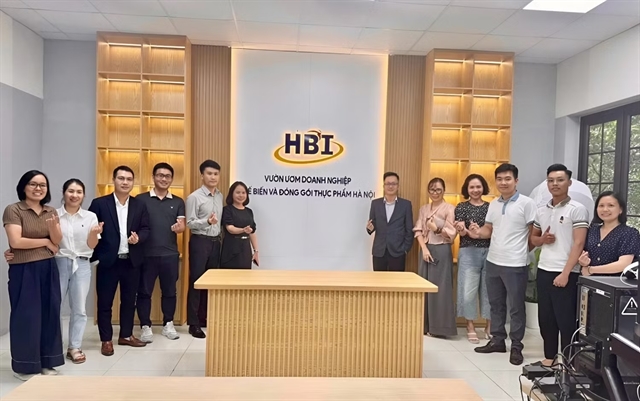 |
| Leaders of the Hà Nội Support Centre for Enterprise and Investment Promotion (SCE) and businesspeople joining the Hà Nội Food Processing and Packaging Business Incubator. — Photos courtesy of SCE |
HÀ NỘI — Formed as part of the Hà Nội Support Centre for Enterprise and Investment Promotion (SCE), the Hà Nội Food Processing and Packaging Business Incubator is actively supporting small and medium-sized enterprises (SMEs) in research, production, digital transformation, market expansion and efforts to improve competitiveness.
With production facilities, management consulting, market support and digital transformation assistance, the incubator has become an important support platform helping SMEs accelerate development and enhance their competitiveness.
Speaking to giaoduc.net.vn, Đàm Thanh Sơn, deputy head of the Enterprise Development Division at the SCE, said the incubator is currently supporting SMEs in production space, laboratories, shared machinery and equipment for food-related activities, helping businesses reduce initial research and product development costs.
The incubator also offers consultation, training and professional development programmes for company directors, department heads and employees on management and business administration skills, process development and compliance with quality and food safety standards, he said.
It helps businesses promote their products and expand their markets by facilitating their participation in trade fairs and exhibitions and connecting them with potential partners at industry conferences and seminars, where they can seek investment to expand production and business operations, he said.
Acting as a hub connecting businesses with support resources from domestic and international business support organisations, the incubator enables them to access favourable policies and conditions for development.
As innovation and digital transformation are no longer optional, but have become essential for businesses to survive and achieve breakthroughs in the market, Sơn said the incubator has been carrying out various activities to enhance the innovation and digital transformation capabilities of businesses participating in its programmes.
The activities focus on raising awareness among business owners and employees through training courses and inviting leading experts to provide direct advice on digital transformation roadmaps and solutions to optimise production and business processes.
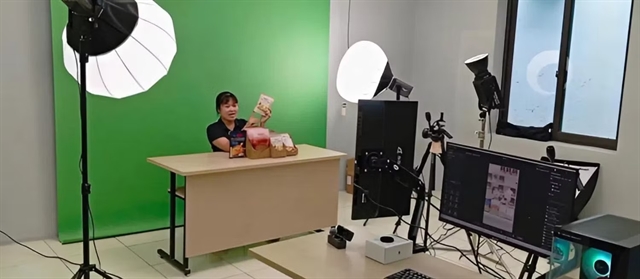 |
| A livestreaming session for a business at the incubator. |
Recently, the incubator upgraded some of its facilities to provide more effective digital transformation support, including renovating spaces and purchasing specialised equipment to set up a livestreaming room.
It has also provided skills training enabling businesses to livestream and sell products directly on e-commerce platforms from the incubator.
According to Sơn, these activities are aimed not only at supporting businesses during the incubation process, but also at helping them gradually mature, enhance their competitiveness and strengthen their market position.
One example is Nutricare JSC, which graduated after joining the three-year programme from 2010 to 2013.
Nutricare has since become a national brand and one of Việt Nam’s leading medical nutrition companies, offering powdered and ready-to-drink milk products for people of all ages, from children and older adults to patients.
The company now operates two manufacturing plants and was ranked among the top 50 fastest-growing Vietnamese enterprises in 2025.
From product research to first revenue
From a start-up with no stable market, 5T Trading and Production JSC in Gia Lâm Commune, Hà Nội has gradually brought its products to market, generated revenue and maintained production and business operations.
After receiving support in production space, facilities and training from the Hà Nội Food Processing and Packaging Business Incubator, the company is expected to graduate from the incubator in April 2027.
Company director Lê Thị Ngọc Ngân said the firm joined the incubator around 2021, when it was still in the early stages of its start-up journey.
At the time, the company had no stable market and was mainly focused on researching and refining its products. Participating in the incubation programme enabled the company to conduct research while gradually bringing its products to market, she said.
The company is now in its fifth year at the incubator. The standard incubation period is three years, but as it joined during the COVID-19 pandemic, production and business activities were disrupted and faced significant difficulties. The company was therefore granted an extension of the support period to maintain operations and further refine its products.
“After nearly five years, the most notable change is that we have moved from having no revenue to establishing business operations and building a relatively stable customer base. In the first year, the company generated no revenue. In the second and third years, business operations began to stabilise, with annual growth of around 7-8 per cent,” Ngân said.
Although this growth rate does not represent rapid expansion, she said that for a small business operating mainly in a niche market and affected by the COVID-19 pandemic, establishing revenue, retaining customers and maintaining steady year-on-year growth were a meaningful achievement.
Along with revenue growth, the company has also improved its production and operating processes. While it initially focused mainly on product research, it has now established a relatively clear workflow, from receiving customer requirements and planning to organising production, processing, packaging and delivering products.
“These changes in our operational capacity are particularly important to us during the incubation process,” Ngân said.
According to Ngân, one of the major benefits for small and micro enterprises participating in the incubator is access to existing infrastructure, including production facilities, a wastewater treatment system and other shared facilities. The company only needs to invest in partitions, space arrangements and other adjustments to meet its production requirements.
The company also attended training courses on workforce management, accounting, taxation and business administration, as well as specialised training tailored to its production activities. These courses have not only provided additional knowledge, but also helped the company apply it in practice and develop management and operating methods suited to its scale.
Nguyễn Thị Huệ, director of Green Story JSC in Tương Mai Ward, Hà Nội said businesses operating at the incubator can access production space at a more affordable cost. This is also a practical form of support for food businesses during the start-up stage.
She noted that the company was established in 2022 and joined the incubator about six or seven months later. After nearly four years of receiving support and working with the incubator in production and product development, the firm is now preparing for graduation.
According to Huệ, participating in the incubator has helped the company overcome a number of challenges. First, it has reduced cost pressures while providing a production facility that meets the requirements and standards of the food sector.
Beyond providing infrastructure, the incubator also offers technical support. Most businesses operating there are relatively new and in the start-up stage, so they inevitably encounter difficulties during production.
“When businesses face technical problems, the incubator can provide support through a team of experts and engineers who offer advice on production-related issues,” Huệ said.
“This gives businesses better conditions to refine their processes and improve product quality.”
She added: “The incubator is like a cradle that nurtures businesses. During our operations, we have had the opportunity to build more systematic processes and receive support at various stages, from production and product development to brand building."
Sơn said drawing on the practical operation of the business incubator, the city should apply science and technology and digital solutions in management, consulting, training, resource coordination and monitoring the incubation process.
This will help improve the quality and effectiveness of incubator services, enhance the commercialisation of products and increase the success rate of incubated businesses and projects, he said. — VNS
Society
 Society
 Society
 Society
 Society
 Society
 Society
 Society
 Society
 Society
 Society
 Society
 Society
 Society
 Society