 Society
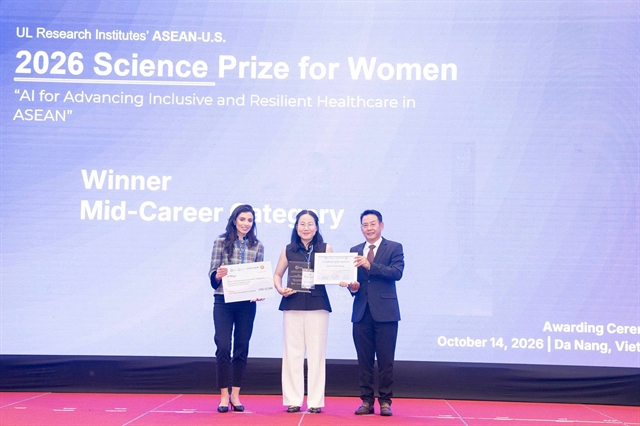
Vietnamese scientist wins ASEAN-US Science Prize for Women
1.
Using familiar vegetables, tubers and grains, the Sông Hồng Agricultural Cooperative in Hà Nội has developed ECOS straws, an eco-friendly product that can also be processed as food after use. Recognised as a national 5-star OCOP (One Commune, One Product) product, ECOS is steadily winning over domestic consumers and reaching international markets, opening up a new path for value-added processing and helping to raise the value of Vietnamese agricultural produce.
From local produce to a unique OCOP product
At the production facility of the Sông Hồng Agricultural Cooperative, familiar ingredients such as turmeric, beetroot, pandan leaves, radishes and various grains are processed into drinking straws in a range of natural colors. What makes ECOS distinctive is that the straws are more than just drinking utensils. After use, they can be stir-fried, boiled, added to hotpots or deep-fried into snacks.
What began as a seemingly simple everyday item has become an innovative way to add value to agricultural produce while helping reduce single-use plastic waste.
The man behind the product is Lê Văn Tám, Director of the Sông Hồng Agricultural Cooperative. Born and raised on the outskirts of Hà Nội, Tám spent about a decade gaining experience in agriculture in the Republic of Korea. After returning to Việt Nam, he sought to apply what he had learned to high-tech agriculture while finding new ways to increase the value of local farm produce.
.jpg) |
| Director of the Song Hong Agricultural Cooperative, Lê Văn Tám (far right), introduces ECOS straws—made from vegetables, tubers, and grains—to customers. |
In 2016, he established the cooperative and gradually developed a model for producing clean vegetables and shrimp using organic methods and high-tech applications. But producing raw materials was only one part of the value chain. Tám wanted to go a step further by turning agricultural produce into higher-value processed products.
The idea for vegetable-based straws came after he watched a documentary about the environmental damage caused by plastic waste. Images of discarded plastic straws littering streets and polluting the ocean, posing a threat to wildlife, prompted him to think about using the cooperative's own agricultural produce to create an alternative.
Turning the idea into a finished product, however, proved far from easy. Tám and his team spent more than two years researching and conducting hundreds of trials. Nearly 30 tonnes of raw materials were discarded during the process, while the research and development costs ran into hundreds of millions of Vietnamese đồng.
The biggest challenge was finding the right balance: the straws had to be strong enough to retain their shape when used with different types of beverages, from hot and cold drinks to smoothies and carbonated beverages, while still being capable of breaking down after use.
By mid-2019, the basic production process had been completed. The product, branded “ECOS Food Straws,” was subsequently trademarked, and the cooperative began working to meet export requirements.
The first shipment to the UK, however, failed. The cold and dry climate caused the straws to crack, forcing the cooperative to take the shipment back and suffer substantial losses. Rather than give up, Tám continued researching ways to overcome the problem. The setback ultimately became a turning point, helping ECOS improve both its quality and its ability to withstand different conditions of use and transport.
According to Nguyễn Đình Hoa, Deputy Director of the Hà Nội Department of Agriculture and Environment, straws made from powders derived from vegetables, tubers and fruits are among Hà Nội's distinctive products. They are not only practical but also environmentally friendly, in line with the city's efforts to promote green, clean, safe and sustainable products.
The recognition of ECOS as a national 5-star OCOP product in 2025, he said, affirmed the product's quality and value. The recognition has not only strengthened the brand but also created more opportunities for ECOS to participate in trade promotion programmes and expand in both domestic and international markets.
From green innovation to global markets
A key advantage of ECOS is its relatively integrated production chain. On an area of about 1,500sq.m, the cooperative operates high-tech greenhouses to grow vegetables, tubers and fruits using organic-oriented methods. These crops provide an important source of raw materials for research and straw production.
Having control over its raw material supply enables the cooperative to monitor input quality, reduce costs and maintain consistent product quality. Vegetables, tubers, grains and starches are carefully selected, processed and monitored in accordance with food safety requirements.
.jpg) |
| The eco-friendly "Ecos" vegetable-based straws from the Red River Agricultural Cooperative (Hanoi) are a product popular in the domestic market and exported to many countries worldwide. |
According to Ngọ Văn Ngôn, Deputy Chief of the Coordination Office for Hà Nội's New Rural Development Programme, the cooperative's model is a notable example of organic production, environmental protection and economic efficiency.
Deep processing has helped create an outlet for clean agricultural produce, reducing the risk of the familiar “bumper harvest, falling prices” cycle while creating stable employment for local people. More importantly, the model goes beyond simply producing an alternative to plastic straws. It has created an integrated value chain extending from raw material production and processing to domestic distribution and exports.
Today, ECOS straws are available at numerous restaurants, hotels, cafés and resorts across Việt Nam. The products are also exported to markets including Japan, South Korea, India and several European countries.
The cooperative can produce approximately 50,000 straws a day, providing regular employment and a stable source of income for around 20 members.
ECOS straws come in a variety of natural colors derived from different ingredients: yellow from turmeric, red from beetroot, green from pandan leaves and white from radishes and other ingredients. According to the cooperative, the products are packaged, barcoded and subjected to quality control before being released to the market.
The straws can retain their shape during hours of use and gradually break down after prolonged contact with water.
Unlike conventional plastic straws, which can persist in the environment for a long time, ECOS is made from natural ingredients and developed to be biodegradable. The product therefore fits well with the growing global shift toward more environmentally responsible consumption.
For Tám, however, the value of ECOS goes beyond its potential to replace plastic straws. More importantly, the product demonstrates that Vietnamese vegetables, tubers and fruits can be transformed into innovative products capable of meeting demanding international market requirements.
“The value of the product lies in its contribution to protecting people's health and establishing a Vietnamese brand in international markets,” Tám said.
In his view, developing processed products from clean agricultural produce can also help farmers increase their incomes while building safe and sustainable sources of raw materials.
From vegetable fields on the outskirts of Hà Nội to restaurants, hotels and overseas markets, ECOS reflects a new approach to agriculture: not simply producing more, but creating greater value from locally sourced raw materials through processing and innovation.
Looking ahead, Tám hopes ECOS straws will no longer be limited to cafés, restaurants, hotels and resorts, but will become part of everyday life.
A straw made from vegetables—one that can be further processed as food after use and is capable of naturally breaking down—is therefore more than just a signature 5-star OCOP product from Hà Nội. It is a story of Vietnamese creativity, of the potential to elevate the value of agricultural produce, and of an agricultural sector moving toward greener, more sustainable development while integrating more deeply into global markets.
* This article was produced in collaboration with the Hanoi Coordination Office for the New Rural Development Program.
Society
 Society
 Society
 Society
 Society
 Society
 Society
 Society
 Society
 Society
 Society
 Society
 Society
 Society
 Society