 Society
Việt Nam, China seek stronger substantive parliamentary cooperation
1.
|
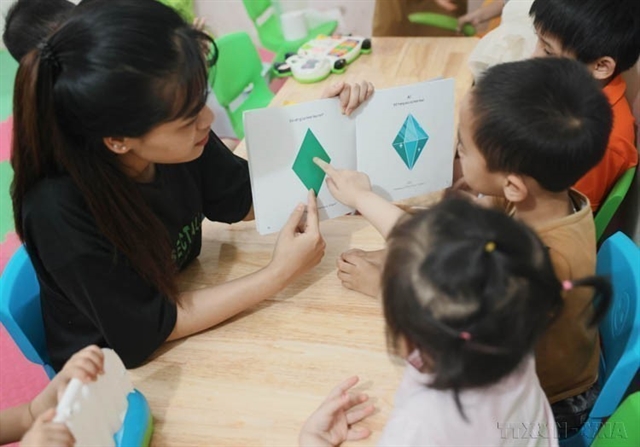
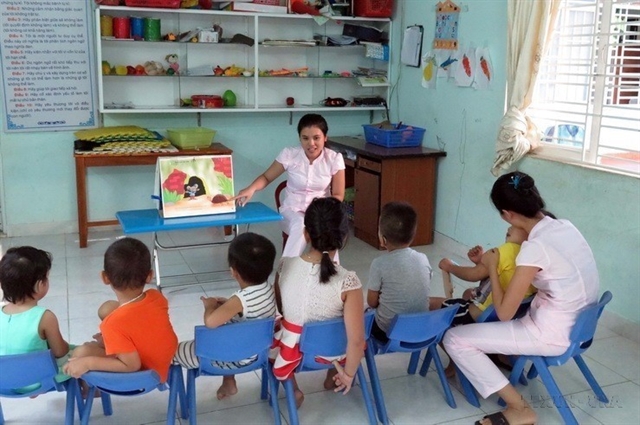
| A preschool teacher assesses a child’s image recognition skills as part of early screening for autism. — VNA/VNS Photo |
HÀ NỘI — Autism spectrum disorder (ASD) is a lifelong condition that can present very differently from one child to another, with no single treatment plan or standard pathway that works for everyone.
Each child brings a distinct mix of neurological and sensory differences, and this has made families, more than institutions, the anchor of care in Việt Nam.
For M.A in Hà Nội, that has meant more than 20 years of steady, often repetitive work with her son H., who began showing signs before his first birthday: limited eye contact, little response to his name and delays in basic development.
At the time, awareness of autism in Việt Nam was low, information was scarce and specialised services were difficult to access. H. did not attend mainstream school. Instead, most of his early intervention took place at home, guided by his mother.
“It was the same things, over and over again,” she said.
“Looking at someone’s eyes. Holding a spoon. Getting dressed. Learning how to manage behaviour.”
Some phases were especially difficult, particularly during adolescence, when H. developed sleep problems, bouts of shouting and heightened sensitivity to his surroundings.
|
| A teacher guides autistic children in image recognition. — VNA/VNS Photo |
From the beginning, M.A did not think in terms of a cure. Her goal was simpler and in many ways harder: helping her son become as independent as possible.
Progress came slowly, in small steps. Over time, H. learned to feed himself, help with household tasks, communicate in basic ways and take part in creative activities such as drawing or playing music.
Her experience reflects a broader pattern in Việt Nam, where families often take on much of the long-term care, even as awareness of autism has grown.
“Not every parent can accept that their child may not be able to attend a regular school,” said Dr Đinh Nguyễn Trang Thu of Hà Nội's National University of Education.
“And even when they do, inclusion doesn’t work the same way for every child.”
Some children benefit from being in mainstream classrooms, particularly in building social and emotional skills. Others struggle. There is no universal model, only what works for a given child at a given time.
Globally, autism is estimated to affect about one in 100 children, and Việt Nam is no exception. In the past, it was often misunderstood or mistaken for other developmental conditions, delaying diagnosis and support.
That is beginning to change.
At the National Children’s Hospital in Hà Nội, more than 45,000 children came in for mental health assessments in 2024, according to Dr Nguyễn Mai Hương from the Psychiatry Department. Around 20 per cent were screened for suspected autism - roughly 10,000 visits in a single year.
|
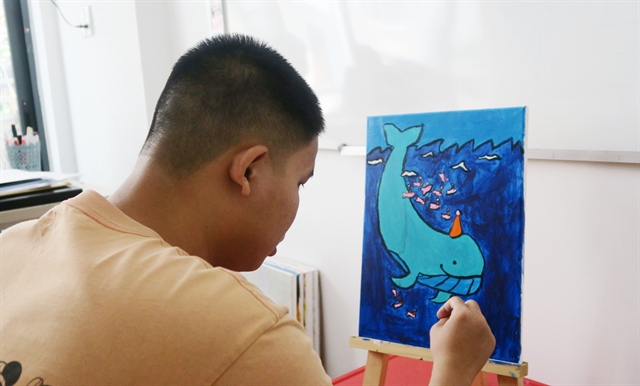
| An autistic child learns to draw. — VNA/VNS Photo |
The rise reflects both growing awareness and a surge in demand for services. But it has also exposed the limits of the system.
Hospitals at the central level are often overcrowded. Waiting times can be long. Intervention costs, typically between 8 million and 20 million đồng (about US$304 to $760) a month, are steep for many families. Services are uneven and outside major cities, access can be limited.
For many parents, that means figuring things out on their own.
The pressure has prompted a gradual policy response. In recent years, authorities have moved to expand support, as autism becomes more visible in public health and education discussions.
A national programme on disability for 2021–2030 aims to improve access to services and create more inclusive environments. Plans are also under way to ensure that every province and city has a public centre supporting inclusive education by the end of the decade.
Alongside government efforts, community-based initiatives have started to fill some of the gaps.
One such programme, known as Colourful Pinwheel, has trained core specialists and reached thousands of parents, teachers and caregivers since its launch in 2018. By promoting more consistent approaches between home and school, it aims to reduce one of the most common sources of frustration for families.
More than 13,000 children have benefited directly from centres supported by the project, while thousands more in the wider community have gained access to structured, evidence-based support.
Public awareness has also grown. Annual events, including a national sports festival for people with autism, offer spaces for social interaction and skill-building while helping to shift perceptions.
Even so, gaps remain. Most policies still focus on children. For autistic adults, support is far thinner.
There are few structured pathways into vocational training, independent living or stable employment. Many continue to rely on their families well into adulthood. Access to disability assessments and financial support can also be inconsistent, in part because autism-specific criteria are still evolving.
|
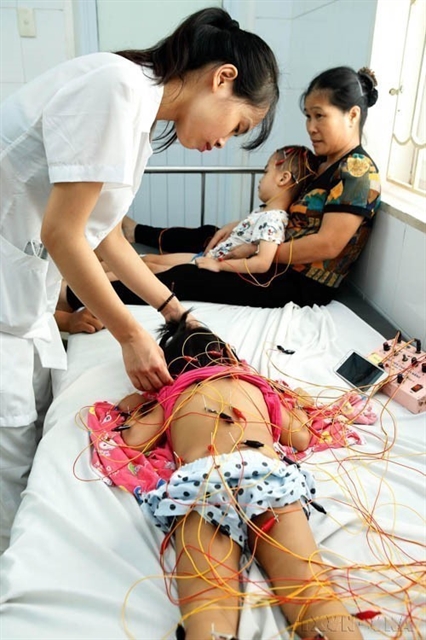
| An autistic child receives electroacupuncture treatment at a hospital in Hà Nội – a method reported to show effectiveness in more than 60 per cent of cases. — VNA/VNS Photo |
Despite that, the direction is clearer than it once was.
Autism, long under-recognised, is now part of the national conversation. A support system is beginning to take shape, uneven, still developing, but increasingly visible.
For families like M.A’s, that shift is meaningful. They remain at the centre of care. But they are no longer entirely on their own. — VNS
Society
 Society
 Society
 Society
 Society
 Society
 Society
 Society
 Society
 Society
 Society
 Society
 Society
 Society
 Society